

The best AI for writing in 2026 depends entirely on what you are writing. That sentence alone separates this guide from most that rank for this topic, because most comparison articles pick one tool and declare it the winner across every writing task. They are wrong, and any writer who has used more than one tool for more than a week knows it.
After testing Claude Opus 4.7, ChatGPT GPT-5.4 and GPT-5.5, Gemini 3.1 Pro, Jasper AI, Copy.ai, and Grammarly across actual writing tasks: blog posts, marketing copy, emails, social media captions, creative writing, and client proposals, the pattern is consistent and useful. Claude sounds like a thoughtful human. ChatGPT sounds like an efficient assistant. Gemini sounds like a well-researched report. And the specialized tools like Jasper and Copy.ai are mostly just those same base models wearing a more expensive interface.
Knowing that pattern changes how you work. This guide gives you the task-by-task verdict, the free tier reality, and a clear decision framework so you stop reading comparisons and start writing.
If you have read the guides on AI tools for freelancing on Fiverr and Upwork, ChatGPT vs Claude: which AI assistant is actually better in 2026, new AI models in 2026: GPT-5, Claude 4, Gemini 3, AI tools to make money online without investment, Grok vs ChatGPT: is xAI’s Grok 4 worth switching for in 2026, or make money with AI art without any skills, you already understand how AI tools fit into income-generating workflows. This guide focuses entirely on the writing dimension of that picture.
Why the “Best AI for Writing” Question Has No Single Answer
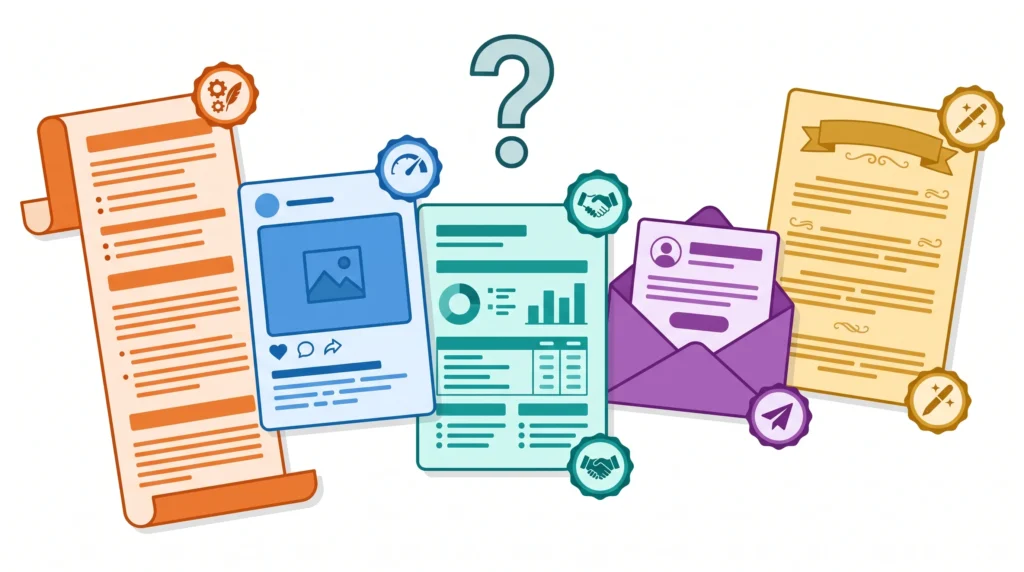
Best AI for Writing in 2026: The Framework Before the Tools
Writing is not one task. A 2,000-word blog post about AI tools, a 30-word Instagram caption for a product launch, a 500-word client proposal, and a 3,000-word short story are all “writing,” but they require different strengths from an AI model.
What makes AI writing tools different from each other is not raw intelligence; all three major tools (Claude, ChatGPT, Gemini) are within a narrow band of capability on most tasks. What differs is their default voice, their approach to structure, their integration with other tools, and their specific performance under particular constraints.
Understanding those differences is more useful than knowing which tool “won” an abstract benchmark. The benchmark for a blog writer is whether the first draft requires thirty minutes of editing or three hours. For that benchmark, the right tool per task matters more than any aggregate score.
Claude Opus 4.7 and Sonnet 4.6: The Best AI for Writing Long-Form Content
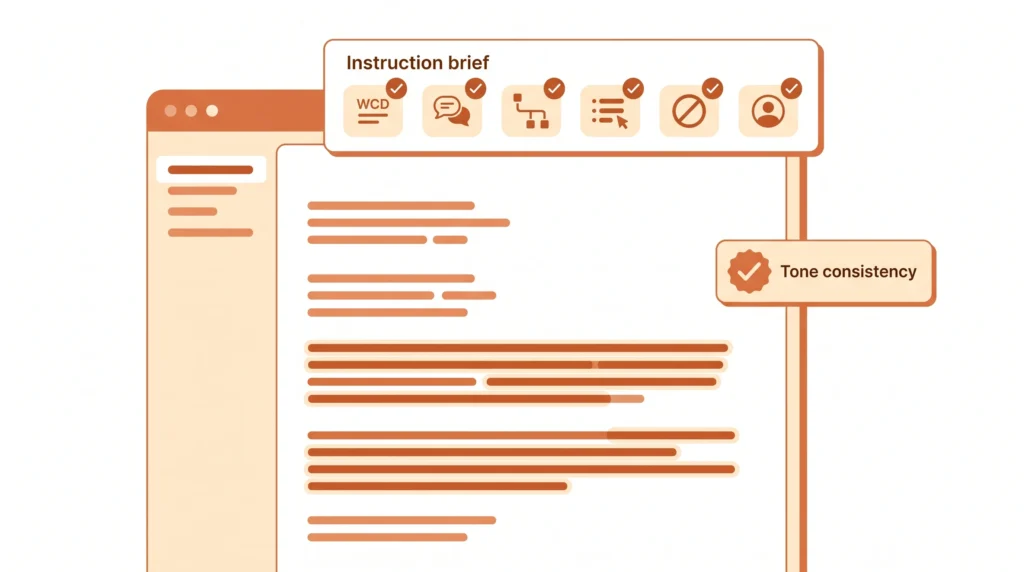
Best AI for Writing in 2026: Where Claude Leads Consistently
Claude is the tool that most serious writers, bloggers, and long-form content creators have settled on in 2026, and the reason is specific: its prose does not require as much editing. When Claude drafts a 1,500-word blog post, the output has varied sentence lengths, natural paragraph transitions, and a tone that does not immediately read as machine-generated. ChatGPT and Gemini produce competent drafts; Claude produces drafts that read like someone who writes for a living wrote a solid first pass.
Where Claude’s writing advantage is most clear:
- Long-form blog posts and articles: Claude maintains argument structure and voice across a full article without the drift toward generic phrasing that appears in ChatGPT’s longer outputs. A 2,000-word blog post from Claude requires editing for accuracy and personalisation; a 2,000-word post from ChatGPT often requires editing for tone and rhythm as well.
- Client proposals and business writing: The precision with which Claude follows multi-part instructions is higher than that of the other tools. Tell it to write formally, address three specific concerns from a client brief, and keep the tone confident but not pushy: it delivers all three without defaulting to a generic professional template.
- Essays and analytical writing: Claude holds a thesis together across multiple sections more reliably. It does not introduce contradictions or lose the thread of an argument halfway through a piece.
- Instruction-following under constraints: If your brief has six specific requirements (word count, tone, structure, keywords to include, phrases to avoid, specific audience), Claude follows all six more consistently than any other general-purpose model.
Claude’s writing limitations:
Claude is slower at generating short-form content, particularly punchy headlines and short social media posts, where ChatGPT’s punchier output style is better suited. Claude also cannot generate images, which matters for content workflows where visual and written assets need to be produced together.
Free tier status: Claude Sonnet 4.6 is available on the Claude.ai free tier with daily usage limits. For most writers doing one to two long-form pieces per session, the free tier is adequate. Claude Pro at $20/month removes limits and unlocks Opus 4.7 for the most demanding writing tasks.
For freelance writers using AI to produce client deliverables, as described in the AI tools for freelancing on Fiverr and Upwork guide, Claude’s instruction-following precision and long-form quality reduce revision rounds and increase deliverable quality per client engagement.
ChatGPT GPT-5.4 and GPT-5.5: The Best AI for Writing Structured and Research-Integrated Content
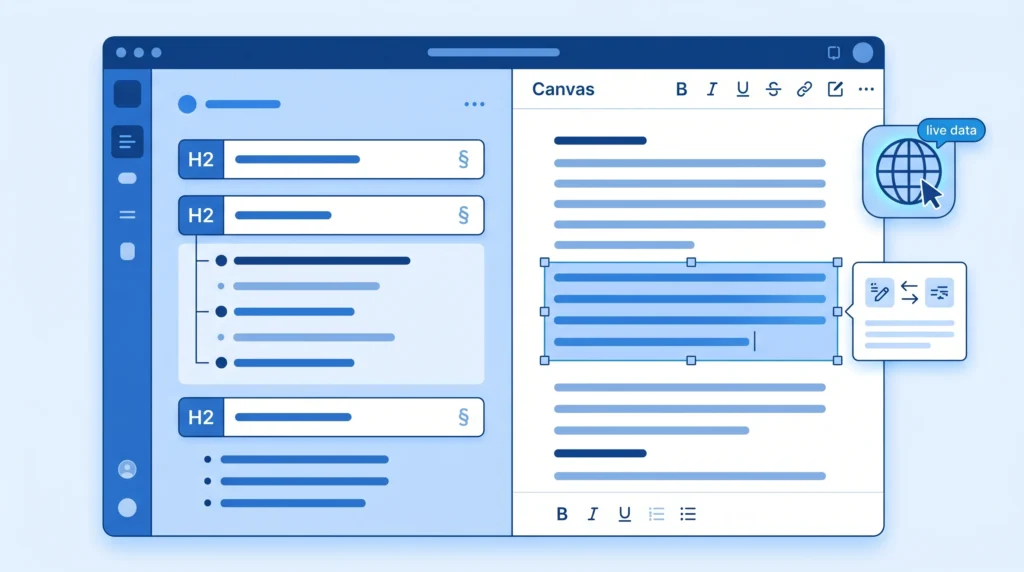
Where ChatGPT Still Leads for Writers
ChatGPT is the tool that most writers already have open, and for a specific category of writing, it is the right choice.
GPT-5.4 and 5.5 excel at structured, systematic content production. Listicles, how-to guides, comparison articles, FAQ sections, and step-by-step instructional content all benefit from ChatGPT’s natural tendency toward organized, headed sections and clear information hierarchy. If your writing is primarily informational content where structure serves the reader’s navigation, ChatGPT builds that structure intuitively.
Where ChatGPT’s writing advantage shows:
- Research-integrated content: With web search enabled, ChatGPT can gather current information and weave it into a draft in the same workflow. For articles that require recent statistics, current events, or up-to-date facts, this reduces the research-then-write process to a single step.
- Headlines, hooks, and short-form punchy content: ChatGPT produces stronger click-worthy headlines and opening hooks than Claude. It writes CTAs (calls to action) with more commercial urgency, which matters for marketing copy.
- Email sequences and marketing copy templates: For structured email flows where consistency of format matters more than creative distinctiveness, ChatGPT handles multi-email sequences reliably.
- Canvas collaborative editing: ChatGPT Plus’s Canvas feature provides a document editing environment where you can ask ChatGPT to revise specific paragraphs, adjust the tone of a section, or shorten a passage while keeping the rest intact. For iterative drafting, this workflow is significantly more efficient than copy-pasting between a chat interface and a word processor.
ChatGPT’s writing limitations:
Longer ChatGPT outputs tend to drift toward a recognizable style: consistent sentence length, predictable paragraph openings, and occasional overuse of transitional phrases (“In conclusion,” “It’s worth noting that,”) that experienced readers associate with AI-generated content. These patterns require editing on longer pieces; they are less apparent on shorter structured content.
Gemini 3.1 Pro: The Best AI for Writing When Research Comes First

Best AI for Writing in 2026 in Google Workspace: Gemini’s Structural Advantage
Gemini 3.1 Pro’s writing strength is inseparable from its research and integration capabilities. On pure prose quality, Claude leads. On structured, systematic output, ChatGPT competes closely. Gemini’s advantage for writers is specifically the combination of real-time research access and native Google Workspace integration.
Where Gemini leads for writing workflows:
- Research-heavy content: Gemini’s real-time web search and 2 million token context window means it can process an entire research library alongside a writing brief. For pieces that require synthesizing multiple sources (competitive analysis, industry reports, evidence-based articles), Gemini handles the research and drafting in a single session more efficiently than Claude or ChatGPT.
- Google Docs integration: Drafting proposals directly in Google Docs with Gemini’s assistance eliminates the copy-paste step entirely. For writers who live inside Google’s ecosystem, this integration saves meaningful time daily.
- Producing multiple ad variations at scale: For advertisers and marketing writers who need twenty variations of copy from a single brief, Gemini’s systematic variation approach produces diverse outputs without pattern repetition.
Gemini’s writing limitations:
Gemini’s prose has a slightly formal, structured quality that is difficult to suppress even with detailed tone instructions. For content that needs to sound conversational, personal, or distinctively voice-driven, it requires more editing than Claude to achieve the same result.
Free tier: Gemini 3 Flash is free through Google AI Studio. Gemini Advanced (Gemini 3.1 Pro) is $20/month through Google One AI Premium, and free for verified students through Google’s education program.
Jasper, Copy.ai, and the Honest Truth About Specialized AI Writing Tools

Are Specialized AI Writing Tools Worth Paying For in 2026?
This is the section that most comparison articles skip, and it is probably the most useful thing in this guide for anyone considering paying $49 to $99 per month for a specialized writing tool.
Jasper, Copy.ai, Writesonic, and similar platforms are not running their own language models. They access the same foundation models (Claude, GPT, Gemini) via API and layer a marketing workflow interface on top. What you are paying for at $49 to $99 per month is a template library, a brand voice enforcement system, a project management interface, and a team collaboration layer, not a fundamentally more capable writing AI.
When specialized tools are worth the cost:
- Marketing teams that need to enforce brand voice guidelines across multiple writers and enforce a specific content framework on every asset
- High-volume content operations where workflow automation and brief-to-draft pipelines across multiple team members justify the overhead
- Teams that need approval workflows, content calendars, and brand asset management integrated with their AI writing tool
When they are not worth it:
For individual writers, bloggers, freelancers, and solo business owners, $20/month on Claude Pro or ChatGPT Plus gives direct access to the same underlying AI quality that these specialized tools access, without the interface markup. The practical advice: start with Claude or ChatGPT directly. If you find yourself needing team workflows, brand enforcement, and publishing integration, then evaluate Jasper or Copy.ai for those specific workflow features, not for better writing quality.
For writers building income online, as described in the AI tools to make money online without investment guide, spending $49/month on a specialized tool before testing the $20/month direct access makes no financial sense.
Free AI Writing Tools: The Honest Assessment for Budget-Conscious Writers
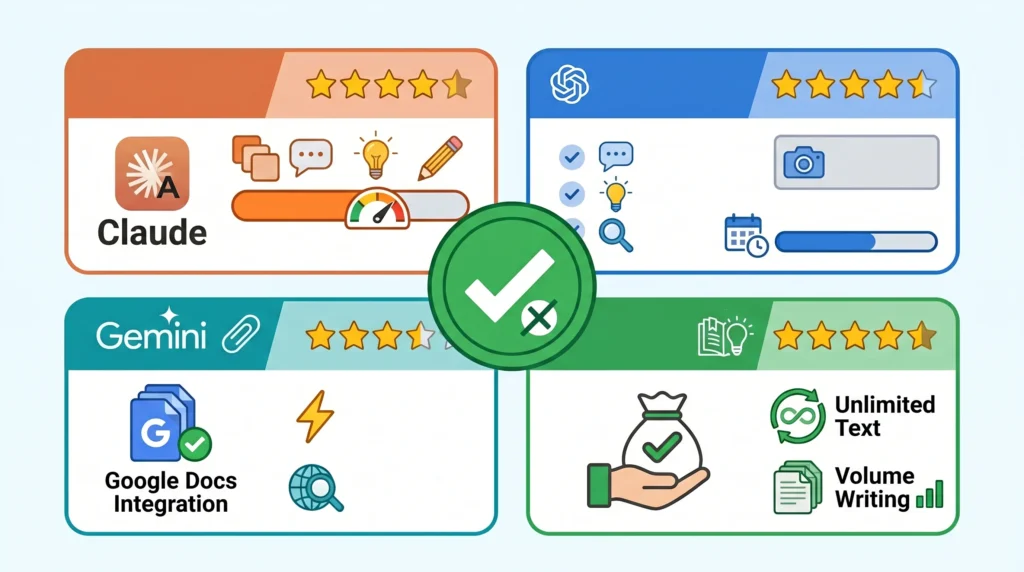
Many writers, particularly bloggers and students starting out, cannot or will not pay $20/month for a writing AI. Here is the honest free tier picture:
Claude Free Tier (Claude Sonnet 4.6):
The best free writing AI available in 2026 on output quality alone. Daily usage limits apply; most users hit them during intensive writing sessions. For one to three pieces of long-form content per day, the free tier is functional. The guide on best free AI tools for students covers this in more detail for academic writing contexts.
ChatGPT Free Tier (GPT-5.5 Instant):
Functional for shorter writing tasks and structured content. Daily limits apply. Image generation is available in limited quantities, which matters for content that requires accompanying visuals.
Gemini Free Tier (Gemini 3 Flash):
Adequate for shorter writing tasks and Google Docs-integrated work. Quality is lower than the free Claude or ChatGPT offerings on complex writing tasks, but the Google Workspace integration is valuable if your writing workflow is based in Google’s ecosystem.
DeepSeek V4 (Free via browser and API):
DeepSeek’s quality on writing tasks is competitive with Claude Sonnet and GPT-5.4 on most everyday content, at zero cost. For high-volume bloggers who need consistent, acceptable-quality writing output without paying for API access, DeepSeek is a genuinely useful free option.
Grammarly Free Tier:
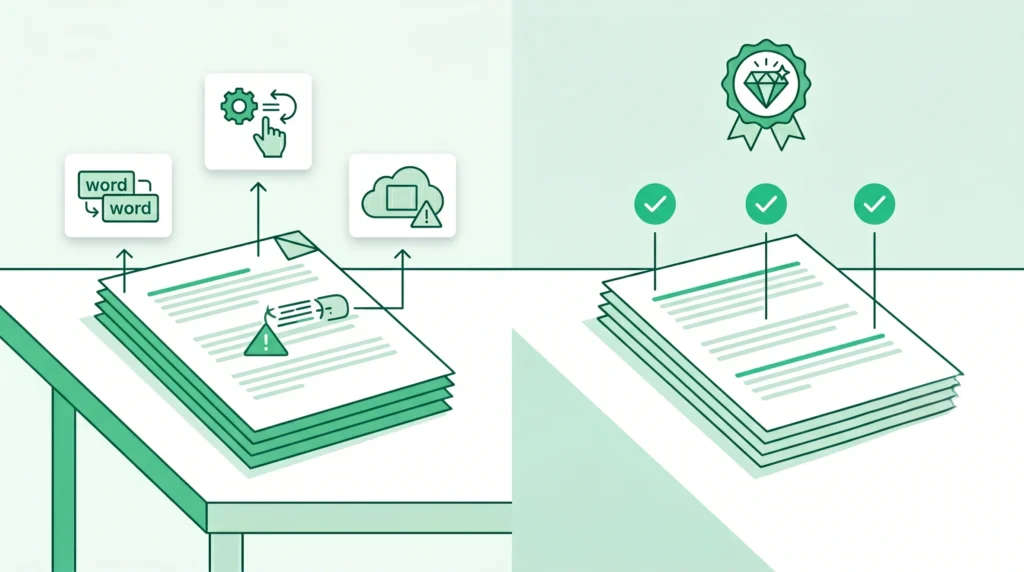
Not a writing AI in the generative sense; Grammarly does not produce prose. What it does is identify grammar errors, flag unclear sentences, and check tone on anything you have already written. The free tier covers the most important checks. Using it as a final pass on AI-generated content catches the subtle errors that make outputs look unedited. For anyone producing AI-assisted content for clients or publication, as described in the AI tools for freelancing on Fiverr and Upwork guide, Grammarly is worth adding to the workflow regardless of which writing AI you use.
The Writing Task Verdict: Which Tool to Use for What
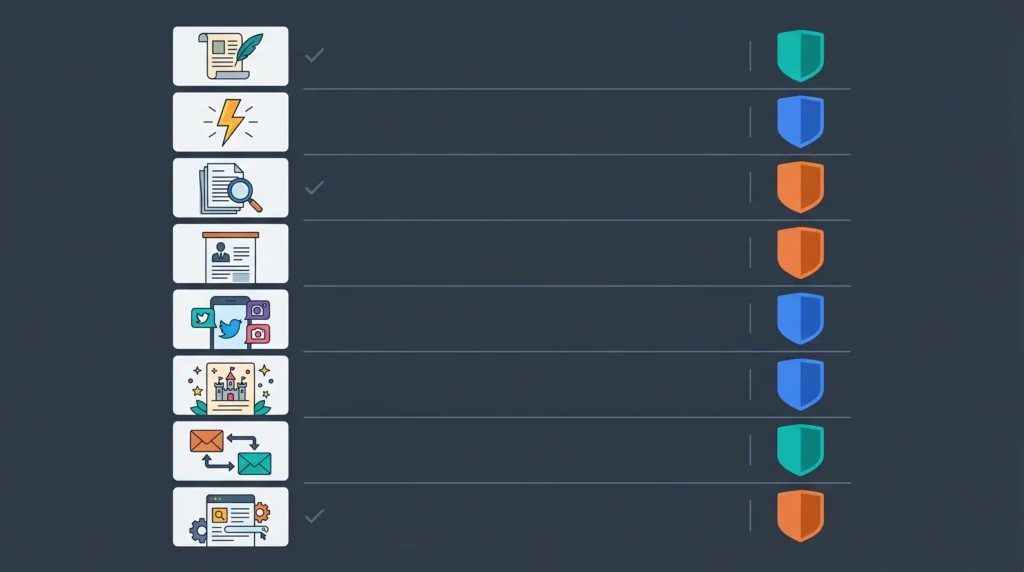
Long-form blog posts and articles: Claude Opus 4.7 or Sonnet 4.6. Consistent prose quality, best instruction following, and least editing required.
Marketing copy, headlines, and short-form punchy content: ChatGPT GPT-5.4. Stronger hooks, better CTA writing, punchier default tone for commercial content.
Research-heavy content requiring current sources: ChatGPT with web search, or Gemini 3.1 Pro for deep synthesis from multiple sources with Google Docs integration.
Client proposals and formal business writing: Claude. Precision on multi-constraint briefs and a natural professional tone set it apart.
Social media captions and short creative content: ChatGPT for casual punchy tone; Claude for thoughtful brand-voice content.
Creative writing and fiction: Claude leads for voice control, character dialogue, and narrative quality. Grok offers more permissive content generation for genres that ChatGPT declines.
Email marketing sequences: ChatGPT handles structured multi-email flows efficiently. Claude produces higher-quality individual emails when tone precision matters.
SEO-optimized blog content: Use Claude or ChatGPT for the draft, then layer in a dedicated SEO tool (Surfer AI, Semrush, or manual keyword optimization) for ranking signals. Neither model replaces a proper SEO content layer for competitive topics.
Academic writing and essays: Claude for analytical depth and argument structure; verified with your institution’s AI policy before submission.
The Optimal Writing Workflow in 2026

The most productive writers using AI tools in 2026 are not picking one model and using it for everything. They route by task, a pattern that most experienced AI users have settled into naturally.
A practical workflow for bloggers and content creators:
- Use ChatGPT (or Perplexity, for research-heavy work) to research the topic and gather current information
- Use Claude to draft the body content, particularly for longer pieces where voice quality matters
- Use ChatGPT to write the headline options and opening hook (three to five variations; pick the strongest)
- Run the draft through Grammarly for a final pass
- Add any images needed via a free image generation tool, as covered in the best free AI image generator for beginners guide
This workflow costs $20/month if you use Claude Pro and the free tier of the other tools, or $40/month if you use both Claude Pro and ChatGPT Plus. For anyone generating income through writing, as described in the new AI models in 2026: GPT-5, Claude 4, Gemini 3 guide, $20 to $40 per month in tool costs is recovered within a single client engagement.
Frequently Asked Questions
Q. Which AI writes the most natural, human-sounding content in 2026?
Claude Opus 4.7 and Sonnet 4.6 produce the most natural prose of any AI writing tool available in 2026. Sentence length variation, paragraph rhythm, and avoidance of the generic transitional phrases that signal AI-generated text are all consistently stronger in Claude than in ChatGPT or Gemini.
Q. Is Claude or ChatGPT better for blog writing specifically?
Claude for long-form blog posts where voice quality, argument coherence, and minimal post-editing matter. ChatGPT for structured blog formats (listicles, how-to guides, comparison posts) where systematic organization benefits from ChatGPT’s structural default. Most experienced blog writers use Claude for drafts and ChatGPT for headline generation and structure planning.
Q. Are Jasper and Copy.ai worth paying for in 2026?
For individual writers, no. Both tools access the same foundation models (Claude, GPT) via API and add a workflow interface on top. Claude Pro at $20/month or ChatGPT Plus at $20/month provides the same underlying writing quality at a fraction of Jasper’s cost. Jasper is worth evaluating for marketing teams that need brand enforcement, team collaboration, and workflow automation; not for individual writing quality.
Q. What is the best free AI tool for writing blog posts in 2026?
Claude’s free tier (Claude Sonnet 4.6 on Claude.ai) is the strongest free option for blog writing quality. Daily usage limits apply. For writers who hit the Claude limit, ChatGPT’s free tier (GPT-5.5 Instant) is a strong alternative. DeepSeek V4 is also a competitive free option for volume writing where API cost matters.
Q. Does Gemini write as well as Claude or ChatGPT?
Gemini 3.1 Pro performs well on structured, research-heavy content and leads on tasks where systematic variation and scale matter. For free-form, voice-driven prose, Claude consistently produces stronger output. The most practical Gemini writing advantage is its native Google Workspace integration, which matters for writers whose workflow lives in Google Docs.
Q. Can AI writing tools replace human writers?
Not in the sense of wholesale replacement, but they have changed what a single writer can produce. A skilled writer using Claude for drafts, ChatGPT for structure, and Grammarly for polish can produce at three to five times their previous volume without significant quality loss. What AI tools cannot replicate is genuine subject-matter expertise, original reporting, specific personal experience, and the editorial judgment to know what to include and what to cut.
Q. What is the best AI for writing marketing copy and advertisements?
ChatGPT GPT-5.4 for punchy, commercial short-form copy and email sequences. Claude for longer landing page body copy and brand-voice-consistent formal marketing content. Jasper AI for teams needing structured campaign workflows, not for better underlying output quality.
Q. Is Grammarly still worth using with AI writing tools in 2026?
Yes, for a specific purpose: catching the subtle errors that AI models produce in generated text, including inconsistent tense, awkward sentence constructions that are grammatically correct but read poorly, and tone mismatches between sections. Grammarly does not generate content; it polishes what is already written. For anyone publishing AI-assisted content professionally, it earns its place in the final review step.
Q. How do I avoid AI-sounding content when using these tools?
Give Claude or ChatGPT a “banned word list” in your prompt: words like “leverage,” “navigate,” “unlock,” “delve,” “comprehensive,” and “in today’s fast-paced world” are overrepresented in AI outputs and signal generated text to experienced readers. Specify sentence length variation explicitly (“vary sentence length from 8 to 30 words throughout”). Add one to two personal observations or specific examples that the AI cannot generate from its training data. These three steps cover the majority of what makes AI writing detectable.
Q. Which AI writing tool is best for non-native English speakers?
Claude and ChatGPT both handle writing assistance for non-native English speakers effectively. For grammar correction and tone polishing, Grammarly’s free tier adds significant value on top of AI-generated drafts. ChatGPT’s web search integration is particularly useful for non-native English writers who need to check whether specific phrases are natural usage.

Final Thoughts
The best AI for writing in 2026 is Claude for long-form prose quality, ChatGPT for structured and research-integrated content, and Gemini for Google-Workspace-integrated research-heavy writing. Those three positions have been consistent across independent evaluations and real-world writer workflows throughout 2026.
What has also become clear is that specialized tools at $49 to $99 per month offer workflow features on top of these same base models, not better writing. And that the free tiers of Claude and ChatGPT, used deliberately and within their limits, cover the majority of writing tasks that most individual writers and bloggers actually face.
The practical takeaway: if you write regularly and AI is part of your process, $20/month on Claude Pro is the single best investment you can make. If you research heavily and work in Google Docs, $20/month on Gemini Advanced is a close competitor. If you need images alongside your writing, ChatGPT Plus covers both at the same price point. Any of the three, used consistently with well-constructed prompts, reduces your writing time and improves your output quality. That is the real benchmark.