
How students can make money with ChatGPT and free AI tools in 2026 is one of the most searched income questions among university and college students right now, and the honest answer is better than most guides suggest: the methods are real, the tools are genuinely free, and the schedules are flexible enough to work around lectures, exams, and assignments.
The catch that most articles miss is the student-specific constraint. A freelancer with eight hours per day can follow almost any income guide online. A student with two to three available hours on a Tuesday, a full exam block on Thursday and Friday, and unpredictable free windows on weekends needs something different. The income methods need to flex around the academic calendar, not compete with it.
This guide covers six methods specifically chosen for students: limited time requirement, zero startup cost, income that can pause during exam periods without losing clients or momentum, and first payment achievable within days or weeks rather than months.
If you have read the guides on best free AI tools for students, AI tools to make money online without investment, Gemini vs ChatGPT for students, or how to make money with Gemini Omni free in 2026, you already have context on the tools involved. This guide focuses entirely on the student income angle: what actually fits a student’s schedule, and what realistic income looks like when you are balancing it with a full academic workload.
Why Student Income Is a Different Problem From General Freelancing
How Students Can Make Money With ChatGPT and Free AI Tools in 2026: The Time Constraint Reality
Most income guides are written for people with flexible schedules who can commit consistent daily hours. Students operate differently, and ignoring that difference is why so many students start a side hustle in September, abandon it before November’s exams, and never return to it.
The three constraints that make student income different:
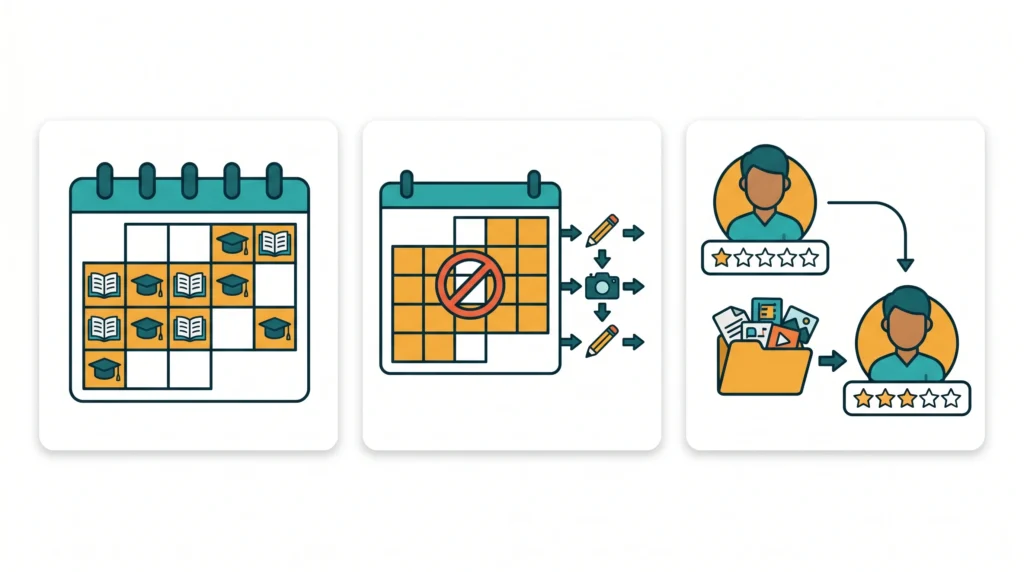
Time availability is unpredictable. A student might have six free hours on a Wednesday and zero on the following Monday. Any income method that requires a fixed daily schedule will break down during the academic year.
Exam periods eliminate availability entirely. Most professional freelancers can push through a busy week. Most students genuinely cannot work on a client project the day before a major exam without real consequences. Income methods for students need to either pause gracefully or be pre-built as passive income streams that continue regardless.
No existing portfolio or client history. The most common barrier for students starting on platforms like Fiverr is not skill; it is that they have zero reviews. Every method in this guide includes a specific strategy for getting that first review, which is the hardest step.
With those constraints understood, here are the six methods that consistently work within them.
Method 1: Freelance Writing on Fiverr Using ChatGPT Free

The Fastest Way Students Can Make Money With ChatGPT and Free AI Tools
Fiverr content writing is the method with the shortest path from starting to the first payment for students. The tools are free, the skill requirement is manageable for anyone who can write a coherent paragraph, and the time per order is low enough to fit around a class schedule.
Free tools required:
- ChatGPT free tier
- Grammarly free tier
- Fiverr free account
What to offer:
Keep the initial service narrow. “I will write a 500-word blog post for your business” is more effective than “I will write all types of content.” Narrow gigs attract specific buyers faster; they also require less setup time per order because the deliverable format is consistent.
Specific gig types that work well for students:
- Blog post writing for small businesses (500 to 1,000 words)
- Product description writing for e-commerce sellers
- LinkedIn profile summaries and post writing
- Email newsletters for service businesses
The student-friendly time structure:
A 500-word blog post with ChatGPT assistance, editing, and Grammarly polish takes 45 to 75 minutes. A student with two free hours can complete one full order and start the next. On an exam week, simply pause the gig availability in Fiverr settings; no client communication required, no reputation damage.
Realistic income:
- Entry level (0 to 10 reviews): $10 to $20 per post
- After 10 reviews: $25 to $50 per post
- At consistent volume (two to three orders per day): $400 to $900 per month
For the full Fiverr gig setup process, the AI tools for freelancing on Fiverr and Upwork guide covers every step from profile creation to proposal writing in detail.
Method 2: AI Social Media Management for Local Businesses

Weekend-Friendly Income That Works Around a Full Class Week
Social media management is particularly well-suited for students because the content batching model lets you work once per week (ideally on a weekend) and deliver content for the entire following week. During exam periods, content can be pre-scheduled two to three weeks ahead.
Free tools required:
- ChatGPT free tier (caption writing)
- Canva free tier (graphic design)
- Buffer free tier (scheduling up to three profiles)
The student-specific workflow:
Dedicate two to three hours on a Sunday to produce a full week of social media content for one client. ChatGPT generates the captions from a brief the client provides; Canva produces the graphics from templates; Buffer schedules everything to post automatically across the week. Once the Sunday session is complete, the client’s social media runs itself until the following weekend.
What to charge:
- One platform, four posts per week: $100 to $150 per month per client
- Two platforms, four posts each: $180 to $250 per month
- Two clients at $150 per month: $300 in recurring income
Managing exam periods:
Notify clients two weeks before a major exam that you will pre-schedule three to four weeks of content in advance. Most clients are happy with this arrangement; it also demonstrates professional planning. Pre-scheduling ensures income continues even during weeks when you cannot actively work.
Method 3: Selling AI-Generated Study Templates and Resources

How Students Can Make Money With ChatGPT By Helping Other Students
ChatGPT can turn messy lecture notes into polished study guides; students can sell each guide for $5 to $20 via Gumroad or Notion links. This method is worth examining carefully because it sits at an important boundary: selling your own AI-assisted study materials is legitimate income; selling AI-generated answers to specific academic assessments is academic dishonesty. This guide covers only the former.
What counts as legitimate study templates:
- Subject-specific revision guides: summarized frameworks for common exam topics in a discipline
- Flashcard sets for vocabulary-heavy subjects: medical terminology, legal definitions, language learning
- Essay planning templates: structural frameworks for common essay types in your faculty
- Problem-solving worksheet templates: blank frameworks for math or science problem sets
- Study schedule and productivity planner templates
None of these sells answers to specific assessments. They sell structures, frameworks, and organized summaries that help students study more effectively, a market that has existed for decades in physical textbook form.
Free tools required:
- ChatGPT free tier (content creation and structure)
- Canva free tier (formatting and design)
- Gumroad free account (listing; takes a percentage per sale)
Realistic income:
- One subject revision guide priced at $5 to $15: 20 sales per month = $100 to $300
- A library of five to ten guides across multiple subjects: $200 to $700 per month passively
- During exam periods, when student demand peaks, sales can double or triple
This method produces passive income that continues during exam periods without any active work, making it uniquely suited to the student income model.
Method 4: AI-Powered Tutoring for Other Students

Combining Your Academic Knowledge With Free AI Tools
Student tutoring has always been a natural income source because the subject knowledge exists already, and the market is your immediate peer network. In 2026, AI tools extend what one student tutor can offer: real-time explanation generation, alternative worked examples on demand, and visualization of concepts that previously required drawing ability or specialist software.
Free tools required:
- ChatGPT free tier (generating alternative explanations, worked examples)
- Gemini free tier (research and current information lookup)
- Google Meet or Zoom free tier (video sessions)
What AI adds to tutoring specifically:
When a tutee does not understand an explanation, a human tutor has to reformulate it on the spot. ChatGPT generates five different explanations of the same concept instantly, which the tutor selects or adapts from. This makes tutoring sessions significantly more productive per hour and allows a student tutor to confidently handle questions slightly outside their core specialization.
Pricing:
- Per-hour tutoring: $10 to $25 per hour, depending on subject level
- Per-session package (four sessions): $40 to $90 per package
- Online tutoring via platforms like Superprof or Tutorful: additional exposure beyond your immediate network
Time requirement: One to two sessions per week of one hour each represents $20 to $50 per week, or $80 to $200 per month, with minimal preparation time beyond reviewing the subject before each session.
For the broader toolset that helps students use AI for academic work itself, the guide on best free AI tools for students covers all the free study tools available in 2026.
Method 5: Canva AI Graphic Design for Campus Organizations

Building a Portfolio While Earning From Day One
Campus organizations, student clubs, sports teams, faculty departments, and event committees all need graphic design work: posters, social media graphics, event banners, and presentation materials. Most of them have no budget for professional designers and no one with design skills on the committee.
A student with basic Canva knowledge and an understanding of their campus context can offer this service and build a portfolio with documented real-world work simultaneously.
Free tools required:
- Canva free tier (design tool)
- Adobe Firefly free tier (custom AI-generated backgrounds and elements)
How to start:
Approach two or three campus organizations you are already connected with. Offer to create their next event poster for free in exchange for a testimonial and permission to include it in your portfolio. Three strong campus design samples with real organization names attached are more convincing to first paying clients than most other types of portfolio work.
Once the portfolio has three to five pieces, move to paid work: other campus organizations, local businesses near campus, student startup projects, and eventually Fiverr gigs targeting event poster design.
Realistic income:
- Campus clients: $15 to $40 per design
- Small local business clients: $25 to $75 per design set
- At two to three orders per week: $150 to $450 per month
Method 6: AI-Assisted YouTube Tutoring Channel

The Long-Term Passive Income Method That Uses Your Degree
A YouTube channel teaching content from your academic subject area is the only method in this guide with a long payoff timeline, but it is also the only one that generates passive income indefinitely from work done during your student years. A well-produced explanation video for a common exam topic continues attracting views, years after it was posted.
Free tools required:
- ChatGPT free tier (script writing and structure)
- Gemini Omni Flash via YouTube Create (visual content generation)
- CapCut free tier (basic video editing)
- YouTube (free to publish; monetizes after Partner Program thresholds)
What works on a student tutoring channel:
Specific, high-search exam topics perform better than broad subject overviews. “How to solve integration by parts with three worked examples” will attract more targeted searches than “calculus for beginners.” Use Google’s free keyword planner or YouTube’s search suggestions to identify what students in your subject are actively searching for.
Time investment:
One video per week, 8 to 15 minutes, takes two to four hours, including scripting with ChatGPT, recording or generating visuals, and basic editing. This fits into a student’s schedule over two evenings.
Timeline to income:
YouTube Partner Program requires 1,000 subscribers and 4,000 watch hours (or 10 million Shorts views). For a niche tutoring channel with consistent uploads, this typically takes four to eight months. The payoff is passive: once videos rank, they continue generating ad revenue without further work.
For Gemini Omni Flash’s specific role in creating short-form YouTube content at zero cost, the guide on how to make money with Gemini Omni free in 2026 covers the complete workflow.
Managing Income Around Exam Periods Without Losing Clients
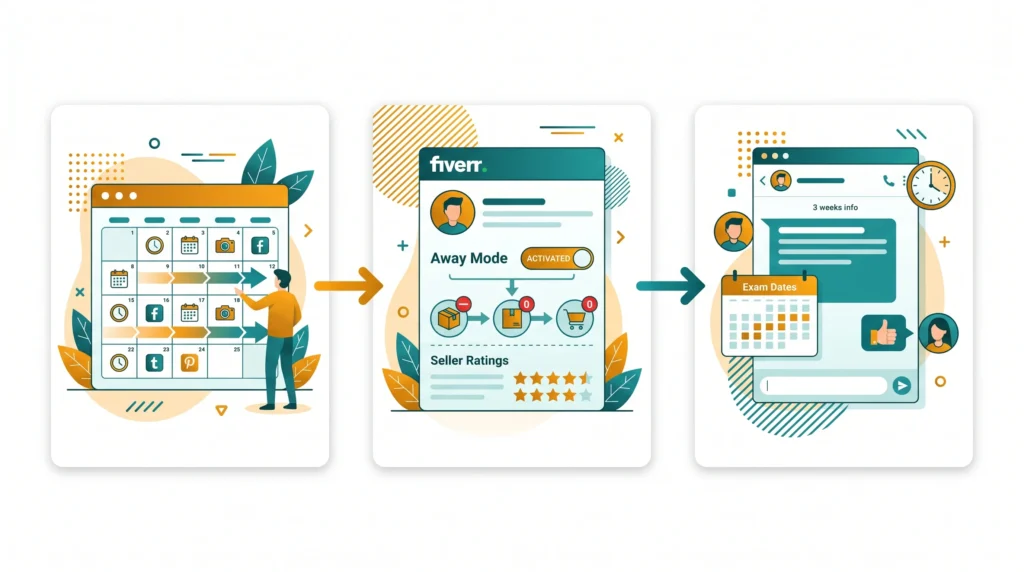
This is the practical problem that every student who starts a side hustle eventually faces, and it is worth a direct answer rather than ignoring it.
Strategies that work:
- Pre-schedule social media content: Three to four weeks ahead of any exam block, content is ready to post automatically.
- Pause Fiverr gig availability: Fiverr allows sellers to set themselves as “Away,” which stops new orders without affecting existing reviews or account standing.
- Communicate in advance: Clients who know three weeks ahead that you will not be available during a specific period are far more accommodating than clients told at short notice.
- Build passive income streams alongside active ones: Study template sales and YouTube views continue during exams without any active work.
The students who maintain long-term side income through their academic years are not the ones who never take breaks; they are the ones who plan those breaks into their workflow rather than discovering them as emergencies.
Academic Integrity: The Clear Line Every Student Must Know
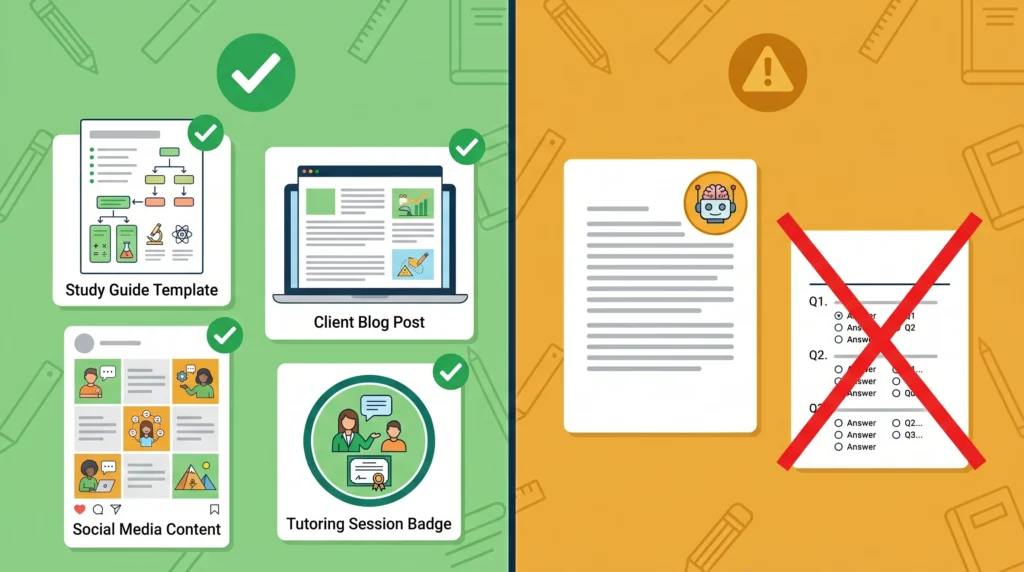
This section is not optional to read. Using AI to earn income outside academic work is legitimate and unrelated to academic integrity. Using AI to complete academic assessments without disclosure, where your institution requires original work, is a different matter entirely.
The clear boundary:
- Using ChatGPT to write client content, produce social media posts, or create templates for sale: completely separate from academic work, no integrity issue
- Using ChatGPT to complete a submitted assignment without disclosure, where your institution prohibits this: an academic integrity violation regardless of intent
- Selling AI-generated study guides and revision frameworks: legitimate; these do not answer specific assessment questions for specific courses
- Creating AI-generated answers to specific exam questions for sale to other students: an integrity violation, both for you and potentially for the buyer
These lines are clear. The income methods in this guide all sit cleanly on the legitimate side of that line.
Frequently Asked Questions
Q. How much can a student realistically earn per month with ChatGPT and free AI tools?
With two hours of work per day, $200 to $600 per month is a realistic first-month target across most of the methods above. By month three with established clients or growing digital product sales, $500 to $1,200 per month is achievable. These figures require consistent effort; they are not passive from day one.
Q. Which method works best for students with very limited time (under one hour per day)?
Study template selling on Gumroad (Method 3) requires the least ongoing time once the initial templates are created. Initial creation takes four to eight hours total; after that, income is largely passive. The YouTube channel (Method 6) also becomes passive once videos are published, though building it requires initial upfront work.
Q. Can students use ChatGPT to write content for clients without disclosing the AI use?
For most freelance content work, AI assistance is a standard part of professional workflows in 2026. Most clients care about the quality of the delivered content, not the production method. For specific client engagements where a client explicitly requires human-only writing, disclose your workflow honestly upfront. When in doubt, ask.
Q. What is the best platform for a student to start selling services with no experience?
Fiverr for service-based income (writing, design, social media): the platform allows sellers to list and receive orders without prior credentials. Gumroad for digital product income (study templates, prompt packs): free to list, no prior sales history required. Both have zero upfront cost.
Q. How do students handle clients during exam periods?
The most effective approach: communicate exam schedules to clients at the start of the engagement, pre-schedule social media content before exam blocks, and pause Fiverr gig availability during exam weeks. Clients who know your schedule in advance are almost always accommodating.
Q. Is selling study guides made with ChatGPT allowed by universities?
Selling your own AI-assisted study materials (revision guides, flashcard sets, template planners) is a personal commercial activity unrelated to academic submission. It does not violate academic integrity policies at any institution. What those policies govern is your own submitted academic work, not commercial products you create independently.
Q. Which free AI tool should students prioritize learning first?
The free AI stack that powers real student income includes ChatGPT free for writing and scripting, Canva free for design, and Claude free for long-form content and analysis. Of these, ChatGPT is the highest-priority starting point because it supports the most income methods directly: writing, tutoring support, social media content, script writing, and template creation.
Q. How does AI tutoring income compare to traditional tutoring income?
Per-hour rates are similar ($10 to $25 per hour for students). The difference is session quality and capacity: AI tools help tutors generate alternative explanations instantly and handle questions slightly outside their expertise, which leads to better sessions, higher client retention, and more referrals over time. The income ceiling is therefore higher with AI-assisted tutoring than with traditional methods at the same hourly rate.
Q. Can a student build a full-time income from these methods before graduating?
Yes, though it requires significant time investment and typically takes 12 to 18 months to reach full-time income levels. Most students who do this treat it as a parallel track: part-time income during study years that becomes full-time after graduation. The skills built, the portfolio of client work, and the online income systems created during student years are valuable regardless of whether the income reaches full-time levels before graduation.
Q. Is Gemini better than ChatGPT for student income methods?
For most writing and content production methods: either works. The specific comparison for student use cases is covered in depth in the Gemini vs ChatGPT for students guide. For YouTube Shorts content creation specifically, Gemini Omni Flash (free via YouTube Create) adds a video generation capability that ChatGPT does not have on its free tier.

Final Thoughts
Students can genuinely make money with ChatGPT and free AI tools in 2026. The methods are real, the tools are free, and the schedule flexibility is specifically suited to the irregular availability that academic life creates.
What makes the difference between students who build consistent income and those who try for a month and stop is straightforward: starting with one method matched to existing skills, working that one method consistently for 60 days before evaluating, and planning exam breaks into the workflow from the beginning rather than treating them as disruptions.
The tools are not the obstacle. Time management and consistency are the actual variables. Both are within a student’s control from the first week.