
Claude vs Gemini: which is better in 2026 is the comparison that surprisingly few articles have answered directly. Most guides that rank for this phrase are either three-way ChatGPT comparisons that treat Gemini and Claude as supporting characters, or they were written before Gemini 3.1 Pro and Claude Opus 4.7 both launched and changed the data significantly.
This guide compares them directly, for actual work: writing, coding, research, context window use, multimodal tasks, pricing, and Google Workspace integration. No ChatGPT inserted as a baseline. No fence-sitting verdict. Each category gets an honest winner, the reasoning behind it, and the specific type of professional or use case that winner applies to.
The short version, before the detail: Claude wins on quality; Gemini wins on breadth and price. For code, technical writing, and precision work, choose Claude. For research, multimodal tasks, and budget-friendly API calls, choose Gemini.
That summary is accurate but incomplete. The full picture matters for making the right decision, because the gap in some categories is decisive while in others it barely exists.
If you have read the guides on ChatGPT vs Claude: which AI assistant is actually better in 2026, new AI models in 2026: GPT-5, Claude 4, Gemini 3, best AI model for coding in 2026: Claude vs GPT vs Gemini, Gemini vs ChatGPT for students, or Perplexity AI vs ChatGPT: which is better for research in 2026, you already have context on how these models fit into the broader 2026 AI landscape. This guide focuses entirely on the two-tool Claude vs Gemini comparison that those broader articles could not fully address.
Two Different Philosophies, Two Different Strengths

Claude vs Gemini 2026: Understanding the Fundamental Difference
Before comparing features, understanding what each model was built to do prevents the most common mistake in this comparison: expecting Claude to be as ecosystem-deep as Gemini, or expecting Gemini to be as precise and crafted as Claude.
Claude excels at depth and precision; Gemini wins on breadth and integration. Claude is built by Anthropic with a focus on writing, reasoning, and careful instruction-following. Gemini is built by Google DeepMind with native multimodal capability and deep integration across Google’s ecosystem.
Claude writes and reasons like a contractor who reads the brief carefully and delivers exactly what was asked. Gemini processes information like a system with a photographic memory and direct access to everything Google knows. Neither description is an insult; they represent genuinely different strengths that match different types of work.
Writing Quality: Claude’s Most Consistent and Decisive Advantage

Claude vs Gemini: Which is better in 2026 for writing?
Yes, and the gap is consistent enough across independent evaluations to be definitive for anyone whose work depends on written output.
Claude writes like a skilled human writer on a good day. It varies sentence rhythm, avoids the formulaic transitions that signal AI-generated text, and follows complex style guides more faithfully. Writers, marketers, and content teams consistently rank Claude higher for output quality.
The specific ways this advantage shows up in real writing work:
- Instruction precision: Tell Claude to write formally, address three specific client concerns, and keep the tone confident without being aggressive; it delivers all three simultaneously without defaulting to a template. Instruction-following is where Claude separates itself from every competitor, Gemini included. Tell Claude to “only modify the database layer, don’t touch the API routes,” and it follows that constraint. Gemini is more likely to offer helpful suggestions beyond the scope you defined.
- Long-form coherence: For documents above 800 words, Claude maintains argument structure, voice, and internal consistency more reliably. The structural drift that appears in Gemini’s longer outputs, where later sections lose the tone established in the opening, is noticeably less common in Claude.
- Avoiding generic filler: Gemini’s prose tends toward a formulaic, report-like style that requires more editing to sound natural. Claude’s default output is closer to polished first-draft quality for most content types.
For freelance writers, content creators, and professionals regularly producing client deliverables as described in the AI tools for freelancing on Fiverr and Upwork guide, Claude’s writing advantage directly reduces revision time and improves deliverable quality per engagement.
Writing verdict: Claude, clearly and consistently. The gap is largest on long-form, voice-driven, and instruction-constrained writing.
Coding: Claude Leads Quality, Gemini Leads on Some Benchmarks
Claude vs Gemini for Coding: Which One Developers Actually Prefer
The coding comparison in 2026 is more nuanced than either side’s marketing suggests.
The benchmark data reveal a clear pattern: Claude leads on coding and instruction-following tasks while Gemini leads on reasoning, math, and multilingual capabilities.
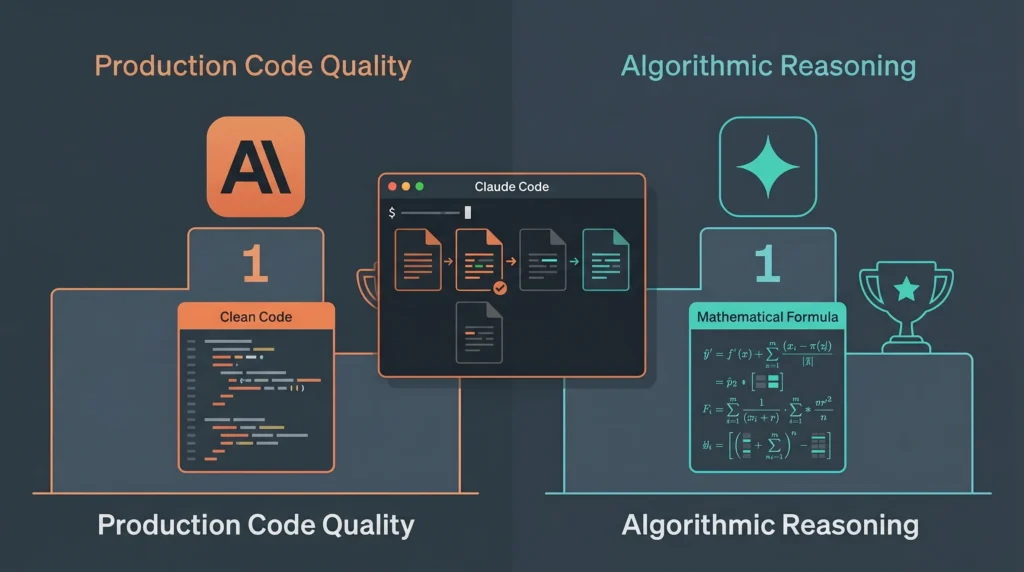
On SWE-bench Verified, which tests the resolution of real GitHub issues from production repositories, Claude Opus 4.7 leads with strong performance on complex multi-file issues. Gemini 3.1 Pro leads LiveCodeBench, which tests competitive programming problems and novel algorithmic reasoning.
What this split means practically:
- For production development work: Claude produces cleaner, more idiomatic code. Claude’s code is cleaner, more idiomatic, and closer to what a senior developer would write. When you are building production systems, that quality gap compounds across hundreds of interactions.
- For algorithmic and competitive programming: Gemini 3.1 Pro’s LiveCodeBench lead is relevant here; its mathematical reasoning and novel problem-solving capability is genuinely strong.
- Claude Code (terminal-based agent): This is a practical differentiator that no benchmark captures. Claude Code gives Claude a unique advantage for developers: it is a terminal-based agent that reads your codebase, runs commands, writes code, and executes tests autonomously. This agentic workflow is included in the Claude Pro plan at $20/month and has no direct equivalent in Gemini’s standard consumer offering.
- Gemini CLI: Google’s terminal-based coding agent integrates particularly well with Google Cloud infrastructure, which is relevant for teams already running on GCP.
For the detailed benchmark breakdown including GPT comparisons, the best AI model for coding in 2026: Claude vs GPT vs Gemini guide covers this in full depth.
Coding verdict: Claude for production code quality and agentic development via Claude Code. Gemini for algorithmic reasoning and teams embedded in Google Cloud infrastructure.
Context Window: Gemini’s Clearest Practical Advantage

Gemini vs Claude Context Window: What 1 Million Tokens Actually Means
This is the category where Gemini’s lead is most clear-cut and least contested.
Gemini wins clearly on the context window. If your work involves large document sets, entire codebases, or corpus-scale analysis, Gemini’s 1 million token context is a genuine capability that Claude does not offer at the standard paid tier. For most standard tasks, Claude’s 200K is more than sufficient, but if you regularly exceed that, Gemini is the only practical option at the $20/month tier.
Claude Opus 4.7 introduced a 1 million token context window in beta at the Claude Max tier ($100 to $200/month). At the standard Claude Pro level ($20/month), the context window is 200K tokens. Gemini Advanced at $19.99/month includes 1 million tokens as the standard offering.
When the context window difference matters:
- Processing an entire large codebase in one session
- Analyzing a full year of company documents alongside a research question
- Working with book-length documents, extensive legal contracts, or multi-report research compilations
- Long multi-turn conversations that reference information from early in the session without losing it
When it does not matter for your workflow:
For most everyday tasks, including writing an article, debugging a function, drafting an email, or analyzing a single document, neither a 200K nor a 1 million token limit is the constraint. The context window advantage is decisive for specific power-use cases; less relevant for the majority of daily tasks.
Context window verdict: Gemini, clearly, at the $20/month price tier. This is the most important specification advantage Gemini holds over Claude for users who regularly work with large volumes of material simultaneously.
Multimodal Capabilities: Gemini Leads by a Structural Margin

Claude vs Gemini Multimodal: Images, Video, and Audio
Multimodal capability, meaning the ability to process and reason about non-text inputs, is an area where the comparison is straightforward.
Gemini 3.1 is natively multimodal: it processes images, video, audio, and code in a single prompt. Claude 4.6 handles images and documents well, but lacks native video and audio understanding. If your workflow involves analyzing screenshots, diagrams, or video content, Gemini has a clear edge.
Gemini Advanced at $19.99/month also includes:
- Imagen 3 for AI image generation
- Veo for AI video generation
- Google Lens integration for real-world object recognition
- Native YouTube video analysis
Claude has no image generation capability at any tier, no video generation, and no audio processing in standard chat mode. For users who need these capabilities alongside text, Gemini is the only option between these two.
Multimodal verdict: Gemini, decisively. For any workflow involving visual content creation, video analysis, or audio processing, Claude is not a viable comparison.
Google Workspace Integration: A Decisive Factor for Specific Users

Gemini’s Google Ecosystem Advantage in 2026
For professionals whose entire workflow runs through Google’s tools, the integration advantage is not a minor convenience; it changes the comparison fundamentally.
Gemini Advanced integrates natively with Google Docs, Sheets, Slides, Gmail, Drive, Meet, and Google Classroom. Reviewing a Google Doc, generating a presentation from a Drive file, summarizing a Gmail thread, analyzing a Google Sheets dataset: all of this happens within the tools you are already using, without any copying, pasting, or application switching.
Claude does not have native Google Workspace integration. The Claude for Google Workspace add-on exists but is less comprehensive than Gemini’s built-in integration. For professionals using Google as their daily productivity environment, this matters in every working session rather than occasionally.
Choose Gemini if you work inside Google Workspace, need real-time search, or want the most affordable top-tier plan for heavy use.
Claude integrates natively with Cursor and Windsurf (coding IDEs) and provides Claude Code for terminal-based development, which matters more for developers than for general knowledge workers.
Integration verdict: Gemini for Google Workspace users. Claude for developers using AI-integrated code editors.
Pricing: API Costs, Free Tiers, and $20/Month Plans
Claude vs Gemini Pricing in 2026: Where Each Tool Offers Better Value
At the consumer subscription level, both tools cost approximately $20/month. The value each plan provides differs significantly.
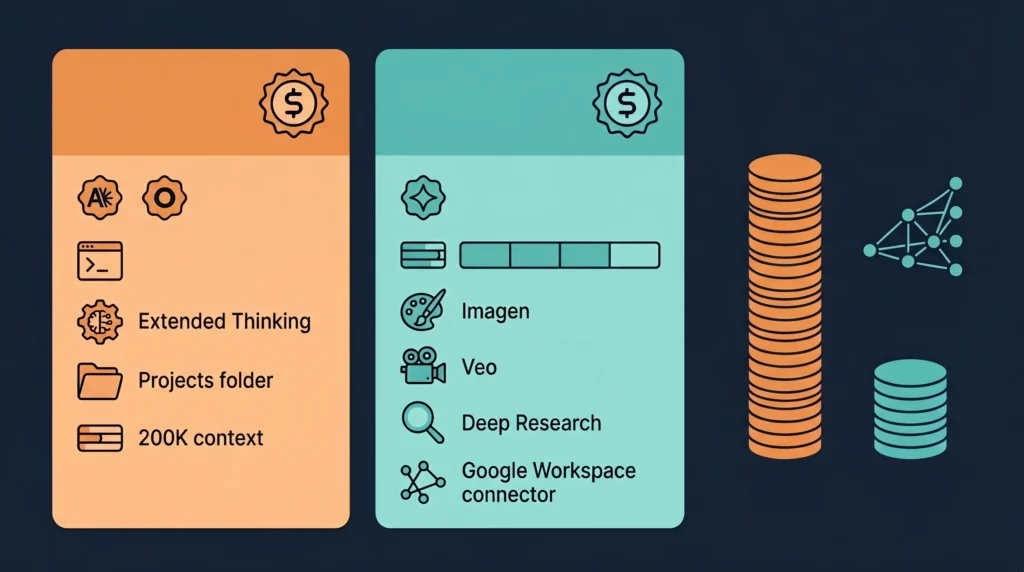
Claude Pro at $20/month:
- Claude Sonnet 4.6 and Opus 4.6 access (5x usage limits vs free)
- Claude Code: terminal-based coding agent
- Extended Thinking mode: visible reasoning chain before final answer
- Projects: persistent, organized context by client or topic
- 200K token context window
Gemini Advanced at $19.99/month (Google One AI Premium):
- Gemini 3.1 Pro: near-top-tier reasoning model
- 1 million token context window
- Image generation via Imagen 3
- Video generation via Veo
- Deep Research mode
- Full Google Workspace integration
- Google Search grounding for real-time information
At the API level, the pricing gap is significant for teams running high-volume workloads:
Claude Pro costs $20 per month or $17 with annual billing. Gemini Advanced costs $19.99 per month as part of Google One AI Premium.
For API pricing, Gemini 3.1 Pro at $7 per million input tokens and $21 per million output tokens is meaningfully cheaper than Claude Opus 4.6 at $15/$75 per million tokens. For teams processing large volumes through the API, this cost difference is substantial over a month of usage.
For individual users on a tight budget, as covered in the AI tools to make money online without investment guide, Gemini’s free tier is more generous: Gemini Flash is free with fewer restrictions than Claude’s free tier, and the standard Gemini 3.1 Pro quality is available at a comparable cost to Claude Pro.
Pricing verdict: Even at $20/month each, Gemini offers more features per dollar. At the API level, Gemini is significantly cheaper for equivalent quality. For individual quality-focused users, Claude Pro’s depth justifies the cost if writing and coding are primary use cases.
Research and Real-Time Information
Claude does not have web search integrated in the same seamless way that Gemini does. Gemini Advanced includes Google Search grounding by default: answers are augmented with current web information automatically, without requiring a separate search mode to be enabled.
Claude’s web search is available but less consistently integrated. For research tasks requiring current information, the Perplexity AI vs ChatGPT: which is better for research in 2026 guide covers the full research tool landscape; between Claude and Gemini specifically, Gemini’s real-time grounding is the more reliable default for current information.
Privacy and Data Handling
For professionals using AI with client information, sensitive documents, or confidential business data, privacy defaults matter.
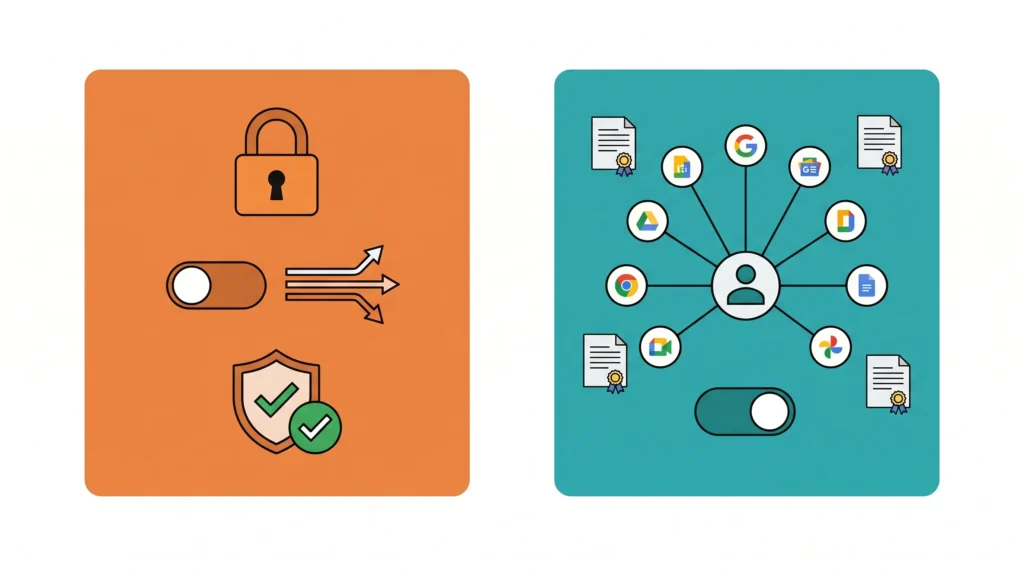
Claude’s privacy defaults are more conservative: Anthropic does not use conversations to train models by default, and the data handling is designed for professional and sensitive use contexts.
Gemini integrates with Google’s broader ecosystem, which provides significant functionality but also means data handling is subject to Google’s privacy policies. For users already committed to Google Workspace, this is typically acceptable; for users with strict data confidentiality requirements, Claude’s more conservative approach may be the deciding factor.
The Verdict: Which Tool for Which Professional
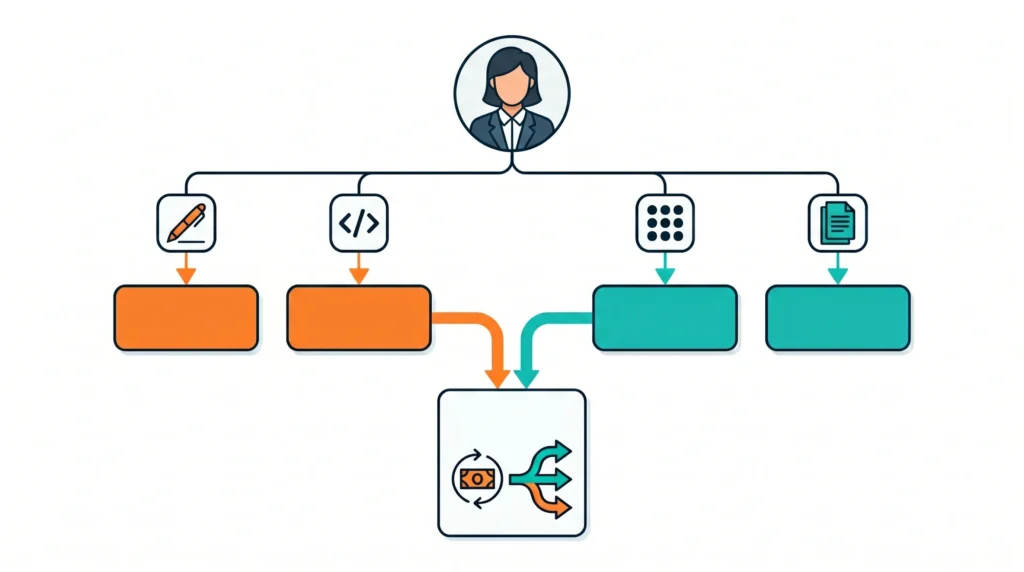
Use Claude as your primary tool if:
- Writing quality, precision, and tone control are central to your work
- You are a developer doing serious production coding or refactoring
- You use Cursor, Windsurf, or Claude Code as your development environment
- Privacy defaults matter for your client or business data
- Complex instruction-following on multi-constraint tasks is a regular need
Use Gemini as your primary tool if:
- You work primarily inside Google Workspace (Docs, Sheets, Gmail, Slides)
- Your work regularly involves large documents, entire codebases, or multi-report analysis that exceeds 200K tokens
- You need image or video generation alongside text work
- Real-time Google Search grounding is important for your research workflow
- You are managing API costs at scale and need frontier quality at a lower per-token cost
Use both when: The most common combination in 2026 is Claude for code and precision writing, plus Gemini for search and Google Workspace productivity. This combination, at $40/month combined, gives access to the best available precision tools and the best available ecosystem integration simultaneously.
Frequently Asked Questions
Q. Is Claude better than Gemini overall in 2026?
Neither is universally better. Claude leads in writing quality, instruction-following precision, and production coding. Gemini leads on context window size, multimodal capabilities, Google Workspace integration, and API cost efficiency. The better tool depends entirely on your primary work type.
Q. Which has the larger context window, Claude or Gemini?
Gemini Advanced at $19.99/month includes a 1 million token context window. Claude Pro at $20/month includes a 200K token context window. Claude Opus 4.7 offers 1 million tokens, but at the Claude Max tier ($100 to $200/month). For the context window at the standard paid tier, Gemini wins clearly.
Q. Is Claude or Gemini better for coding in 2026?
Claude leads SWE-bench Verified for real-world issue resolution and produces cleaner, more idiomatic production code. Gemini leads LiveCodeBench for novel algorithmic reasoning and competitive programming. For production software development and agentic coding via Claude Code, Claude is the stronger choice.
Q. Does Gemini have better Google Workspace integration than Claude?
Yes, substantially. Gemini Advanced is natively integrated with Google Docs, Sheets, Gmail, Drive, Slides, and Google Classroom. Claude has a Google Workspace add-on, but it is less comprehensive than Gemini’s built-in integration. For users who work primarily in Google tools, Gemini’s integration is a decisive practical advantage.
Q. Which free tier is better: Claude or Gemini?
Gemini’s free tier is more generous. Gemini Flash is available with fewer usage restrictions than Claude’s free tier. Both provide meaningful access at zero cost; Gemini’s is the more capable option for users who cannot upgrade to a paid plan.
Q. Can Gemini generate images and video that Claude cannot?
Yes. Gemini Advanced includes Imagen 3 for image generation and Veo for video generation. Claude has no image or video generation capability at any subscription tier. For users whose workflow includes visual content creation alongside text, Gemini is the only option between these two tools.
Q. Which AI is cheaper: Claude or Gemini?
At the consumer subscription level, both are approximately $20/month. At the API level, Gemini 3.1 Pro at $7/$21 per million input/output tokens is significantly cheaper than Claude Opus 4.6 at $15/$75 per million tokens. For teams processing large API volumes, Gemini’s cost advantage compounds meaningfully.
Q. Is Claude better than Gemini for content writing and blogging?
Yes. Claude consistently produces more natural, varied, and publication-ready prose. The output requires less editing, follows complex style briefs more precisely, and avoids the formulaic transitional phrases that are common in Gemini’s writing output. For bloggers and content creators as described in the best AI for writing in 2026 guide, Claude is the strongest writing tool.
Q. Does privacy matter when choosing between Claude and Gemini?
For users with sensitive client data or confidential business information, Claude’s more conservative privacy defaults are a practical consideration. Anthropic does not use conversations to train models by default. Gemini’s data handling is subject to Google’s privacy policies, which are acceptable for most users but more permissive than Claude’s defaults.
Q. Should I use Claude or Gemini for research tasks?
Gemini has an advantage here through Google Search grounding, which provides real-time current information by default. For research requiring the most rigorous source verification and citation quality, the Perplexity AI vs ChatGPT: which is better for research in 2026 guide covers the dedicated research tool comparison. Between Claude and Gemini specifically, Gemini’s live search integration makes it the more reliable default for research involving recent information.

Final Thoughts
Claude vs Gemini in 2026 is one of the more useful comparisons in the AI landscape precisely because these two tools are genuinely different rather than minor variations of each other. Claude is the tool you want when quality, precision, and craft matter more than breadth. Gemini is the tool you want when ecosystem integration, large context, multimodal capability, and cost efficiency are the priorities.
For most individual professionals, the choice comes down to a single question: Is your daily work more about producing high-quality written and coded output (Claude), or is it more about processing and analyzing large amounts of information within an existing Google workflow (Gemini)?
Both tools are genuinely capable at the frontier level. Neither choice is wrong. The right answer is the one that matches the specific work you do most often.