
The best AI tools for doctors to reduce paperwork in 2026 are not the ones featured in hospital boardroom presentations. They are the ones a solo GP, a small clinic owner, or a busy specialist can actually set up in an afternoon, use from the first patient visit, and afford without a procurement committee sign-off.
Here is the reality that most articles on this topic miss entirely: the AI tools being written about most loudly are enterprise platforms priced at $600 to $1,200 per provider per month. Those tools are designed for large health systems with dedicated IT departments. They are genuinely impressive, but they are not what a doctor running a fifteen-patient daily schedule needs when they are still writing notes at 9 pm and wondering why they went into medicine.
Doctors spend, on average, two hours on administrative tasks for every one hour of direct patient care. That ratio is not sustainable. It drives burnout, reduces the quality of patient interactions, and ultimately affects the care that patients receive. The tools in this guide address that ratio directly, at price points that make sense for individual practitioners and small practices.
If you have already read the guides on AI tools that replace a virtual assistant and best free AI tools for students (particularly relevant for medical students), you will recognize the pattern: AI tools are most valuable when they target the most time-consuming, repetitive tasks first. In clinical practice, those tasks are documentation, scheduling, patient communication, and information lookup. This guide covers all four.
Why Paperwork Is Quietly Damaging Patient Care More Than Most Doctors Admit

Best AI Tools for Doctors to Reduce Paperwork: Understanding the Real Problem First
Before covering tools, it is worth being honest about what excessive documentation actually costs, not in money, but in the things that brought most people into medicine.
When a doctor spends forty-five minutes after the clinic completing notes for a six-hour session, the cost is not just time. Attention and recall degrade across that gap. Details that felt clear in the consultation room become approximations two hours later. The note that should reflect a precise clinical interaction becomes a reconstruction rather than a record.
More importantly, when patients sense that their doctor is distracted by documentation obligations during the visit itself, whether glancing at a screen, typing while listening, or cutting the conversation short to stay on schedule, the therapeutic relationship suffers. Trust takes longer to build, history-taking becomes less thorough, and patients leave with less clarity about their care.
AI documentation tools do not replace clinical judgment. They handle the structural, repetitive work of converting a clinical conversation into a formatted record, which frees the physician to be fully present during the encounter itself.
Best AI Scribes for Doctors: From Solo Practice to Small Clinic
Best AI Tools for Doctors to Reduce Paperwork: The Medical Scribe Category
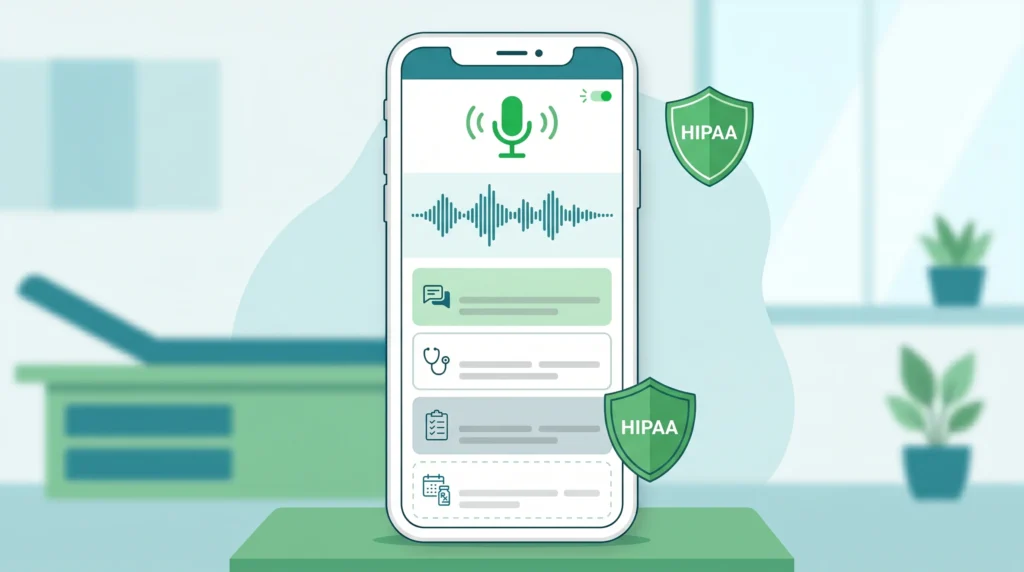
An AI medical scribe listens to the conversation between doctor and patient, either in real time or from a recording, and generates a structured clinical note automatically. The doctor reviews, edits if necessary, and approves; the entire process takes two to three minutes instead of fifteen to twenty.
Freed AI ($99/month, Free Trial Available):
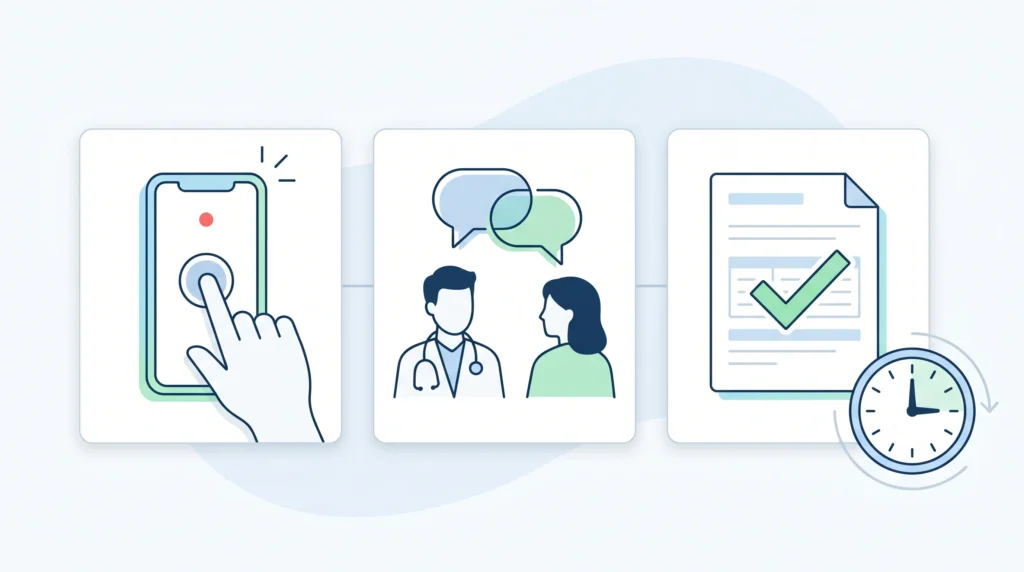
Freed is built specifically for solo practitioners and small practices. Setup requires no IT support: create an account, open the app on any device, press record at the start of the consultation, and a SOAP-format note is ready before the patient has left the building. The note adapts to each doctor’s style over time, learning preferred phrasing, abbreviations, and specialty-specific terminology.
What makes Freed particularly suitable for non-enterprise settings:
- No EHR integration required: copy the finished note into any system
- HIPAA compliant; patient recordings are not stored after note generation
- Works on any device: phone, tablet, or laptop
- $99 per month with no long-term contract; free trial available to test before committing
Heidi Health (Free Tier + Paid from ~$50/month):
Heidi Health offers one of the most generous free tiers in the AI scribe category, making it the natural starting point for doctors who want to test the technology before paying anything. The free tier produces good-quality clinical notes with slightly more post-generation editing than the paid tier.
Key advantages for solo and small-clinic use:
- Free tier available; paid plans start at approximately $50 per month
- Strong template library across multiple specialties
- Multilingual support: particularly useful for clinics serving diverse patient populations
- Active user community sharing and refining specialty-specific templates
PatientNotes ($50-$70/month):
PatientNotes sits at the most affordable end of the serious AI scribe market. It supports more than thirty specialties, produces HIPAA-compliant notes, and is designed specifically for individual clinicians rather than health systems. For practices where budget is the primary concern and quality needs to be adequate rather than enterprise-grade, PatientNotes represents a practical entry point.
AI Tools for Patient Scheduling: Reclaiming the Time Lost to Phone Tag
How Scheduling AI Gives Doctors Back Their Administrative Hours
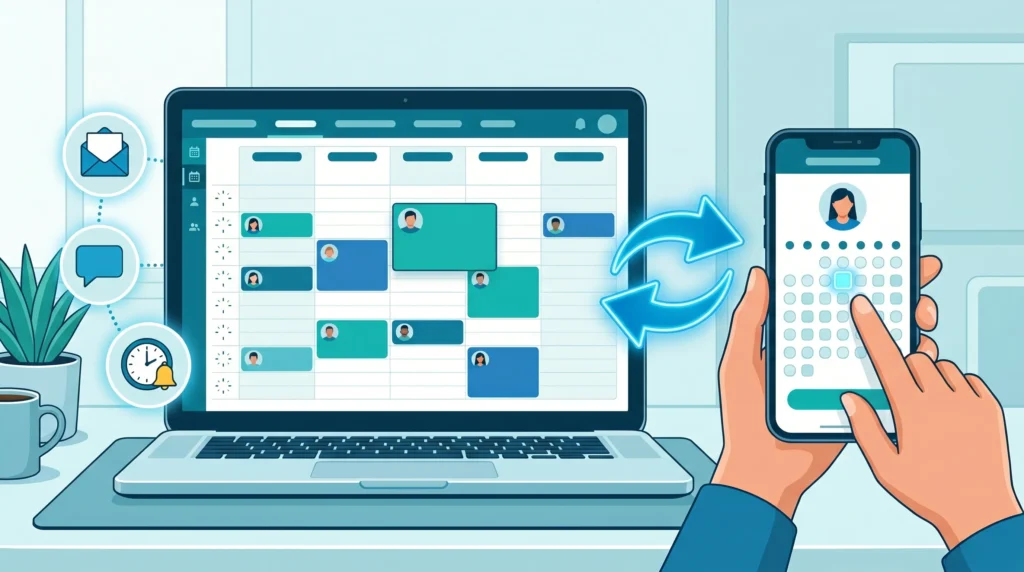
Beyond documentation, scheduling is the second largest administrative time sink in most clinical practices: incoming calls, appointment confirmations, cancellation management, and follow-up calls for patients who do not show. AI scheduling tools handle all of this automatically, without requiring a receptionist to be available for each interaction.
The guide on AI tools that replace a virtual assistant covers scheduling AI in detail for general business use; the tools below are specifically relevant to medical practice contexts.
Calendly (Free Tier + Paid from $10/month):
For private practitioners, telehealth consultants, and specialists who manage their own bookings, Calendly eliminates the back-and-forth of appointment scheduling entirely. Patients select from available slots directly; the appointment appears in both calendars automatically, with confirmation and reminder messages sent without any manual action.
Relevant for clinical use:
- Automated reminder emails and SMS reduce no-show rates without staff involvement
- Buffer times between appointments can be set automatically, preventing the overrun that leads to late-running clinics
- Integration with Google Calendar, Outlook, and most EHR-adjacent scheduling systems
For doctors managing complex schedules across clinical sessions, administrative work, research time, and personal commitments, Reclaim AI automatically protects time blocks based on set priorities. If a meeting is moved, Reclaim adjusts the rest of the schedule downstream to maintain balance between clinical and non-clinical demands.
ChatGPT for Doctors: The Most Underused Tool in Clinical Practice
Best AI Tools for Doctors: Using ChatGPT Practically and Safely
Most conversations about ChatGPT in healthcare focus on what it cannot do: it cannot diagnose, it cannot replace clinical judgment, and it should not be used with identifiable patient information. All of that is correct. What is less discussed is the substantial category of things it can do extremely well for clinical practice, without any of those concerns.
Patient education materials:
Writing a clear, accessible explanation of a new diagnosis is time-consuming. A doctor who has just spent twenty minutes with a patient explaining Type 2 diabetes management does not need to spend another fifteen minutes writing out a take-home information sheet. ChatGPT can produce a clear, accurate, plain-language summary of almost any condition, medication, or procedure in seconds; the doctor reviews it, adjusts for the individual patient’s circumstances, and hands it over.
Prompt example: “Write a plain-language explanation of metformin for a newly diagnosed Type 2 diabetic patient. Include what it does, how to take it, common side effects, and what to watch for. Keep it at a sixth-grade reading level.”
Referral and correspondence drafting:
Referral letters follow predictable structures. A doctor who writes fifteen referrals per week is repeating roughly the same structural work fifteen times. ChatGPT, given the relevant clinical details, produces a professional first draft that requires editing rather than composition, saving ten to fifteen minutes per referral letter without introducing any patient data into the tool.
Clinical information lookup:
For non-critical, non-diagnostic information queries, such as checking drug interaction categories, reviewing dosing guidelines for common medications, or understanding the general framework of a condition outside one’s specialty, ChatGPT provides a fast first reference. It should always be confirmed against current clinical guidelines for any decision that affects patient management, but as a rapid orientation tool for the non-specialist, it is genuinely useful.
Important note on patient data: Never enter identifiable patient information into any general AI tool, including ChatGPT’s standard interface. Use these tools for template creation, education material drafting, and general information; not for processing real patient data.
AI Tools for Prescription Reminders and Patient Follow-Up
Reducing Non-Adherence and Missed Follow-Ups with Affordable Automation
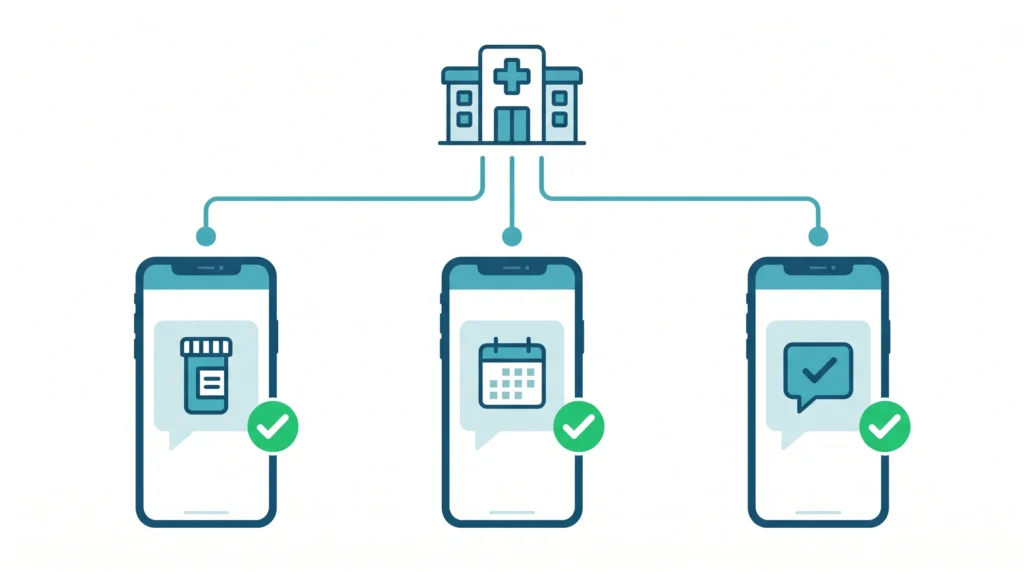
Medication non-adherence is one of the most significant factors in poor chronic disease outcomes. Patients who do not take prescribed medications as directed, or who miss follow-up appointments, generate more acute presentations, more emergency visits, and ultimately more clinical complexity. AI-powered communication tools address this at scale without requiring staff time for each individual reminder.
Klara and Similar Patient Communication Platforms:
Klara is a patient communication platform that automates appointment reminders, follow-up messages, and prescription reminder workflows. The free or low-cost tier is adequate for small practices. Patients receive automated messages via SMS or email; responses route to the practice without requiring a dedicated phone line to be staffed.
WhatsApp Business with Automation (Free):
For practices in regions where WhatsApp is the dominant communication channel, WhatsApp Business, combined with free automation tools like Tidio or ManyChat allows automated appointment reminders, post-visit follow-up messages, and FAQ responses to be sent to patients without manual staff involvement. The setup requires approximately two hours of initial configuration and runs continuously thereafter.
The AI tools that replace a virtual assistant guide cover the broader category of customer communication automation; the same principles apply directly to patient communication workflows in a clinical setting.
Clinical Decision Support: Free Tools Worth Knowing About
AI Clinical Decision Support That Individual Doctors Can Actually Access
Enterprise clinical decision support tools are priced for hospitals. The following are accessible to individual practitioners without institutional access:
Uptodate (Subscription, ~$600/year per individual):
Not an AI tool in the generative sense, but the most comprehensive, evidence-based clinical reference available for individual practitioners. The recent AI-assisted search features make it significantly faster to navigate and find relevant guidance. For specialists and generalists who need current evidence-based guidance at the point of care, the individual subscription price is justified by the clinical value.
OpenEvidence (Free for Verified Clinicians):
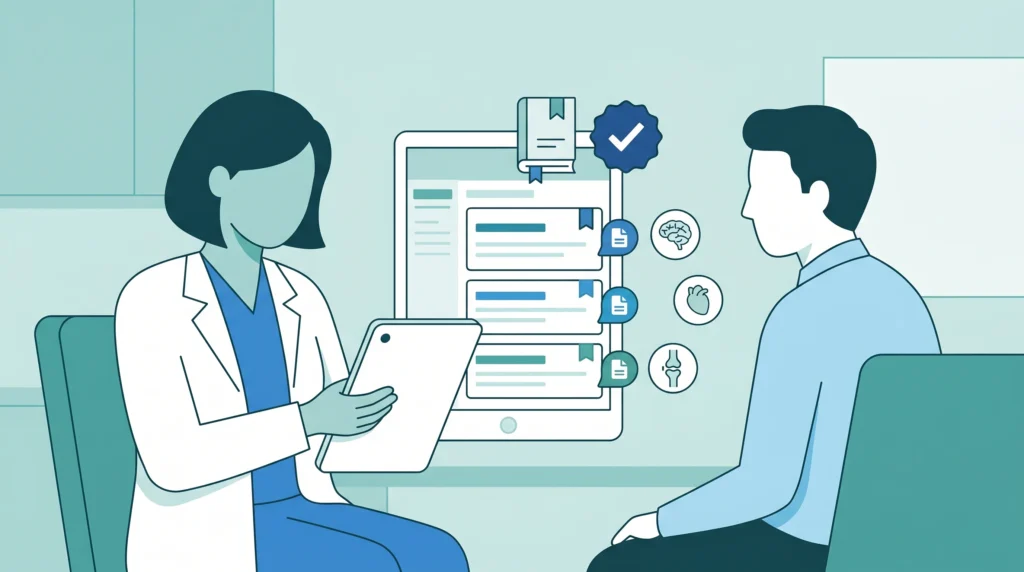
OpenEvidence provides AI-generated clinical answers drawn from peer-reviewed medical literature, with source citations. It is HIPAA-compliant and free for verified clinicians. The tool is particularly useful for literature-level queries: what does current evidence say about a specific treatment approach, what are the most recent guidelines on a particular condition? Source accuracy can vary where medical literature is sparse, so it is best used as a rapid orientation tool rather than a definitive reference.
Tali AI (Free Tier + Paid from ~$50/month):
Tali AI combines AI scribe functionality with an “Ask a medical question” feature, allowing doctors to query diagnostic criteria, treatment options, and clinical guidelines hands-free during consultations. For practitioners who want both documentation assistance and clinical reference support in a single tool, Tali provides both at a price point accessible to solo practitioners.
Data Privacy and Security: What Every Doctor Must Confirm Before Using Any AI Tool
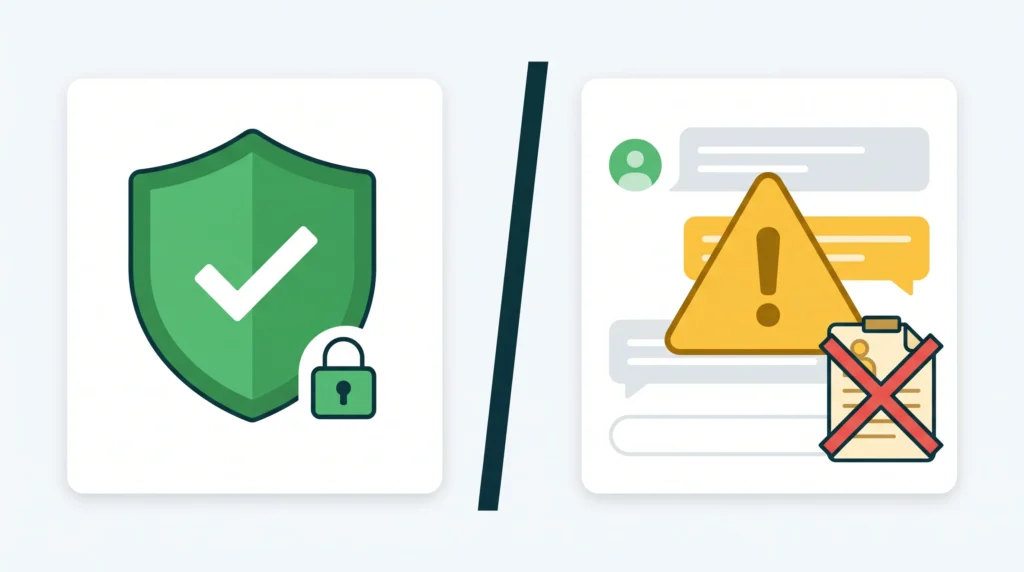
This section is not optional reading. Using AI tools in clinical practice without understanding their data handling creates patient privacy risks and potential regulatory exposure that can be serious, regardless of the tool’s other merits.
The questions to ask before using any AI tool in clinical practice:
- Is the tool HIPAA compliant (or compliant with the relevant data protection regulation in your region)?
- Where is patient data stored, and for how long?
- Does the tool use patient interactions to train its models?
- What happens to data if you stop using the service?
The practical guidance:
Tools like Freed, Heidi Health, and Tali AI are explicitly designed for clinical use and are HIPAA compliant. General-purpose tools like ChatGPT’s standard interface are not designed for clinical use and should never process identifiable patient information. The distinction is straightforward: purpose-built medical AI tools have appropriate data handling by design; general AI tools do not, regardless of their other capabilities.
How to Start Without Disrupting Your Current Workflow
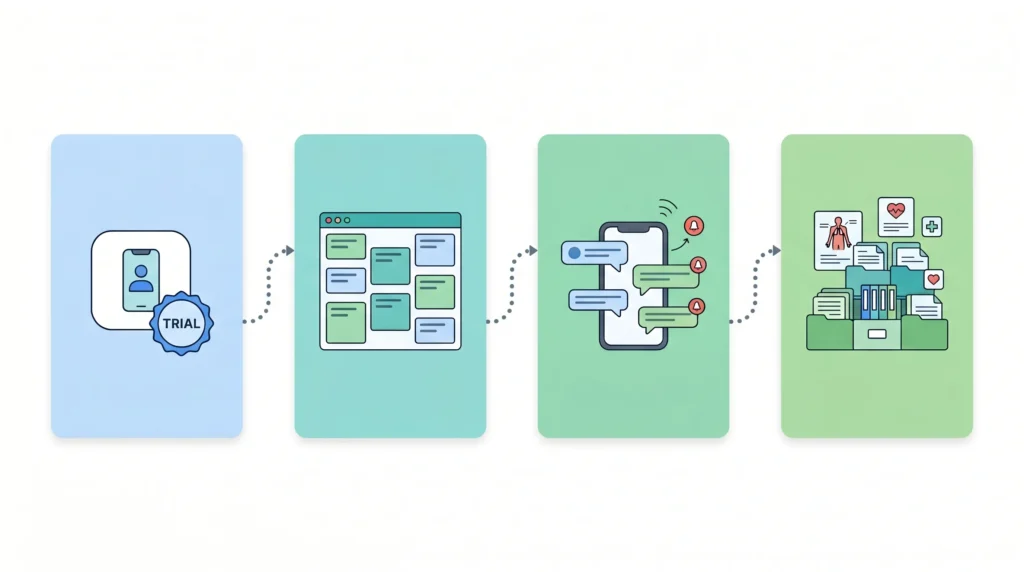
Starting with AI tools in clinical practice does not require changing everything at once. The approach that works consistently for busy practitioners:
- Week 1: Install Heidi Health’s free tier. Use it for five consultations. Compare the generated notes against what you would have written. Assess accuracy and the editing time required.
- Week 2: If the note quality is adequate, use it for an entire clinic day. Calculate the time saved on documentation.
- Week 3: Set up automated appointment reminders via Calendly or your existing booking system. Measure the change in no-show rate over four weeks.
- Week 4: Use ChatGPT to draft three patient education materials for your most commonly discussed conditions. Review and personalize each one. Build a library over time.
The cumulative effect of these four changes, without any single dramatic workflow overhaul, typically recovers two to four hours per week for most practitioners within the first month.
For medical students reading this alongside the best free AI tools for students guide, the documentation and research tools covered here are directly relevant to clinical placements and will become increasingly important throughout your career. Familiarity with AI documentation workflows is rapidly becoming a standard professional competency.
Frequently Asked Questions
Q. Are AI medical scribes accurate enough to use without extensive editing?
The best tools in 2026, including Freed and Heidi Health on their paid tiers, report 92 to 96 percent accuracy on clinical notes. In practice, this means most notes require minor edits rather than substantive rewrites. The editing time is significantly less than the composition time for notes written from scratch, which is where the time saving occurs. Accuracy improves further as the tool learns each individual clinician’s style over the first few weeks of use.
Q. Can I use ChatGPT for clinical work without violating patient privacy?
Yes, with a clear boundary: use ChatGPT for tasks that do not involve identifiable patient information. Drafting patient education templates, generating referral letter structures, and looking up general medical information are all appropriate uses. Entering a patient’s name, date of birth, or specific clinical details is not appropriate in any general-purpose AI tool. Purpose-built clinical AI tools with HIPAA compliance are the correct choice for tasks that involve real patient data.
Q. What is the most affordable way to start with AI documentation tools?
Heidi Health’s free tier is the most accessible starting point: no payment required, reasonable note quality, and enough capability to assess whether AI documentation fits your workflow before committing to a paid plan. If the free tier demonstrates clear time savings, the paid upgrade at approximately $50 per month is justified by the first week of time recovered.
Q. Will AI tools eventually replace the doctor-patient relationship?
No, and the framing misunderstands what these tools actually do. AI documentation tools remove the administrative layer between doctor and patient; they do not replace the clinical interaction itself. A doctor using an AI scribe is more present during the consultation, not less: they are not typing or dividing attention between the patient and a screen. The documentation happens in the background. The relationship, the judgment, the clinical decision, all of that remains entirely with the physician.
Q. Do these tools work for all medical specialties?
Most major AI scribes support multiple specialties, with specialty-specific note templates for primary care, internal medicine, psychiatry, orthopedics, dermatology, and others. Tools like DeepScribe and PatientNotes are particularly strong for specialty-specific documentation. General-purpose scribes like Freed work well across most outpatient specialties; complex procedural or surgical documentation may require specialty-specific tools or more post-generation editing.
Q. How does using AI tools help with doctor burnout specifically?
Burnout in clinical practice is substantially driven by administrative load rather than clinical work itself. Surveys of physicians consistently show that documentation, prior authorizations, and administrative follow-up generate more dissatisfaction than patient care does. AI tools that reduce documentation time directly address the specific element of the workload that most contributes to burnout, without changing the clinical work that most doctors entered the profession to do. For a broader look at how AI handles administrative workloads across professions, the AI tools that replace a virtual assistant guide covers the same principles in a non-clinical context.

Final Thoughts
The best AI tools for doctors to reduce paperwork in 2026 are not the ones that require a hospital IT department to deploy. They are the ones that a single motivated clinician can install, test, and integrate into practice within a week, without a procurement process, a training seminar, or a six-month implementation timeline.
Freed and Heidi Health for documentation; Calendly and Reclaim AI for scheduling; ChatGPT for patient education and correspondence drafting; and OpenEvidence for clinical reference: these tools together address the four largest administrative time drains in most clinical practices, at a combined monthly cost significantly less than a single hour of a locum physician’s billing rate.
The goal is not to automate medicine. It is to give the time back that medicine has quietly been taking from the people who practice it, one SOAP note at a time.