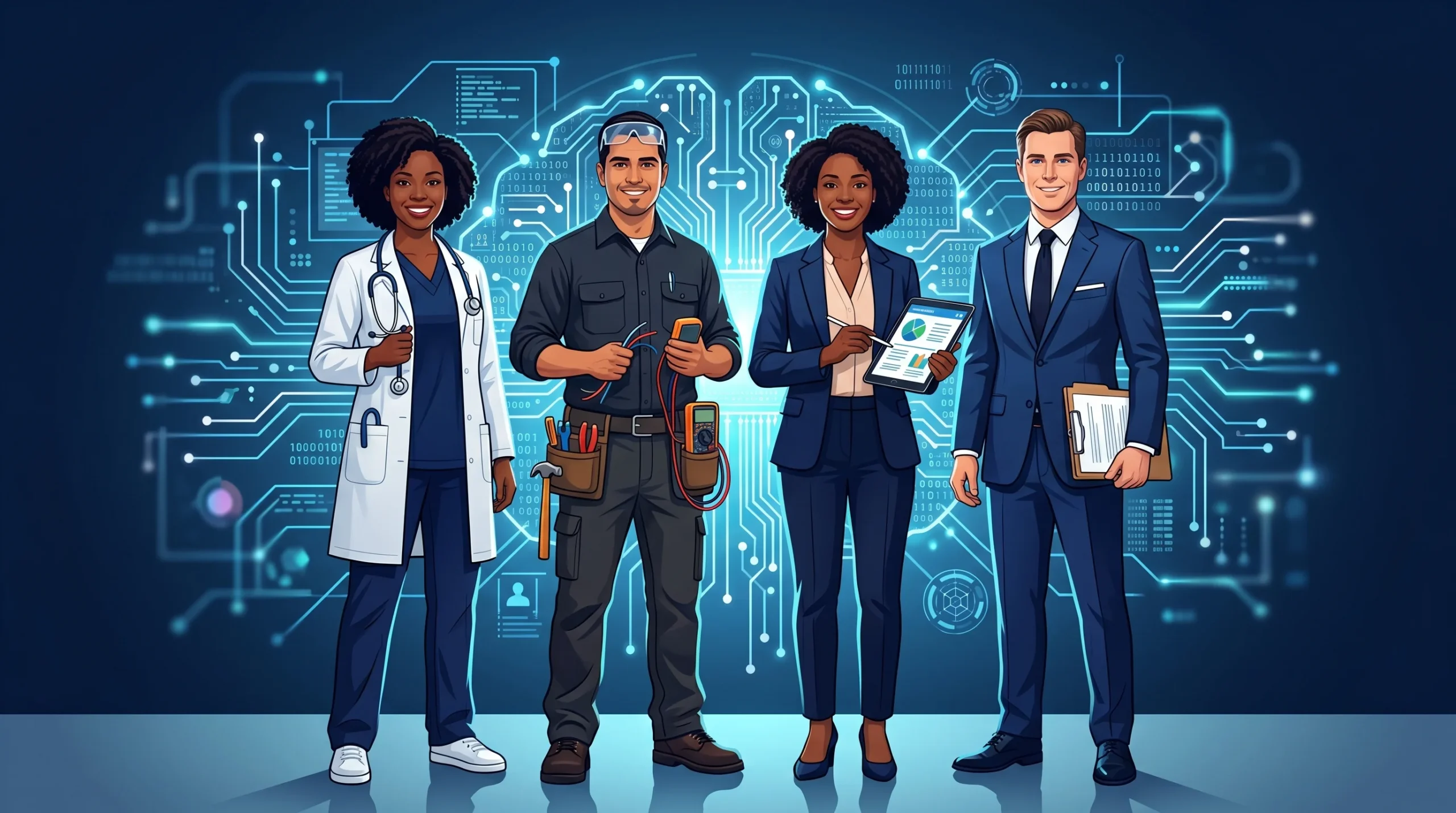
Which jobs are safe from AI in 2026 is one of the most searched career questions on the internet right now, and honestly, the concern behind it is completely fair. Over the past twelve months, GPT-5, Claude 4, Gemini Omni, and dozens of specialized AI systems have reshaped entire industries at a pace nobody predicted. Writers, data analysts, customer support agents, and basic coders are already feeling the pressure. So it makes sense that people across every profession are asking: ” Am I next?
Here is the part most articles skip: AI is not wiping out all jobs. It is sorting them. Some roles are becoming automated; others are becoming more valuable precisely because AI cannot touch them. The professionals who understand this distinction, and who know how to layer AI tools on top of their work, are earning more in 2026 than they ever did before.
This guide covers both sides: the careers that are structurally protected from AI replacement, and the specific tools each professional can use to boost their income starting today.
What Actually Determines Which Jobs Are Safe From AI in 2026?
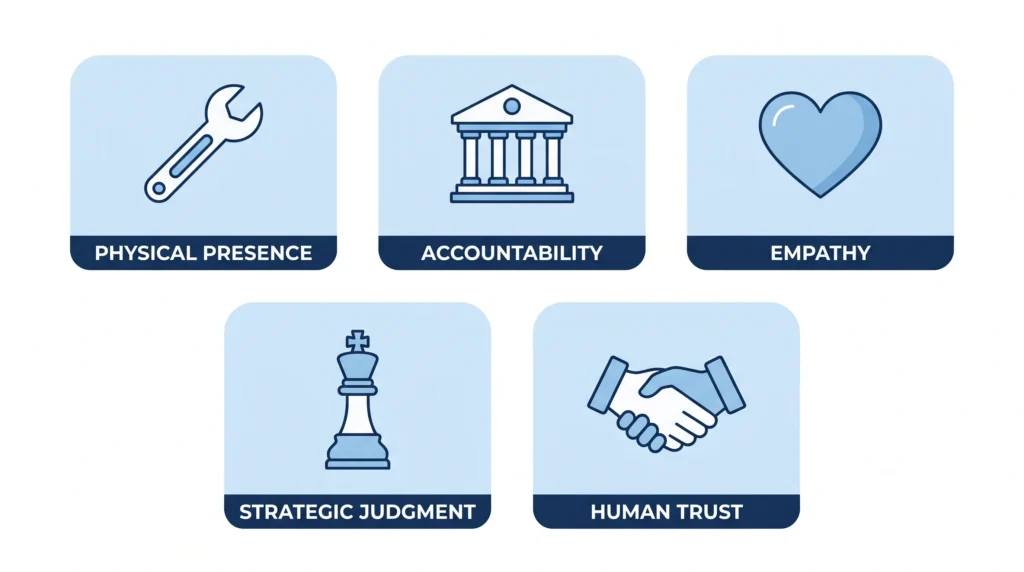
Before getting into the list, it helps to understand the framework, because “AI-proof” is not a vague feeling; it follows a clear logic. A job is genuinely safe from AI when it requires one or more of these:
- Physical presence in unpredictable environments: Every job site is different. A flooded basement, a faulty electrical panel, or a patient who stops breathing mid-surgery requires real hands, real judgment, and real-time physical response. No language model handles that.
- Licensed ethical accountability: Lawyers, doctors, and financial advisors carry legal liability for their decisions. A client can take a doctor to court; they cannot sue a chatbot. Where liability exists, a licensed human must exist.
- Genuine emotional attunement: Therapists, grief counselors, crisis responders, and special education teachers work with the full weight of human emotion. Reading a room, adjusting in real time, and being present in a way that actually helps: these are not features you add to a model.
- Strategic judgment under pressure: Creative directors, brand strategists, and senior executives make high-stakes calls that depend on cultural context, organizational history, and human intuition. AI can generate options; it cannot make the decision.
- Human trust as the core product: When a student trusts a teacher, when a patient relies on their nurse, when a client believes in their advisor, the relationship itself is the service. That is not outsourceable.
The World Economic Forum’s Future of Jobs Report 2025 put numbers to this: AI and automation will displace roughly 92 million roles by 2030 while simultaneously generating around 170 million new ones. Net gain: 78 million jobs. The catch is that approximately 39% of core workplace skills are expected to shift during that window. Safe jobs are not just surviving; they are growing.
Skilled Tradespeople: The Most Overlooked AI-Proof Professionals
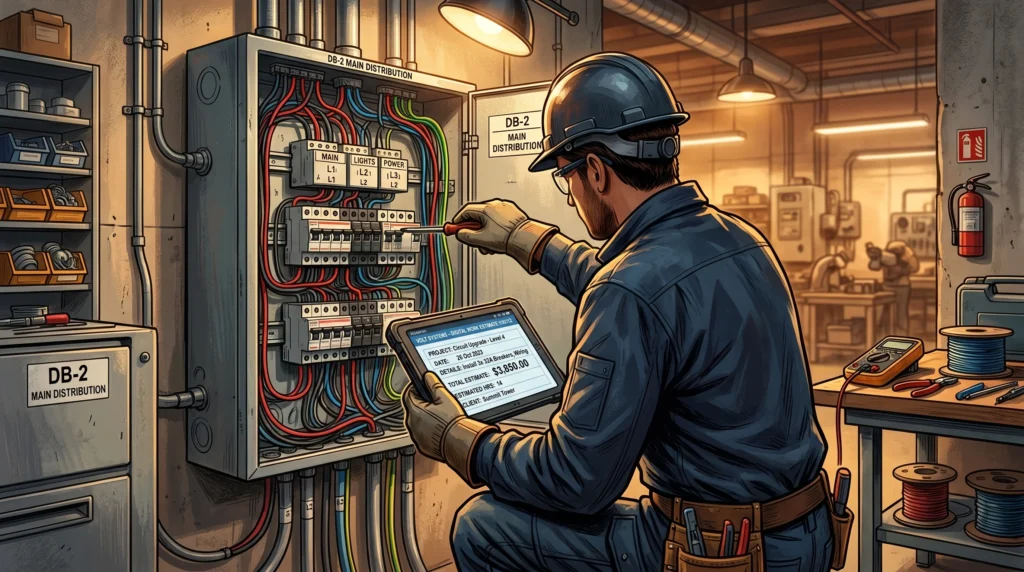
Electricians, plumbers, HVAC technicians, welders, and elevator mechanics sit in arguably the most protected category in the entire job market. The work is physically complex, spatially unpredictable, and impossible to replace remotely.
Every job site is unique. A pipe burst in a 1970s building at 2 AM presents variables that no current robotic system can handle at scale. Add licensing requirements, physical dexterity built over years of practice, and the shortage of skilled tradespeople in virtually every market, and you have a category where demand is rising while supply stays tight.
How to earn more using AI tools:
- Use ChatGPT or Claude to write professional client proposals, job estimates, and follow-up messages in minutes. Most tradespeople lose repeat business not because of bad work but because of slow or unclear communication; AI fixes that gap fast.
- Use Canva AI to build a branded portfolio and social media presence. A plumber with a clean profile, fast responses, and client reviews consistently charges 30 to 40% more than competitors without one.
- Automate bookings with AI-integrated scheduling tools like Calendly so you are capturing leads even while on a job.
If you are new to using AI tools for income, the [AI Tools to Make Money Online Without Investment] guide on nfeni.com is a solid starting point with zero-cost options.
Realistic income lift: From standard trade rates to $85 to $150 per hour for specialized work, with an additional $500 to $1,500 per month possible through an AI-assisted referral and content strategy.
Healthcare Professionals: Protected by Empathy, Presence, and Liability
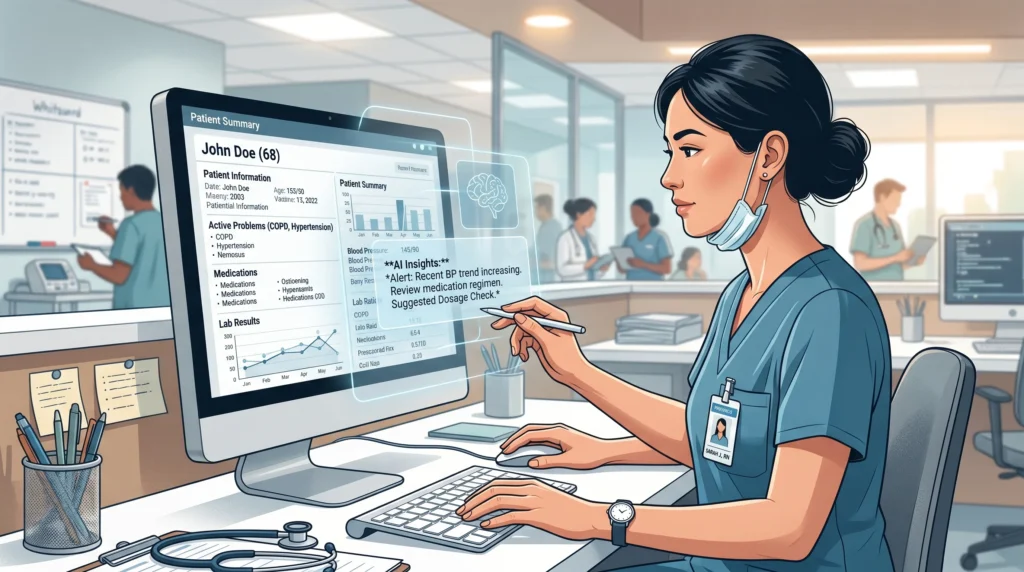
Nurses, physiotherapists, surgeons, paramedics, and general practitioners are in a category where AI is a powerful assistant and will never be a professional. The stakes are too high, the human variables too complex, and the accountability too clear.
Patient care involves reading non-verbal cues, making split-second decisions with incomplete information, managing family dynamics during a crisis, and being physically present when presence is everything. AI tools can flag drug interactions, suggest diagnoses, and summarize histories with impressive accuracy; they cannot deliver clinical care.
Healthcare employment is projected to grow at double digits through 2030 globally, driven by aging populations and expanding access to medical services.
How to earn more using AI tools:
- Use AI for medical documentation: tools like Nuance DAX and even general models like Claude handle clinical note drafting from voice recordings, cutting 2 to 3 hours of daily admin time. That freed time is direct income recovery.
- Explore telehealth consultations as an additional income stream. AI tools handle scheduling, intake forms, and follow-up reminders automatically.
- Healthcare professionals with expertise in a specialty can use AI writing tools to produce patient education content, health blog posts, and online courses. This pairs directly with the monetization strategies covered in [Best AI Side Hustles You Can Start With No Money].
Realistic income lift: A nurse practitioner offering after-hours telehealth with AI-supported admin can add $1,200 to $3,000 per month on top of a standard role.
Therapists and Mental Health Professionals: Where AI Simply Cannot Go
The therapeutic relationship works because of the therapist: their consistency across sessions, their non-judgmental presence, and their ability to sit with someone’s pain without flinching or redirecting. AI wellness chatbots exist and serve a real light-support function; they are not replacements for clinical therapy.
Demand for mental health services is rising across every market, and qualified professionals are in shortage nearly everywhere. This is one of the few fields where the combination of growing demand and structural irreplaceability makes the career genuinely secure for the foreseeable future.
How to earn more using AI tools:
- Use Claude or ChatGPT to write SEO-optimized blog content that attracts private clients organically. A therapist who consistently publishes helpful content on anxiety, relationship dynamics, or burnout can fill a full private practice caseload through search traffic alone.
- Create digital products: online courses, guided workbooks, and audio resources using AI writing assistance, sold through platforms like Gumroad or Teachable.
- Use AI to draft intake forms, session note templates, and patient resources, cutting non-billable admin time significantly.
The [AI Tools That Replace a Virtual Assistant] article on nfeni.com covers automation tools that are especially useful for solo practitioners managing their own admin.
Realistic income lift: A therapist combining a standard caseload with AI-assisted content marketing and one digital product can earn an additional $1,500 to $4,000 per month.
Teachers and Educators: The Mentorship That Cannot Be Automated
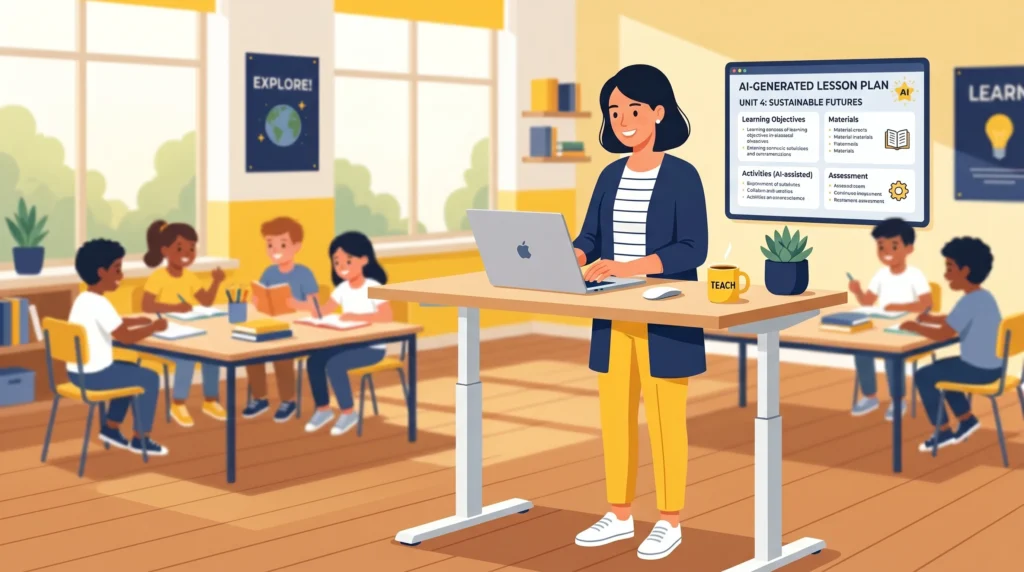
A skilled teacher does not just deliver information; they read a classroom, adjust their approach in real time, notice who is struggling before it shows in assessments, and build the kind of trust that shapes how a student sees their own potential. AI tutoring tools are excellent supplements to this; they are not substitutes for it.
Special education, early childhood learning, and vocational skills training are especially resistant to automation. The social and emotional dimensions of education for young people require human judgment, cultural sensitivity, and genuine relationships that no system can replicate.
How to earn more using AI tools:
- Build personalized lesson plans, quiz banks, and full course materials using Khanmigo, Claude, or ChatGPT at a pace that was previously impossible for an individual educator.
- Launch an online tutoring service using AI-generated course content as a backbone. With AI handling prep work, a single teacher can serve significantly more students without proportionally more hours.
- Sell AI-assisted study guides and workbooks in your subject area on platforms like Teachers Pay Teachers or Gumroad.
For context on how students are already using these tools and what educators should understand, the [Best Free AI Tools for Students] article is worth reading.
Realistic income lift: A teacher running a part-time online tutoring service with AI-built materials can add $800 to $2,500 per month with 8 to 12 additional hours per week.
Lawyers and Legal Professionals: Where Liability Requires a License
Legal professionals carry a protection that is structural protection: accountability. A lawyer who advises a client bears professional and legal responsibility for that advice. AI tools can research case law faster than any associate, draft boilerplate contracts, and summarize lengthy documents in seconds; they cannot appear in court, carry a bar license, or be held liable when advice goes wrong.
Legal work also involves strategic judgment under uncertainty: knowing when to push, when to settle, how to read a negotiation, and how to navigate the unwritten rules of a specific jurisdiction. These are skills built over years of practice.
How to earn more using AI tools:
- Use Harvey or general models like Claude to dramatically cut research and drafting time. Lawyers who have done this report handling 20 to 30% more client work per month without additional staff.
- Offer AI-assisted contract drafting services for small businesses and startups: an underserved market willing to pay for affordable, professionally reviewed document preparation.
- Consider AI compliance consulting as a niche: as regulations around AI use in business expand, legal professionals who understand both areas are commanding premium advisory rates.
Creative Directors and Brand Strategists: Taste Cannot Be Prompted
AI can generate thousands of creative options in seconds. It cannot make the strategic judgment call about which one is right. It cannot feel the cultural moment, understand why a brand needs a completely different tone this quarter, or recognize when a direction is technically acceptable but fundamentally wrong.
Senior creative direction is about synthesizing business strategy, cultural context, and audience psychology into one coherent vision. That synthesis requires experience, taste, and the ability to take ownership of a decision. AI is a generative instrument inside that workflow, not the conductor.
How to earn more using AI tools:
- Use Midjourney, DALL-E 3, or Adobe Firefly for rapid concept visualization, cutting pitch preparation from days to hours.
- Freelance creative directors using AI tools are now packaging full brand identity services that previously required entire agencies. The [AI Tools for Freelancing on Fiverr and Upwork] guide covers how to position and price these packages.
- Use ChatGPT or Claude to produce first drafts of brand strategy documents, campaign briefs, and content calendars, then apply your expertise to shape the final output.
Realistic income lift: Freelance creatives using AI tools consistently report completing two to three times more client projects per month, which directly multiplies income without more working hours.
The Four Skills Worth Building Across Every Safe Career
Across every category above, four underlying skills keep appearing as the common thread. Building these is the smartest long-term career investment in the current environment:
- Emotional intelligence: Reading people, managing relationships, communicating with genuine empathy. No model replicates this at the level a real professional delivers it.
- Physical mastery: Hands-on skills in trades, surgery, or performance that require years of embodied practice. AI has no body.
- Strategic judgment: Making high-stakes decisions with incomplete information, taking professional ownership of outcomes, and navigating ambiguity with confidence.
- AI tool fluency: Understanding how to use AI tools effectively within your specific profession. This is now a core professional skill. Practitioners who know how to prompt, evaluate, and direct AI output are consistently outperforming those who ignore or avoid it.
On that last point: if you are unsure where to start, the [ChatGPT vs Claude: Which AI Is Better for Your Work] comparison and the [New AI Models in 2026] overview on nfeni.com cover the current landscape clearly.
Quick Reference: AI Tools by Job Category
| Career | Recommended AI Tools | Monthly Income Potential |
|---|---|---|
| Skilled Trades | ChatGPT, Canva AI, Calendly | +$500 to $1,500 |
| Healthcare | Nuance DAX, Claude | +$1,200 to $3,000 |
| Mental Health | Claude, Gumroad | +$1,500 to $4,000 |
| Education | Khanmigo, ChatGPT | +$800 to $2,500 |
| Legal | Harvey, Claude | +20 to 30% more clients |
| Creative Direction | Midjourney, DALL-E 3, Claude | 2x to 3x project throughput |
Frequently Asked Questions
Q. Which jobs are the safest from AI in 2026?
Healthcare professionals, licensed tradespeople, therapists, educators, lawyers, and senior creative roles consistently rank as the most protected. These depend on physical presence, licensed accountability, emotional attunement, or strategic judgment.
Q. Will AI eventually replace even these safe jobs?
Current AI technology cannot handle the full complexity of these roles reliably. That said, every professional should develop AI fluency: knowing how to use AI tools within your work is now a competitive skill, not optional.
Q. Can free AI tools realistically help me earn more?
Yes. ChatGPT’s free tier, Claude’s free access, and Google Gemini are all genuinely useful without a paid subscription.
Q. Is teaching truly safe from AI replacement?
Classroom teaching, mentorship, and early childhood education are highly protected. AI tutoring tools supplement learning; they do not replace the developmental and relational role of a skilled teacher.
Q. Are creative jobs safe or at risk?
Senior creative roles requiring strategic judgment are well protected. Junior roles involving repetitive content production face more pressure. The solution: use AI tools to operate at a senior level faster.
Q. What skills should I focus on to stay safe from AI?
Emotional intelligence, physical mastery, strategic decision-making, and AI tool fluency. The last one is increasingly the differentiator between professionals who thrive and those who stagnate.
Q. Are trades jobs like plumbing and electrical work genuinely AI-proof?
Yes, for the foreseeable future. The physical complexity and unpredictability of trade environments, combined with a global shortage of skilled tradespeople, make these roles among the most economically resilient available.
Q. How much extra can I realistically earn using AI tools in a safe job?
Depending on the role and tools used, professionals are reporting between $500 and $4,000 per month in additional income or equivalent time savings. The table in this article breaks this down by category.
Q. Is prompt engineering a good new career to consider?
Prompt engineering is one of the roles AI is creating rather than eliminating, with salaries ranging from $70,000 to $120,000 per year for full-time positions. A complete beginner’s guide is coming soon on nfeni.com.
Q. Where can I learn AI tools for free to apply them in my current role?
Start with the free tiers of ChatGPT, Claude, and Google Gemini. The [New AI Models in 2026] articles on nfeni.com are practical starting points for any profession.
The professionals winning in 2026 are not the ones avoiding AI; they are the ones in structurally protected roles who also learned to use AI tools faster than their competition. That combination: human judgment plus AI efficiency, is genuinely difficult to replicate and genuinely worth building right now.