
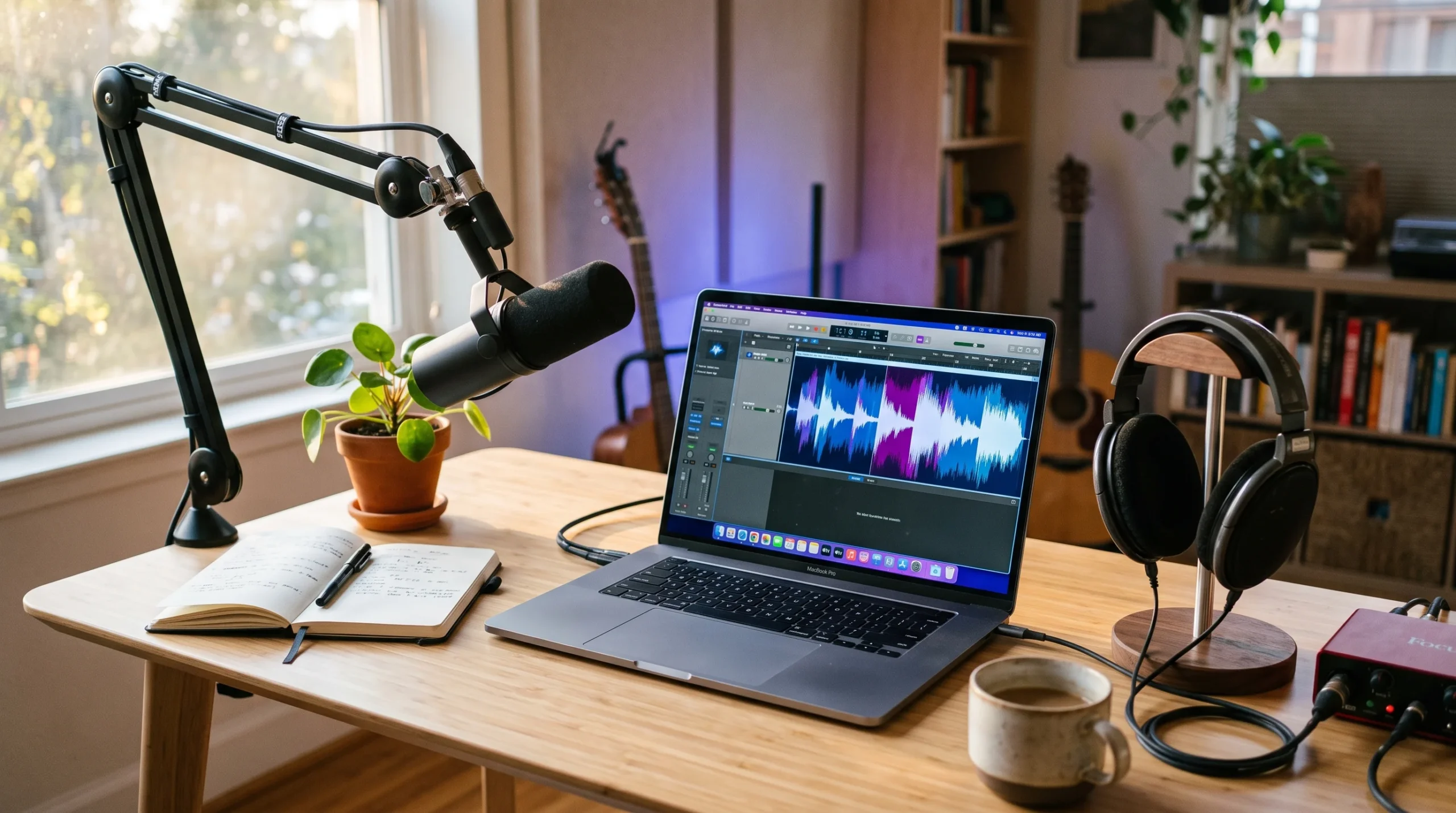
If the thought of appearing on camera makes you want to close your laptop and forget the whole “content creator” idea, voice AI just solved that problem for you. You no longer need a studio, a decent microphone, or even your own voice to build an income online. A free ElevenLabs or Murf.ai account, a laptop, and a bit of patience are enough to get started.
This guide walks you through exactly how to make money with voice AI using only free tools, without spending a single dollar upfront. You’ll learn how these platforms work, how their free plans compare, five realistic income methods people are already using, and a step-by-step project you can finish this weekend.
What Is Voice AI and Why It’s Suddenly Everywhere

Voice AI refers to software that generates human-sounding speech from written text, or clones an existing voice so it can “speak” new sentences it never actually said. Instead of hiring a voice actor or recording narration yourself, you type a script, choose a voice, and the AI produces an audio file that often sounds indistinguishable from a real person.
Tools like ElevenLabs and Murf.ai sit at the center of this shift. ElevenLabs is known for extremely natural-sounding voices and emotional tone control, which makes it popular for storytelling, YouTube narration, and audiobooks. Murf.ai leans more toward professional, corporate-style narration, making it a favorite for explainer videos, e-learning courses, and business presentations.
The reason this matters for your income is simple: faceless content and voice-based freelance work have both grown rapidly, and most creators still record narration themselves, hire expensive voice actors, or skip audio projects entirely because they assume good voiceover requires expensive equipment. Voice AI removes that barrier completely.
If you’ve already explored Best Free AI Video Generator for Content Creators, you already understand how AI can replace an entire production crew. Voice AI is simply the audio half of that same shift, and it’s arguably the more underused half right now.
ElevenLabs vs Murf.ai vs PlayHT: Free Plan Comparison

Before picking a tool, it helps to know exactly what each free plan actually gives you. Here’s a straightforward comparison:
| Platform | Free Tier Limit | Custom Voice Cloning | Best For |
|---|---|---|---|
| ElevenLabs | Around 10,000 characters per month | Yes, one custom voice | Storytelling, YouTube narration, emotional tone |
| Murf.ai | Around 10 minutes of voice generation plus 10 minutes of transcription | Limited on free plan | Corporate, e-learning, explainer scripts |
| PlayHT | Around 12,500 words per month | Limited on free plan | Podcasts, longer-form audio drafts |
None of these limits are huge, but they’re enough to produce your first few paid projects or your first few YouTube videos while you test whether voice AI content is something you want to pursue seriously. Many beginners rotate between two or three free accounts during their first month to stretch their output further, which is a completely legitimate way to start without paying for anything.
A quick note on quality: ElevenLabs generally produces the most natural, human-like intonation, especially for narrative or emotional content. Murf.ai sounds slightly more “produced” and polished, which actually works in its favor for business and training content. Testing both on the same script before committing to one platform is worth the extra ten minutes.
5 Real Ways to Make Money with Voice AI Using Free Tools Only

Here are five methods people are already using to turn free voice AI tools into actual income. None of these require a paid subscription to start.
1. Start a Faceless YouTube Channel with AI Voiceovers

Faceless channels built around history, true crime summaries, motivational content, or educational explainers rely almost entirely on narration and visuals, not a presenter’s face. You write or research a script, generate the voiceover with ElevenLabs, pair it with stock footage or simple visuals, and upload.
This is one of the most scalable methods because YouTube ad revenue is largely passive once a video is published. Typical RPMs for this kind of content range from roughly $3 to $8 per thousand views, depending on the niche and audience location. If you’ve already read How to Make Passive Income with Free AI Tools in 2026, this method fits directly into that same passive-income framework, just with an audio-first approach instead of relying purely on written or visual content.
2. Offer Voiceover Services on Fiverr
Small businesses, course creators, and app developers constantly need short voiceovers for ads, explainer videos, and onboarding tutorials, but many can’t afford professional voice actors. Using Murf.ai’s free tier, you can deliver short projects, typically 30 seconds to two minutes of finished audio, for anywhere between $20 and $100 per gig depending on complexity and turnaround time.
The key here is positioning yourself correctly. Instead of listing “AI voiceover,” which some buyers still associate with robotic quality, market it as “natural, human-sounding professional voiceover” and let the demo speak for itself. Buyers care about the final result, not the process behind it.
3. Narrate Audiobooks for Self-Published Authors
Self-published authors on platforms like ACX and Findaway increasingly accept AI-narrated audiobooks, especially for non-fiction and niche genres where budget matters more than celebrity narration. A single audiobook project can pay anywhere from a flat fee to per-finished-hour rates, and because ElevenLabs allows longer-form generation with consistent voice tone, it’s well suited to this kind of work.
Start small: offer to narrate a short ebook or a single chapter as a portfolio sample before pricing full-length projects. Authors want proof the voice stays consistent across a long recording, so a clean sample matters more than a polished sales pitch.
4. Create Podcast Intro and Outro Packages
Independent podcasters often skip professional intros entirely because hiring a voice actor for a 15-second clip feels excessive. That gap is your opportunity. Package a short, branded intro and outro, add light background music, and sell it as a bundle for $15 to $40 per podcast. Because the audio clips are short, you can produce dozens of these within a single free-tier monthly limit.
This pairs well with the audience already covered in Best AI Side Hustles You Can Start With No Money in 2026, since it requires zero upfront investment and can be delivered within a day.
5. Offer AI-Dubbed Multilingual Videos
YouTubers and course creators expanding into new markets often need their content translated and re-voiced in other languages. Voice AI tools that support multiple languages let you offer dubbing services without being multilingual yourself. You translate the script (or use AI translation as a starting point), generate the voiceover in the target language, and sync it to the original video.
This is a higher-value service, often priced per minute of finished video, and demand is rising fast as creators try to reach global audiences without hiring multiple voice actors.
Step-by-Step: Your First $0 Voice AI Project

Here’s a simple project you can complete without spending anything, using a faceless YouTube video as the example:
- Pick a narrow topic. Broad topics like “history facts” perform worse than specific angles like “lesser-known events from ancient Rome.”
- Write a 600 to 900 word script. Keep sentences short; long, complex sentences sound unnatural even with high-quality voice AI.
- Generate the voiceover in ElevenLabs, staying within the free character limit. Break longer scripts into sections if needed.
- Download the audio and import it into CapCut, which is free and works well for pairing narration with stock visuals or simple text animations.
- Add royalty-free background music at low volume so it doesn’t compete with the narration.
- Export, write a clear title and thumbnail, and upload.
The entire process, from script to published video, typically takes two to four hours for a beginner and costs nothing beyond your time.
How Much Can You Realistically Earn

It’s worth being honest here instead of making big promises. Voice AI income scales with consistency, not luck.
Part-time creators who publish two to three faceless videos per week, or take on a handful of Fiverr voiceover gigs monthly, typically see somewhere in the range of $300 to $800 per month within the first few months. Full-time creators who combine multiple income streams, YouTube ad revenue, freelance voiceover gigs, and audiobook narration commonly reach $1,500 to $4,000 per month once they’ve built a portfolio and repeat clients.
These numbers depend heavily on niche, consistency, and how well you position your services, not just the tools you use. Two people using the exact same free ElevenLabs plan can earn very different amounts based on effort and strategy.
Common Mistakes Beginners Make
Avoiding these early mistakes will save you time and wasted free-tier credits:
- Generating a full script before testing the voice. Always test a short sample first to confirm tone and pacing match your content.
- Ignoring pacing and pauses. Robotic-sounding AI voice is usually a script problem, not a tool problem; short sentences with natural punctuation sound far more human.
- Underpricing freelance voiceover work out of fear that AI-generated audio is worth less. Buyers pay for the final quality, not the method.
- Using the same voice for every project. Testing multiple voices helps you find one that matches your niche or brand.
- Burning through the entire free-tier limit on one long project instead of testing smaller pieces first.
Best Practices Checklist
- Test two or three voices before committing to one for your channel or brand.
- Keep scripts conversational; avoid long, comma-heavy sentences.
- Save your favorite voice settings so future projects sound consistent.
- Build a short portfolio sample before pitching freelance clients.
- Track your free-tier usage monthly so you don’t run out mid-project.
- Combine voice AI with a related skill, like basic video editing, to increase what you can charge.
Voice AI vs Traditional Voiceover: A Quick Comparison
| Factor | Traditional Voiceover | Voice AI (Free Tools) |
|---|---|---|
| Upfront Cost | Often $50 to $300+ per project | $0 on free tiers |
| Turnaround Time | Days, depending on availability | Minutes |
| Consistency Across Projects | Varies by voice actor availability | Highly consistent |
| Language Flexibility | Requires separate actors per language | Built-in multilingual support on most platforms |
| Emotional Nuance | Often superior for complex scripts | Improving rapidly, strong for most use cases |
This comparison isn’t meant to suggest voice AI replaces every use case for human narration, but for the volume of content most beginners and small businesses need, it’s a practical, low-risk starting point.
If you’re a student exploring this alongside other AI income methods, it’s worth pairing this guide with How Students Can Make Money Using ChatGPT and Free AI Tools, since scriptwriting with ChatGPT and narration with ElevenLabs work naturally together. And if you’re still deciding between multiple AI income paths, AI Tools to Make Money Online Without Investment covers several zero-cost options beyond voice AI worth comparing.

Conclusion
Voice AI has quietly become one of the most accessible ways to earn online in 2026, mainly because it removes two of the biggest barriers beginners face: needing to appear on camera and needing expensive equipment. Whether you go the faceless YouTube route, freelance voiceover work, audiobook narration, podcast branding, or multilingual dubbing, the starting cost is genuinely zero if you stick to free ElevenLabs and Murf.ai plans while you test what works for you.
The people earning consistently with this method aren’t necessarily the most technically skilled; they’re the ones who treat it like a real, ongoing project rather than a one-off experiment. Start with one method, publish or pitch consistently for a few weeks, and let the results guide where you focus next.
Frequently Asked Questions
Q. Can I really make money with voice AI for free?
Yes. Both ElevenLabs and Murf.ai offer free tiers generous enough to produce your first videos or freelance samples without any upfront cost.
Q. Is ElevenLabs or Murf.ai better for making money?
ElevenLabs tends to work better for storytelling and YouTube narration, while Murf.ai suits corporate or e-learning style projects. Many creators use both depending on the project.
Q. Do I need to know how to code or edit video to use voice AI?
No coding is required. Basic video editing using free tools like CapCut is enough to pair AI voiceovers with visuals for YouTube content.
Q. How much can beginners earn from voice AI in the first month?
Most beginners earn modestly in month one, often under $100, while learning the tools. Income typically grows once you build a portfolio and post consistently.
Q. Is AI-generated voiceover legal to sell to clients?
Yes, as long as you’re using a legitimate platform under its terms of service and not cloning someone’s voice without consent. Always check each platform’s commercial usage policy.
Q. Which platform has the most realistic voice quality?
ElevenLabs is widely regarded as one of the most natural-sounding options currently available, especially for emotional or narrative content.
Q. Can I use voice AI for audiobook narration?
Yes. Several self-publishing platforms now accept AI-narrated audiobooks, particularly for non-fiction and niche genres.
Q. What’s the easiest voice AI income method for complete beginners?
Podcast intro and outro packages are usually the simplest starting point since they’re short, quick to produce, and require minimal editing.
Q. Do free voice AI plans limit how much audio I can generate?
Yes, most free plans cap you by character count or minutes per month, so it’s worth planning projects around those limits, especially early on.
Q. Can voice AI replace hiring a real voice actor entirely?
For many everyday projects like explainer videos, YouTube narration, and short ads, yes. For high-emotion, high-budget productions, human narration is still often preferred.