
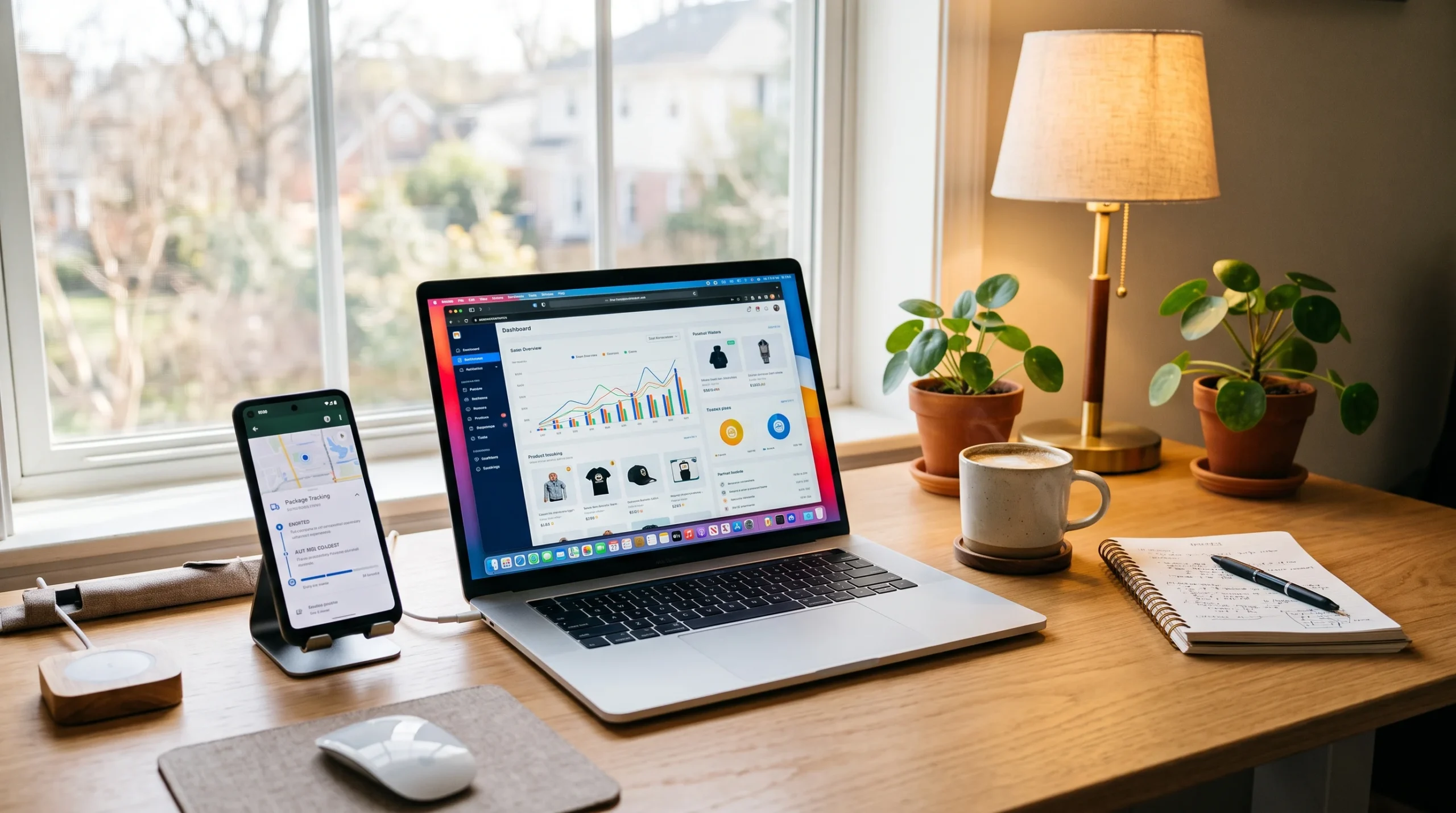
Dropshipping has been around for over a decade, and every year someone declares it “dead.” It isn’t. What has changed is how it’s built. In 2026, the sellers actually making money aren’t the ones manually scrolling AliExpress for hours or guessing which product might trend next month. They’re using AI to compress weeks of work into a single afternoon, and that shift is what an AI dropshipping business 2026 for beginners guide really needs to explain.
This article walks you through the entire process: finding products that have a real chance of selling, building a store without hiring a developer, automating the parts of the business that used to eat your evenings, and setting honest expectations about money and timelines. No hype, no “get rich in 30 days” promises, just a realistic, tool-agnostic roadmap.
What Is AI Dropshipping Business (And How It Differs From Traditional Dropshipping)

AI dropshipping is the same core business model as traditional dropshipping: you sell products online without holding inventory, and a supplier ships directly to the customer, but nearly every manual step is now assisted or automated by AI tools.
Traditional dropshipping in its early years meant hours of scrolling supplier catalogs, guessing at demand, writing product descriptions from scratch, and manually replying to every customer email. AI dropshipping in 2026 replaces most of that guesswork with data. AI tools can analyze search trends, social engagement, and competitor pricing in minutes; generate optimized product listings; and handle a large share of routine customer questions automatically.
The business model hasn’t changed. The workload has. That’s the entire pitch, and it’s worth understanding clearly before you spend a dollar, because AI reduces effort; it doesn’t eliminate risk. You still need a product people actually want, a store that builds trust, and a plan for when something goes wrong with an order.
Step 1: Use AI Tools to Find Winning Products

The single biggest reason dropshipping stores fail isn’t bad marketing; it’s picking a product nobody wanted in the first place. This is exactly where AI earns its keep, because product research used to be the most time-consuming part of starting a store, and it’s now the part AI compresses the most.
A concise answer first: the fastest way to find a winning product with AI is to combine trend-detection tools (which scan search volume and social signals) with a demand-validation step (checking if people are actually buying, not just viewing).
Here’s a practical workflow:
- Start broad. Use an AI research tool to scan a category- home organization, pet accessories, fitness recovery, whatever interests you and let it surface products with rising search interest over the last 60 to 90 days.
- Check for genuine demand signals, not just curiosity. A product that’s “interesting” gets views. A product that’s “solving a problem” gets purchases. Look for items tied to a specific frustration: something breaks often, takes too long, or is annoying to do by hand.
- Cross-check competition. If an AI tool shows a product trending but hundreds of stores are already selling it at rock-bottom prices, you’re entering a race to the bottom. Look for a gap, a sub-niche, a bundle angle, or an underserved audience.
- Validate with a small budget. Even the best AI prediction is still a prediction. Run a small test campaign before committing to bulk inventory decisions or heavy ad spend.
This is also where the research overlaps with content and marketing tools nfeni has covered before. If you’re new to using AI for market research broadly, the ideas discussed in Best AI Side Hustles You Can Start With No Money in 2026 apply directly here; many of the same free-tool habits translate into smarter product scouting.
Step 2: Build Your Store in Hours With AI Store Builders

A concise answer first: yes, you can realistically build a functional, professional-looking dropshipping store in a single afternoon using AI-assisted store builders; the platforms handle layout, copy suggestions, and design decisions that used to require a freelancer.
Modern e-commerce platforms now include AI features directly inside their store editors: generating a homepage layout from a short brief, suggesting color palettes based on your niche, writing starter product descriptions, and even recommending which apps or plugins your store needs based on what you’re selling.
A sensible build order looks like this:
- Pick a platform that fits dropshipping workflows (most major ones now integrate directly with supplier apps and offer AI design assistance).
- Use the AI layout generator to create your homepage, product page template, and about page, then edit it in your own voice. AI drafts are a starting point, not a finished product.
- Write product titles and descriptions with AI, but always fact-check specifications, sizing, and materials against the actual supplier listing. AI-generated copy that invents details you can’t back up creates returns and complaints.
- Set up trust signals early: a real contact page, clear shipping and returns policy, and honest delivery-time expectations. AI can draft these policies, but you still need to verify them against your actual supplier’s shipping windows.
If you’ve read Best No-Code AI Automation Tools to Earn Money Online in 2026 (Zapier, Make & More), you already understand the logic here: AI store builders work the same way; they remove the technical barrier, not the decision-making. You still choose the niche, the tone, and the offer.
Step 3: Automate Product Descriptions, Pricing, and Customer Service

Once your store is live, the real advantage of running an AI-powered dropshipping business shows up in the day-to-day operations, the parts that used to consume entire evenings.
Product descriptions. Instead of writing every listing manually, use AI to generate a first draft from the supplier’s raw specs, then edit for accuracy and tone. Keep descriptions focused on the problem the product solves, not just its features; this also tends to perform better for search visibility.
Dynamic pricing. Some AI-assisted pricing tools monitor competitor pricing and suggest adjustments, so you’re not manually checking rival stores every day. Use this as a guide, not an autopilot; sudden AI-driven price drops can quietly erode your margin if you’re not watching the numbers.
Customer service. This is where AI dropshipping most clearly separates itself from the old model. A well-configured AI chatbot can handle order-status questions, shipping delays, sizing questions, and return requests the repetitive queries that make up the bulk of dropshipping support tickets, while flagging anything unusual for a human to review.
If you want a deeper walkthrough of setting this up specifically, How to Build an AI Chatbot for Small Business With No Coding (And Charge $500+) covers the exact process of configuring a no-code chatbot, and the same setup applies almost directly to a dropshipping storefront.
A quick comparison of what changes:
Traditional dropshipping workflow: manual product listing, hours of daily competitor price-checking, replying to every email personally, hours lost to “where is my order” tickets.
AI dropshipping workflow: AI-assisted listing drafts, automated price alerts, chatbot handling routine tickets, human time reserved for judgment calls and relationship-building with suppliers.
The goal isn’t to remove yourself from the business; it’s to remove yourself from the repetitive parts of it.
Best Free and Low-Cost AI Dropshipping Tools for Beginners

You don’t need an expensive software stack to start. Most beginners can run the first few months on free tiers or low-cost plans while they validate whether the business is worth scaling.
A practical starter stack usually includes: a trend and product-research tool with a free tier, a store platform with a built-in AI content assistant, a chatbot or help-desk tool with automated response templates, and a general-purpose AI assistant for drafting emails, ad copy, and supplier messages.
Resist the urge to buy every “AI dropshipping suite” advertised in your feed before you’ve made a single sale. Many of these tools are built around promoting a specific paid subscription rather than genuinely helping you validate a product. Start lean, prove the model works with real orders, then reinvest profit into paid tools once you know exactly what problem you’re solving with them.
Realistic Startup Costs and Income Expectations

A concise answer first: most beginners can start an AI dropshipping business for a modest upfront cost covering a store subscription, a domain name, and a small testing budget for ads, but meaningful, consistent profit typically takes several months of testing, not days.
Here’s what a realistic early budget generally includes:
- Store platform subscription (monthly)
- A custom domain name (annual, relatively small cost)
- Initial ad testing budget to validate a product before scaling
- Optional: a paid tier on a research or automation tool once you’ve outgrown the free version
On the income side, be wary of any article promising specific dollar figures within a set number of days; those numbers are rarely honest and depend entirely on niche, ad skill, and how much testing you’re willing to do. What’s more useful is understanding the shape of the journey: the first weeks are almost always about testing and losing small amounts of money on products that don’t work. Profitability tends to come from finding one or two products that genuinely resonate, then reinvesting into scaling those specific winners rather than constantly chasing new trends.
This is a business, not a lottery ticket. AI shortens the research and setup phase dramatically, but it doesn’t shortcut the testing phase; that part still requires patience.
Common Mistakes New AI Dropshippers Make

Even with AI handling the heavy lifting, beginners tend to repeat the same errors:
Trusting AI product suggestions without validating real demand. A trending search term isn’t the same as buying intent, always cross-check with actual sales signals before committing budget.
Copy-pasting AI-generated descriptions without fact-checking. If an AI tool invents a feature your product doesn’t have, you’ll deal with returns, refunds, and negative reviews.
Letting the chatbot handle everything with no human oversight. Automated customer service should catch the easy 80%, not replace judgment on refunds, complaints, or anything that could become a chargeback.
Ignoring supplier shipping times. AI can help you find a product fast, but if your supplier ships in three to four weeks, no amount of automation will fix the customer complaints that follow.
Skipping the testing budget. Jumping straight to a large ad spend on an unvalidated product is one of the fastest ways to lose money in this model, AI-assisted or not.
Over-relying on one tool for everything. AI dropshipping works best as a workflow of specialized tools, research, store building, and support, not a single all-in-one shortcut.
Is AI Dropshipping Business Still Worth Starting in 2026?
A concise answer first: yes, for the right person, someone willing to treat it as a genuine business that requires testing and patience, not a passive income scheme. AI dropshipping is not “easier money” than traditional dropshipping; it’s the same business with significantly less wasted time on research, setup, and repetitive support work.
The honest case for starting now is that AI has lowered the barrier to entry without lowering the standards customers expect. Stores that use AI thoughtfully, validating products, writing accurate listings, and backing up automation with real human oversight tend to build more trust and fewer complaints than stores that use AI to cut every corner possible.
If you’re coming from a background in AI-assisted side hustles, this naturally complements work covered in AI Affiliate Marketing: Best AI Tool Affiliate Programs to Earn Passive Income in 2026, dropshipping and affiliate marketing solve different problems (owning a storefront vs. promoting someone else’s), and understanding both gives you a broader view of which online business model actually fits your goals, time, and risk tolerance.
Start small, validate before you scale, and let AI do what it’s actually good at: cutting the busywork, not replacing your judgment.
Frequently Asked Questions
Q. Can I start AI dropshipping with no money?
Not entirely for free, but you can start with a modest budget covering a store subscription and a small ad-testing fund. Most AI research and automation tools offer free tiers that are enough to get started before you invest further.
Q. What is the best free AI tool for product research?
There isn’t one single “best” tool for everyone; it depends on your niche. Look for a trend-research tool with a genuine free tier that shows rising search interest over recent months, and always cross-check its suggestions against real sales data before committing budget.
Q. Is dropshipping still profitable in 2026?
It can be, but profitability depends far more on product validation, pricing discipline, and customer trust than on the year itself. AI has made research and setup faster, but the fundamentals of running a profitable store haven’t changed.
Q. Do I need technical skills to run an AI dropshipping store?
No. Modern AI store builders are designed for non-technical users, handling layout, design suggestions, and basic automation without requiring any coding knowledge.
Q. How long before an AI dropshipping store becomes profitable?
There’s no universal timeline. Most beginners spend the first several weeks testing products and refining their store before seeing consistent profit, and results vary widely based on niche, budget, and how quickly you act on data.
Q. What’s the difference between AI dropshipping and traditional dropshipping?
The business model is identical: no inventory, supplier ships directly to the customer. The difference is execution: AI dropshipping uses automated tools for product research, store building, listing creation, and customer support instead of doing each step manually.
Q. Can AI chatbots fully replace customer service in a dropshipping store?
No. AI chatbots can handle routine questions like order status and shipping timelines effectively, but complaints, refund disputes, and unusual situations still need human judgment to protect your store’s reputation.
Q. Do I need to disclose that product descriptions were written with AI?
There’s generally no legal requirement to disclose AI-written product copy, but the descriptions must be accurate. Misrepresenting a product’s features, whether written by a human or AI, can lead to returns, disputes, and platform policy violations.
Q. Is it risky to rely on AI for pricing decisions?
It can be if used without oversight. AI pricing tools are useful for monitoring competitors, but automated price changes should be reviewed regularly to make sure your margins stay healthy.
Q. What’s the biggest mistake beginners make when starting an AI dropshipping business?
Trusting AI product suggestions as guaranteed winners without validating real demand first. AI narrows down options efficiently, but the final decision to test a product still requires your own judgment and a small validation budget.
Conclusion
Starting an AI-powered dropshipping business in 2026 isn’t about finding a shortcut; it’s about removing the busywork that used to make dropshipping unsustainable for beginners. AI can shrink weeks of product research into an afternoon, generate a working store in hours, and handle the repetitive customer service tickets that used to eat your evenings. What it can’t do is replace testing, patience, or your own judgment about what customers actually want. Approach it as a real business, validate before you scale, and let the tools do what they’re genuinely good at.