

AI tools for real estate agents to save time are not the same as AI tools for real estate companies. That distinction matters more in 2026 than it ever has before, because the tools making the loudest noise in the industry press are enterprise platforms priced at $300 to $1,200 per month, designed for large brokerages with dedicated technology staff and six-month implementation timelines.
An individual agent managing twenty active clients does not need a platform. They need a set of specific, affordable, or free tools that address the actual tasks consuming their time: writing listing descriptions, following up with leads who have gone quiet, creating marketing graphics, staging vacant properties virtually, and qualifying new inquiries without spending forty minutes on a phone call that goes nowhere.
This guide covers exactly that. Every tool here is accessible to an individual agent without a brokerage IT department, a procurement budget, or a technology consultant. And every tool addresses a specific time drain that agents consistently identify as the work that keeps them at their desks long after the working day should have ended.
If you have read the earlier guides on AI tools that replace a virtual assistant, AI tools to make money online without investment, and make money with AI art without any skills, you will recognize the approach: match the right free or low-cost tool to the specific task, understand its limits honestly, and build a workflow that compounds over time.
Why Most Real Estate Agents Are Not Using AI Effectively in 2026
AI Tools for Real Estate Agents to Save Time: The Gap Between Awareness and Adoption
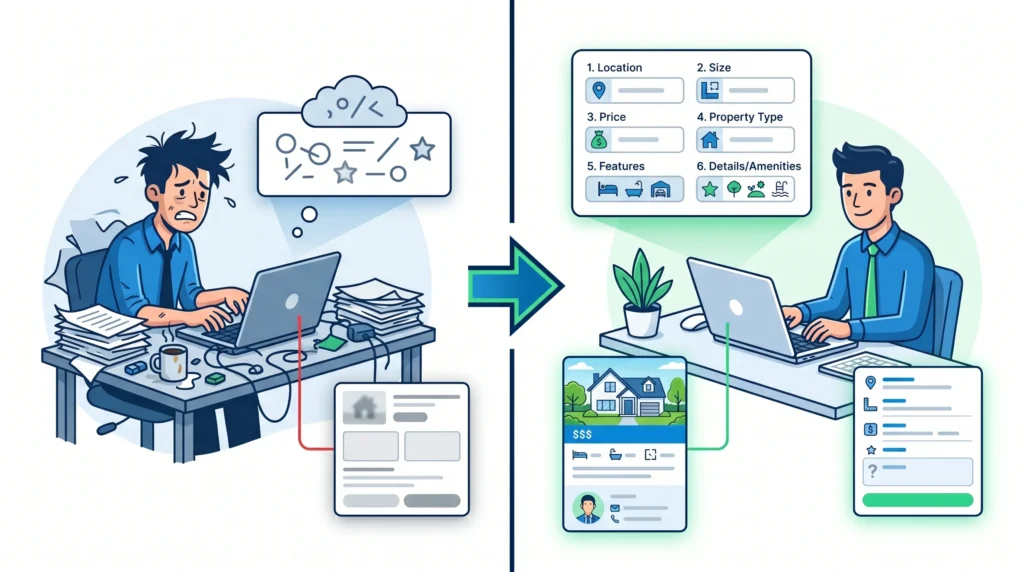
Awareness of AI in real estate is high; effective use is not. Most agents who have “tried AI” have opened ChatGPT once, typed a vague request, received a generic output, and concluded that it is not particularly useful for real estate specifically. That conclusion is understandable and also incorrect: the tool works; the prompting does not.
The agents who are saving ten to fifteen hours per week with AI tools are doing something different. They are treating each AI tool as a specialist rather than a generalist. They are not asking ChatGPT to “help with real estate marketing.” They are giving it the specific details of a property, a specific buyer persona, and a specific platform format, and asking it to produce a specific output. The difference in results between those two approaches is substantial.
Before covering tools by task, it is worth being honest about one thing: AI closes paperwork, not deals. The relationship, the negotiation, the reading of a hesitant buyer’s concerns, the judgment call on pricing strategy; all of that remains with the agent. What AI handles is the administrative and creative layer surrounding those human interactions, and that layer is where most of an agent’s non-client time currently disappears.
AI for Listing Descriptions: The Task Every Agent Should Automate First
AI Tools for Real Estate Agents to Save Time on Property Listings
Writing a compelling listing description for a three-bedroom property with a dated kitchen and a good-sized garden is not a creative challenge; it is a formatting exercise that follows predictable patterns. It should open with the most compelling feature, address the target buyer’s likely priorities, include accurate square footage and key features, and close with a call to action. Most agents write dozens of these per year and spend twenty to forty minutes on each one.
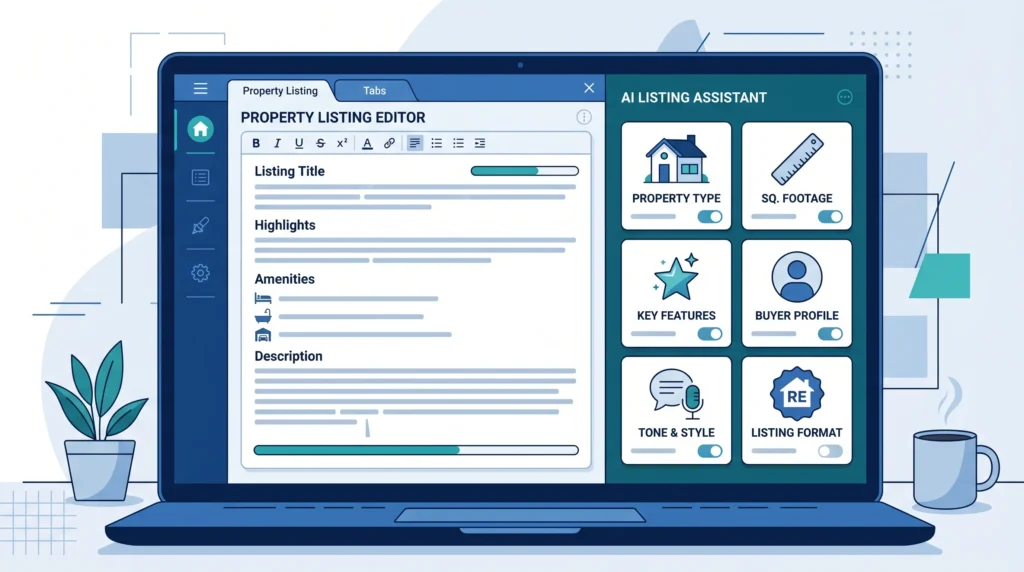
ChatGPT produces excellent first drafts of listing descriptions when given specific property details. The key is the specificity of the prompt. A vague prompt produces a generic listing. A detailed prompt produces something genuinely usable.
Effective prompt structure for listing descriptions:
- Property type and location (city/neighbourhood level only; no specific address needed)
- Square footage, bedroom, and bathroom count
- Standout features: recent renovations, garden size, parking, views, storage
- Target buyer type: first-time buyer, family, investor, professional couple
- Tone: formal and luxurious, warm and approachable, practical and investment-focused
- Platform: MLS listing, website property page, social media caption
With those six elements provided, ChatGPT produces a draft that requires light editing rather than rewriting. A twenty to forty-minute task becomes a five-minute one.
Write.homes (Free Plan Available, Paid from $8/month):
Write.homes is built specifically for real estate listing content, which means its outputs are already formatted for MLS requirements and real estate marketing conventions without needing the agent to structure a detailed prompt. The free plan is functional for low-volume use; the paid tier is affordable enough to justify for agents listing more than five properties per month.
AI Virtual Staging: Turning Empty Rooms Into Sellable Spaces

How AI Virtual Staging Tools Save Agents Thousands per Listing
Professional in-person staging costs between $1,500 and $5,000 for a vacant property, with timeline delays for furniture delivery and setup. AI virtual staging produces photorealistic furnished room images from empty room photographs in minutes, at a fraction of that cost. For agents working with investors, vacant properties, or landlords who have already moved out, this is one of the most immediately practical AI applications available.
BoxBrownie (Paid, Per-Credit Pricing from $1.60 per edit):
BoxBrownie is one of the most established AI-assisted virtual staging platforms, combining AI with human quality review to produce consistently professional results. The credit-based pricing makes it accessible for individual agents: one edit credit covers one room transformation, so the cost scales directly with usage rather than requiring a monthly subscription.
Results are delivered within 24 hours, are photographically realistic, and include furniture style options suited to the property’s target buyer demographic.
Styldod (Paid, Affordable Monthly Plans):
Styldod offers AI virtual staging, photo enhancement, floor plan creation, and property marketing materials within a single platform. Monthly plans are priced for individual agents rather than brokerages, and the range of services available means that agents can consolidate several visual production tasks into one tool.
For agents who have been reading about AI image creation in the guide on make money with AI art without any skills, the workflow here is similar: AI generates the base visual, which is then reviewed and refined for the specific client use case.
Lead Qualification and Follow-Up: Where Most Agents Lose the Most Potential Income

AI Tools for Real Estate Agents to Save Time on Lead Management
The average time between a lead inquiry and an agent’s first response is, by industry research, significantly longer than the window during which that lead is still exclusively considering one agent. By the time many agents respond to a form submission or missed call, the prospect has already spoken to two or three competitors who answered faster. AI tools address this gap without requiring the agent to be available around the clock.
Tidio (Free Tier + Paid from $29/month):
Tidio is an AI chatbot platform that installs on any website and responds to visitor inquiries immediately, around the clock. For real estate agents with a personal website, Tidio handles the initial qualification conversation: it collects the prospect’s timeline, budget range, property preferences, and contact information, then notifies the agent with a qualified lead summary rather than a raw inquiry form submission.
The difference in conversion between a prospect who receives an immediate response and one who waits hours for a callback is substantial; the agent’s response to Tidio’s collected summary can be a targeted, informed call rather than a cold introduction.
ChatGPT for Follow-Up Email Sequences:
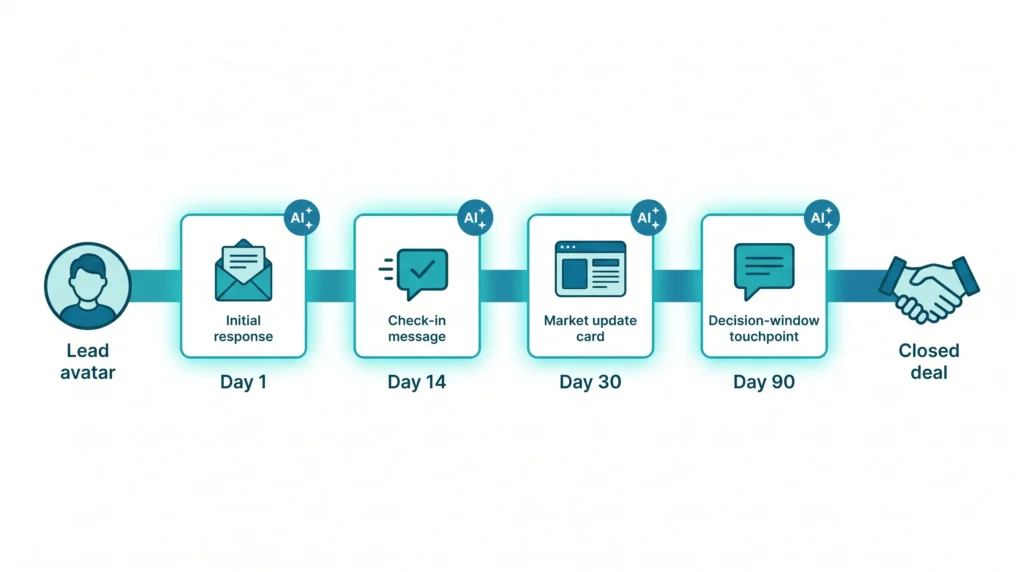
Leads who do not convert immediately, whether buyers who are “just looking” or sellers who are “thinking about listing in six months,” require consistent, non-intrusive follow-up to remain in the pipeline. Writing twelve months of personalised follow-up emails manually is not sustainable for a solo agent.
ChatGPT, given the lead’s expressed situation and timeline, generates a complete follow-up email sequence: an initial response, a two-week check-in, a one-month market update, and periodic touchpoints timed to the lead’s stated decision window. The agent personalises each email with current local market details before sending; the structure and language are already done.
The AI tools that replace a virtual assistant guide covers email automation in detail for general business use; the same approach applies directly to real estate lead nurture sequences.
Real Estate Marketing: Social Media, Graphics, and Content

AI Tools for Real Estate Marketing That Individual Agents Can Actually Afford
Real estate marketing on social media is, for most individual agents, inconsistent. When the pipeline is busy, posting stops. When things slow down, the social media effort that would generate new leads is the first thing to get dropped. AI tools address the consistency problem by reducing the time required for each piece of content to a level that fits into an already full schedule.
Canva’s AI features, including Magic Design and the AI image generator, allow agents to produce professional property marketing graphics, open house announcements, market update posts, and personal branding content without design skills. Templates built specifically for real estate are available within the platform; the AI layer generates custom graphics from a property description or brand prompt in seconds.
For agents who want custom AI imagery for their marketing, the guide on best free AI image generator for beginners covers the full range of free tools available, most of which produce output that transfers directly into a Canva design layout.
Xara (Free Plan + Paid from $9/month):
Xara automates social media post creation and scheduling with AI-generated captions and platform-optimised formatting. For agents who want a consistent social media presence without manually creating content for each platform, Xara’s automation layer handles the production while the agent provides the base property information and brand preferences.
Buffer AI Assistant (Free Tier):
Buffer’s AI assistant generates social media post variations from a single input, then schedules them across platforms at optimal posting times. For an agent posting about the same property across Instagram, LinkedIn, and Facebook, Buffer eliminates the repetitive reformatting that different platform requirements normally demand.
AI for Property Valuation Research: A Tool for Faster Market Analysis

Using AI to Speed Up Comparable Market Analysis (CMA)
Comparative market analysis is one of the most time-consuming parts of a listing presentation: pulling recent sales, adjusting for property differences, and presenting a defensible price range to a seller who has already looked at the online estimates and formed a strong opinion. AI tools do not replace the agent’s local market judgment; they accelerate the data gathering and formatting that surrounds that judgment.
Perplexity AI searches current property listing data, market reports, and real estate news in real time, providing sourced summaries of market conditions in specific areas. For an agent preparing for a listing presentation, a ten-minute Perplexity research session on current market trends, recent sale patterns, and buyer demand signals provides the context framing for a CMA without the hour of manual report reading that would otherwise be required.
Importantly, Perplexity AI, like ChatGPT, can generate inaccurate specific numbers if asked for precise comparable sale prices without a current data source. Use it for market context and trend identification; verify specific comparable sales through your MLS or listing platform directly.
ChatGPT for CMA Presentation Formatting:
Once the comparable data has been gathered through the MLS, ChatGPT can format the analysis into a clear, professional narrative for the seller presentation: explaining the pricing rationale, addressing likely seller objections, and framing the recommended price range in language that communicates confidence without being dismissive of the seller’s expectations.
Client Communication: Drafting Emails, Updates, and Difficult Messages
Real estate client communication covers a wide emotional range: excited first-time buyers, anxious sellers, disappointed bidders, and clients frustrated by delays in the transaction process. Drafting a message that is accurate, professional, and appropriately calibrated to the client’s emotional state takes more time than most agents budget for it.
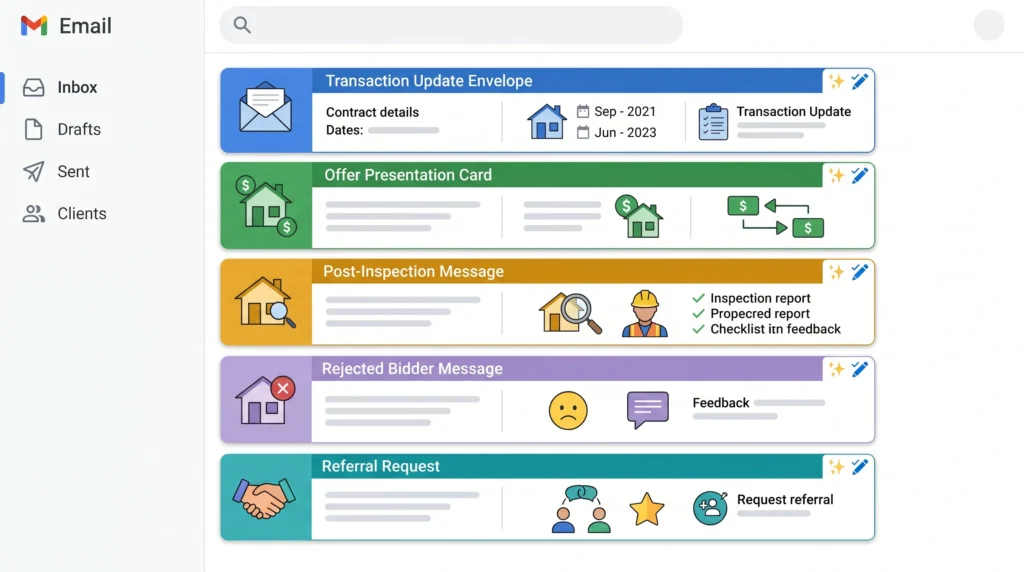
ChatGPT handles the structural drafting; the agent provides the factual details and emotional context, and edits the output to match the specific client relationship. Tasks that work well:
- Transaction status update emails when a milestone has been reached or delayed
- Offer presentation messages to sellers, including framing multiple offer situations
- Post-inspection communication explaining findings and next steps
- Rejection messages for unsuccessful bidders that maintain the relationship for future transactions
- Referral request messages to satisfied clients post-closing
For context on how AI communication tools work across broader business functions, the AI tools that replace a virtual assistant guide covers the email drafting and client communication workflow in detail.
AI Tools Real Estate Agents Should Not Over-Rely On

This section matters as much as everything above. Knowing where AI falls short prevents the mistakes that cost agents listings, clients, and professional reputation.
Negotiation and pricing judgment: AI tools do not understand the specific dynamics of a particular seller’s motivation, a buyer’s emotional attachment, or the unspoken signals in a counteroffer conversation. These remain entirely within the agent’s domain.
Local market specifics: General AI tools will produce confident-sounding but potentially inaccurate information about specific neighbourhood dynamics, recent sale prices, or local planning developments. Always verify AI-sourced market information through current MLS data.
Legal and contract language: No AI tool should be trusted to produce, review, or interpret contract language for real estate transactions without qualified legal review. Use AI for client communications and marketing content; contract work requires professional oversight.
Relationship building: Clients choose agents they trust and feel comfortable with. That trust is built through human interactions: the listening, the problem-solving, the responsiveness in difficult moments. AI tools free up time for those interactions; they do not substitute for them.
A Practical AI Starting Stack for Individual Real Estate Agents

Rather than adopting every tool at once, here is a realistic sequence that delivers immediate time savings without overwhelming the learning curve:
- Week 1: Use ChatGPT for every listing description and follow-up email. Nothing else changes. Measure the time saved.
- Week 2: Add Tidio to your website for lead capture. Review the qualified summaries it generates versus your previous form submissions.
- Week 3: Use Canva AI for your next five social media posts. Measure the production time compared to your previous approach.
- Week 4: Try BoxBrownie virtual staging on one vacant listing. Compare buyer engagement on that listing against comparable listings with standard photography only.
That four-week sequence costs between $0 and $50 in total and introduces tools with direct, measurable impact on two of the highest-value activities in an agent’s business: lead conversion and listing presentation quality.
Frequently Asked Questions
Q. Can AI tools actually help me close more deals, or just save time on admin?
Both, but through different mechanisms. Time savings are direct and immediate: tasks that took forty minutes take five. Deal closing improvement is indirect: when administrative time is reduced, agents have more capacity for client relationships, faster lead response times, and more consistent follow-up, all of which improve conversion rates over time. AI does not close deals; agents do. AI gives agents more time and better tools to do that closing.
Q. Is ChatGPT reliable for real estate listing descriptions without editing?
No, and every agent who uses it should understand this clearly. ChatGPT produces strong first drafts that require editing for accuracy, local specifics, and MLS compliance. It occasionally generates plausible-sounding but incorrect details if the property information provided is incomplete. Always review every AI-generated listing description against the property’s actual specifications before publishing.
Q. How much do these AI tools cost for an individual agent monthly?
A practical solo agent stack using the tools in this guide costs between $0 and $80 per month: ChatGPT free tier ($0), Canva free tier ($0), Tidio free tier ($0), Buffer free tier ($0), Perplexity AI free ($0), Write.homes basic plan ($8/month), and BoxBrownie on a per-credit basis (approximately $1.60 to $4.00 per virtual staging edit). The total investment is substantially less than a single hour of administrative assistant time.
Q. Will AI replace real estate agents?
The honest answer is: not the tasks that actually define the profession. Property search, comparable analysis, basic information provision, and administrative processing are already being affected by AI tools and platform automation. The relationship management, negotiation strategy, local market judgment, and client advocacy that differentiate excellent agents are not tasks that AI tools perform or are close to performing. Agents who use AI tools to eliminate administrative work and invest that recovered time in client relationships are strengthening their position; agents who ignore these tools are spending time on tasks that platforms will increasingly automate around them.
Q. Do I need technical skills to set up these AI tools?
No. Every tool in this guide is designed for non-technical users. ChatGPT requires typing. Canva requires clicking through templates. Tidio installs on a website via a plugin or embed code with no coding required. BoxBrownie requires uploading a photo. The learning curve for any individual tool in this guide is measured in hours, not days or weeks.

Final Thoughts
The agents who will look back at 2026 as the year their business changed are not the ones who waited for the perfect AI platform or the brokerage to adopt something at the enterprise level. They are the ones who spent an afternoon setting up ChatGPT for listings, installed Tidio on their website, and started using Canva AI for social media content; and then watched the hours previously consumed by those tasks become available for the work that actually builds a real estate career: knowing more clients, understanding their situations more deeply, and being present when the deals get difficult.
That is where the leverage is. The tools make it possible. The agent still has to show up.