

Every local business you drive past today is quietly losing money to a problem nobody talks about: the phone ringing and nobody picking up. A dental office misses a call while the receptionist is with a patient. A plumber misses a call because he’s under a sink. A salon misses a call because the front desk is empty for lunch. Each of those calls is a customer who, more often than not, simply calls the next business on the list.
That gap is exactly why an AI voice agent business has become one of the more realistic AI-powered income opportunities of 2026. Instead of selling a tool, you’re selling a fix for a problem every local business owner already feels in their gut. And unlike a lot of AI side hustles that require great technical skill, building and selling AI phone receptionists is now something a motivated beginner can learn in a few weeks.
This guide walks through what an AI voice agent actually is, which platforms make the most sense for non-developers, how to build your first call flow, who to sell it to, and how to price the service so it turns into recurring income rather than a one-time gig.
What Is an AI Voice Agent? (And Why Local Businesses Are Suddenly Paying for One)
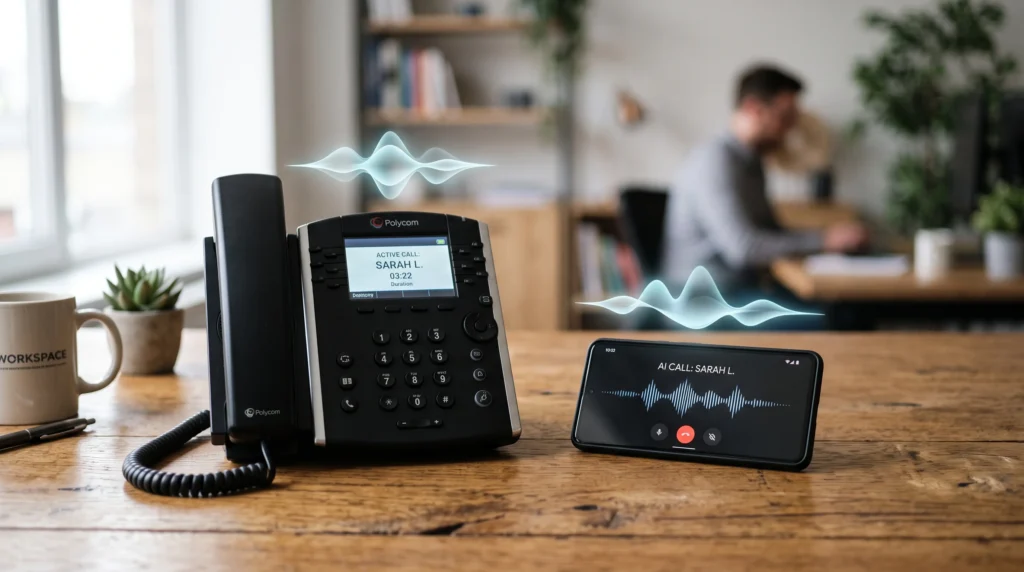
An AI voice agent is software that answers a phone call, understands what the caller wants using natural language, and responds in a realistic voice, either by handling the request itself or routing it to a human. It’s the evolution of the old phone-tree system, except it actually holds a conversation instead of making callers press 1 for sales.
The reason 2026 is the tipping point isn’t that the technology is brand new. Voice AI has existed for years. What changed is cost and quality. Per-minute pricing for a usable voice agent has dropped into a range that undercuts what a single missed call typically costs a business, while the voices themselves have become natural enough that most callers don’t immediately clock that they’re talking to software.
This is a natural next step for a site like Nfeni, since it builds directly on ground already covered in How to Build an AI Chatbot for Small Business With No Coding (And Charge $500+) and Make Money with Voice AI: Free ElevenLabs & Murf.ai Guide for Beginners 2026. A chatbot handles typed conversations on a website. A voice agent handles the phone, which for most local businesses is still the primary way customers make contact and the channel where a missed connection costs the most.
The Real Opportunity: What a Missed Call Actually Costs a Small Business

Here’s the concise answer first: a missed call isn’t just a missed call, it’s a lost booking, and for service businesses that book appointments, that translates directly into lost revenue that never shows up on a report explaining why.
Think about how a typical local service business operates. The person answering the phone is usually also the person doing the work: cutting hair, fixing a car, cleaning teeth, showing a house. When they’re busy, which is most of the day, the phone rings out. Some callers leave a voicemail. Most don’t. They just call the next number on the search results page.
An AI voice agent doesn’t get busy. It doesn’t take lunch breaks, doesn’t go home at 5 p.m., and doesn’t have a bad day that makes it short with a caller. It answers every single time, asks the right qualifying questions, and either books the appointment directly into a calendar or captures the lead cleanly for a callback. For a business owner, that’s not a nice-to-have feature; it’s revenue that used to leak out quietly and now doesn’t.
This is also why the pitch for this service is easier than most AI side hustles. You’re not explaining artificial intelligence to a skeptical business owner. You’re showing them a number: how many calls they likely missed last week, multiplied by what an average customer is worth.
Best No-Code AI Voice Agent Business Platforms for Beginners

You don’t need to write a line of code to build a functioning AI voice agent in 2026. A handful of platforms have built visual, drag-and-drop interfaces specifically so non-developers can design call flows.
Retell AI is generally the most approachable starting point for a true beginner, with a visual flow builder and templates aimed at common use cases like appointment booking and lead qualification. Vapi leans slightly more technical but offers deeper customization once you’re comfortable, along with strong integrations for connecting calendars and CRMs. Bland AI is known for handling high call volume reliably, which matters once you have several clients running agents simultaneously. Synthflow is worth testing too, since it markets itself specifically toward agencies building this as a service rather than a single in-house tool.
A sensible approach is to open free trials on two of these platforms, build the same simple call flow on each, and compare how intuitive the process feels. You’re not looking for the platform with the most features; you’re looking for the one you can actually operate confidently and explain to a client without stumbling.
Step 1: Design Your First Call Flow

Before touching any platform, write out the conversation on paper. What does the AI say when it picks up? What questions does it need to ask to book an appointment or capture a lead? What happens if the caller asks something outside the script? And critically, when does the call get handed off to an actual human?
That last point matters more than beginners usually expect. The businesses that get the most value from an AI voice agent aren’t trying to replace every human interaction; they’re trying to catch the calls that would otherwise go unanswered and hand anything complicated straight to a person. Build a clear fallback path: if the caller sounds frustrated, asks for a manager, or needs something the script can’t handle, the agent should say so honestly and transfer or take a message, rather than pretending to understand.
Keep the first flow simple. A basic appointment-booking agent for something like a hair salon or auto shop only needs to greet the caller, ask what service they need, offer available time slots, confirm the booking, and collect a callback number as backup. Complexity can come later once you’ve delivered a few working agents.
Step 2: Connect a Phone Number, Calendar, and CRM
Once the conversation logic is built, the agent needs to actually function in the real world. That means connecting a dedicated phone number, which most platforms let you provision directly or port over from an existing business line. It also means connecting a calendar, usually Google Calendar or a scheduling tool, so the agent can check real availability instead of guessing.
If the client already uses a CRM, connecting the voice agent so new leads land there automatically saves them from manually re-entering information, and it’s a feature you can genuinely charge more for. This is where familiarity with Best No-Code AI Automation Tools to Earn Money Online in 2026 (Zapier, Make & More) pays off, since Zapier or Make can often bridge the gap between a voice platform and whatever calendar or CRM a specific client happens to use.
Step 3: Test It Like a Real Customer Before You Sell It
Never hand a client a voice agent you haven’t personally called and tried to break. Call it as a genuinely confused customer would: interrupt it mid-sentence, ask something off-topic, mumble, give it a wrong date, ask for a discount that doesn’t exist. Note where it stumbles or sounds robotic, then refine the script.
This testing phase is where beginners are tempted to cut corners, and it’s exactly where a poorly tested agent embarrasses a client in front of their own customers. A voice agent that mishandles even one real caller can undo weeks of trust-building with a business owner, so treat this step as non-negotiable rather than optional polish.
Which Local Businesses Need This Most?

Not every business type benefits equally from an AI voice agent, so targeting the right ones makes selling far easier. Service businesses that rely on phone-booked appointments and lose real money when a call goes unanswered are the strongest fit.
HVAC and plumbing companies are a natural first market, since missed calls during emergencies often mean a customer calls a competitor within minutes. Dental and medical offices lose bookings the same way, and a voice agent that handles appointment confirmations and rescheduling frees up front-desk staff for patients physically in the office. Salons and spas, auto repair shops, and real estate agencies all share the same pattern: the person who should be answering the phone is usually busy doing the actual work.
If you’ve already read Nfeni’s coverage of AI Tools for Real Estate Agents to Save Time or Best Free AI Tools for Restaurant Owners, you’ll recognize these as some of the same verticals worth approaching, just with a phone-based service instead of a general toolkit.
How to Pitch and Price Your AI Voice Agent Service

Here’s the direct answer before the detail: most beginners charge a setup fee somewhere between $300 and $1,500 depending on complexity, plus a monthly retainer between $150 and $500 that covers hosting, minutes, and ongoing tweaks.
The setup fee covers the actual build: designing the call flow, configuring the platform, connecting the phone number, calendar, and CRM, and testing everything before launch. The monthly retainer is where the real business lives, because it turns a one-time project into recurring income, and it also covers the per-minute usage costs the platform charges you, so you’re not losing money as call volume grows.
When pitching, lead with the cost of the problem rather than the mechanics of the solution. Ask the business owner roughly how many calls they think they miss in a busy week, then walk through what even a modest portion of those calls converting into appointments would be worth over a year. Offer to build a working demo using their actual business details before asking for payment; a live demo that answers questions about their specific services is far more convincing than any explanation of the technology.
Legal and Disclosure Basics: TCPA, Consent, and Letting Callers Know They’re Talking to AI
Before selling this as a service, understand the basic legal guardrails. Regulations around automated calling, generally covered under TCPA-style consumer protection rules, exist to prevent deceptive or unwanted automated communication. The safest approach for an inbound AI voice agent, meaning one that only answers calls a customer initiates rather than making outbound calls, is straightforward: have the agent clearly identify itself as an AI assistant near the start of the call.
This isn’t just a legal precaution; it’s good practice. Callers who know they’re speaking with an AI tend to be more patient and clearer in what they ask for, and it protects both you and your client from complaints about deceptive practices. Avoid using AI voice agents for unsolicited outbound calling or anything resembling telemarketing without proper consent, since that’s where legal risk increases significantly, and rules vary by jurisdiction.
Common Mistakes That Make an AI Voice Agent Sound Robotic (And Lose the Client)

The single biggest mistake beginners make is writing a script that sounds like a script. Real conversation has small imperfections, brief acknowledgments, and natural pacing. An agent that responds instantly to everything in perfectly formal sentences feels uncanny to callers, even when the voice itself sounds realistic.
Other common mistakes include failing to build a proper fallback for unexpected questions, which leaves the agent repeating itself or giving a nonsensical answer; skipping the human handoff option entirely, which frustrates callers with genuinely complex needs; and not updating the agent’s knowledge when a client changes their hours, pricing, or services. Treat every voice agent as something that needs periodic maintenance, not a one-time build you never touch again, and build that maintenance into your monthly retainer rather than doing it for free.
Conclusion
An AI voice agent business works because it solves a problem business owners already feel every day without needing to be convinced it exists. You’re not selling artificial intelligence as a concept; you’re selling back the customers a business was quietly losing to a ringing phone. Starting is genuinely accessible in 2026: pick a platform like Retell AI, Vapi, or Bland AI, build one solid call flow, test it relentlessly, and take it to a single local business as a live demo before you ever mention price.
Once you land your first client and see the retainer land in your account every month, the model becomes easy to repeat across HVAC companies, dental offices, salons, and auto shops in your area or entirely remotely. Combined with what you’ve already learned from Nfeni’s coverage of Best AI Side Hustles You Can Start With No Money in 2026 and Best AI Tools for Small Business Owners 2026, this is one of the clearer paths from AI curiosity to real, recurring income.
Frequently Asked Questions
Q. Can a complete beginner really start an AI voice agent business in 2026?
Yes. No-code platforms handle the technical heavy lifting, so the real skill to develop is designing clear call flows and pitching business owners on the value, not writing code.
Q. How much should I charge a local business for an AI voice receptionist?
Most beginners charge a setup fee of $300 to $1,500 depending on complexity, plus an ongoing monthly retainer of $150 to $500 that covers usage and maintenance.
Q. Which AI voice agent platform is easiest for non-developers: Vapi, Bland, or Retell?
Retell AI is generally the friendliest starting point for beginners due to its visual flow builder, though it’s worth trialing more than one platform before committing.
Q. Is it legal to use AI voice agents to answer business phone calls?
Inbound AI voice agents that answer calls a customer initiates are generally fine as long as the AI clearly identifies itself. Outbound automated calling carries stricter legal requirements and more risk.
Q. How is an AI voice agent different from a regular chatbot?
A chatbot handles typed conversations, usually on a website, while a voice agent answers live phone calls and responds using natural speech, which is still the primary contact method for most local service businesses.
Q. What kind of businesses benefit most from an AI voice agent?
Appointment-driven service businesses like HVAC, plumbing, dental offices, salons, auto repair shops, and real estate agencies see the clearest return, since missed calls directly translate into lost bookings.
Q. Do I need a background in AI or programming to offer this service?
No. The platforms are built with visual, no-code interfaces, so the more important skills are clear communication, basic project organization, and understanding how a local business actually operates.
Q. How long does it take to build and launch a client’s first AI voice agent?
A straightforward appointment-booking agent can typically be built, tested, and launched within a few days to a week, depending on how much back-and-forth is needed to finalize the script.
Q. Can an AI voice agent completely replace a business’s front-desk staff?
Not usually, and it shouldn’t try to. The strongest setups use the AI to catch calls that would otherwise go unanswered and hand off complex situations to a human, rather than eliminating staff entirely.
Q. What’s the biggest risk of offering this as a service?
The biggest risk is under-testing the agent before launch. A poorly tested voice agent that confuses or frustrates a client’s real customers can damage trust quickly, so thorough testing before going live is essential.