
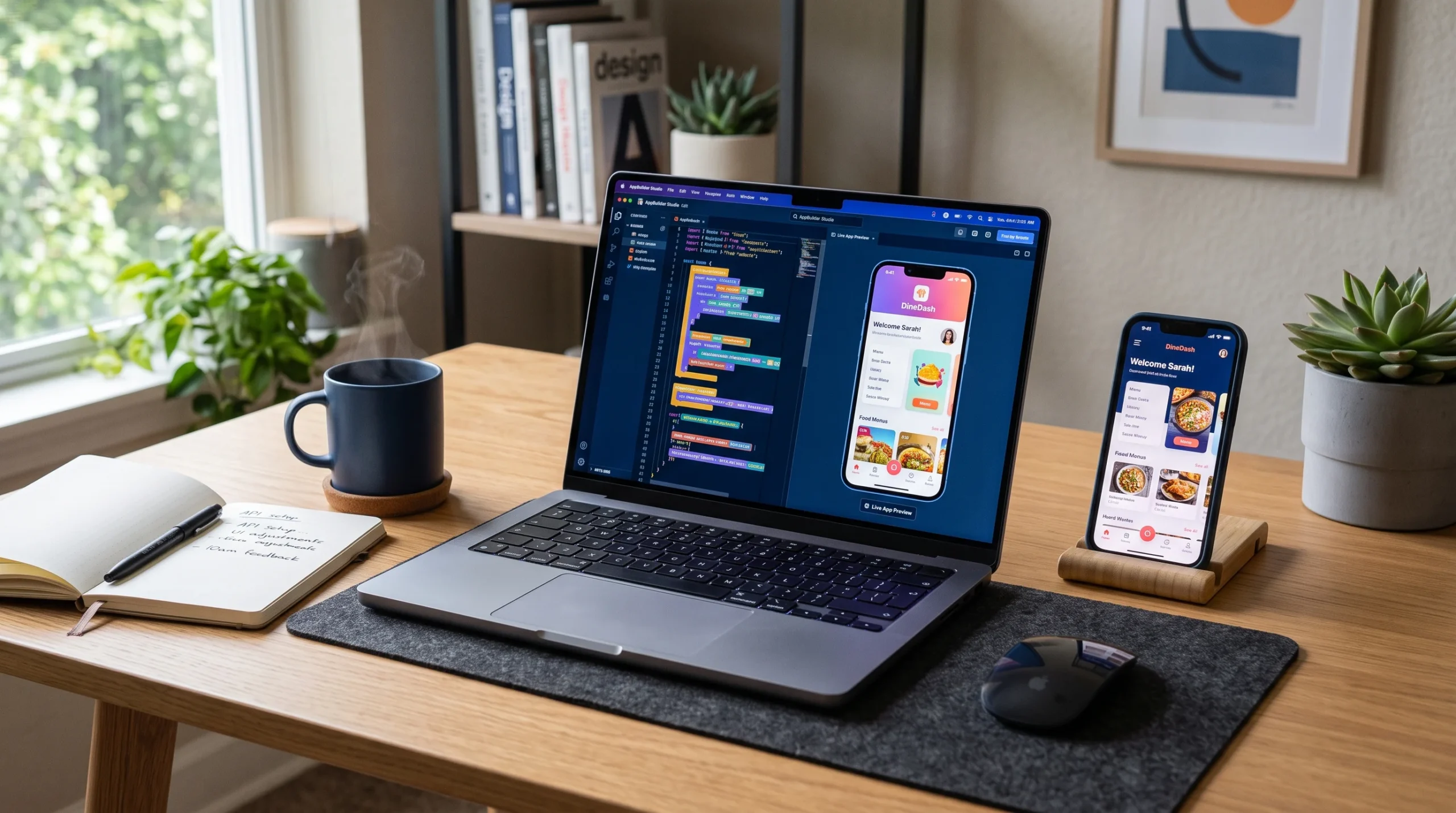
How to make money with vibe coding: A year ago, “vibe coding” was a niche phrase floating around tech Twitter. Today it’s a dictionary-recognized term, a multi-billion-dollar tool category, and one of the fastest ways for a complete beginner to build something people will actually pay for. If you’ve ever had an app idea but assumed you needed years of programming experience to build it, that assumption no longer holds.
This guide breaks down exactly what vibe coding is, which tools to start with, and more importantly, how to turn what you build into real income, whether that’s a one-time template sale, a recurring micro-SaaS subscription, or paid client work.
What Is Vibe Coding? A Plain-English Explanation for Beginners

Vibe coding means describing what you want an app to do in plain English, and letting an AI model write, test, and refine the underlying code for you. Instead of learning syntax, you learn how to communicate your idea clearly; the AI handles the technical translation.
The term describes a genuine shift in how software gets built. Traditional development required understanding programming languages, frameworks, and debugging logic. Vibe coding tools sit on top of large language models trained specifically to generate working applications from conversational prompts. You type something like “build me a simple tool that lets users upload a CSV and see it as a bar chart,” and the platform generates a functional interface, backend logic, and often a working preview within seconds.
This doesn’t mean the process is effortless. You still need to think like a product builder: understanding what problem you’re solving, testing the output, and iterating when something breaks. But the barrier that used to keep non-programmers out of app development has effectively collapsed.
It’s worth noting that vibe coding isn’t the same as older no-code platforms. Traditional no-code tools like Bubble or Webflow rely on drag-and-drop builders with fixed components. Vibe coding tools generate actual, editable source code from natural language, which means the apps are more flexible, easier to customize deeply, and often closer to what a professional developer would produce by hand.
Best Free Vibe Coding Tools to Start With (Lovable, Bolt, Google AI Studio, Replit)

You don’t need a budget to start. Several leading platforms offer generous free tiers that are more than enough for building and testing your first app.
Lovable has become one of the most popular entry points for beginners because it focuses on turning a single prompt into a working web app, complete with a database and user authentication if needed. It’s particularly good for building tools with a visual interface, like dashboards or client portals.
Bolt.new takes a similar conversational approach but gives you more visibility into the underlying code as it’s generated, which is useful once you want to start making small manual tweaks.
Google AI Studio has expanded well beyond simple prompt testing and now supports building and deploying lightweight applications directly from natural-language instructions, which pairs well if you’re already using Gemini-based tools for other tasks.
Replit remains a strong option if you want a bit more control over the development environment while still leaning on AI assistance for the heavy lifting. It’s especially useful once your app grows more complex or you want to collaborate with someone else.
A sensible approach for beginners: pick one tool, build something small end-to-end, and resist the urge to compare five platforms before you’ve shipped anything. The tool matters far less than the habit of finishing what you start.
5 Real Ways, How to Make Money With Vibe Coding in 2026
The concise answer: you can earn through selling finished apps, subscription-based micro-SaaS products, cloneable templates, freelance client builds, or app flipping. Here’s how each works in practice.
1. Build and sell a finished micro-app. Many beginners start by solving a small, specific problem: a habit tracker, an invoice generator, a niche calculator, and selling access as a one-time purchase or through a marketplace.
2. Launch a micro-SaaS with recurring billing. Instead of a one-off sale, you charge a small monthly fee for ongoing access. This is where vibe coding really shines, because recurring revenue compounds over time even from a small user base.
3. Sell cloneable app kits or templates. If you build something useful, you can package the underlying structure and sell it to other builders who want a head start rather than building from scratch.
4. Take on freelance client builds. Small businesses increasingly want custom internal tools, booking systems, dashboards, lead trackers, and don’t want to hire a full development team for something simple.
5. Flip completed apps. Some builders create small, functional apps purely to sell the entire project, including the code and user base, to someone else who wants to run it.
Most successful beginners don’t pick just one path forever. A common pattern is starting with freelance builds to generate quick cash flow, while simultaneously developing a micro-SaaS product on the side for longer-term recurring income.
Step-by-Step: Build Your First App and Publish It Online

Start small. The biggest mistake beginners make is trying to build something too ambitious for a first project.
Step 1: Pick a narrow problem. Choose something you personally understand well, a tool for a hobby, a task you do repeatedly at work, or a gap you’ve noticed in an existing product.
Step 2: Write a clear, specific prompt. Instead of “build me a project management app,” try “build a simple tool where a user can create a list of tasks, mark them complete, and see a progress percentage.” Specificity produces better first drafts.
Step 3: Test everything the AI generates. Click every button, submit every form, and try to break it. Vibe-coded apps often work well on the surface but have edge cases that fail under real use.
Step 4: Iterate in small chunks. Ask for one change at a time rather than requesting five modifications in a single prompt. This keeps the AI’s output predictable and easier to debug.
Step 5: Connect a custom domain and deploy. Most vibe coding platforms include one-click hosting. Once your app works reliably, publish it and get it in front of a handful of real users before promoting it broadly.
Step 6: Collect feedback before scaling. Five real users testing your app will teach you more than a week of solo tweaking. Use their feedback to fix friction points before you invest more time.
How to Sell Cloneable App Kits and Templates
A concise answer first: package your app’s structure, remove client-specific data, write clear setup instructions, and list it on a marketplace or your own site.
This model appeals to people who don’t want ongoing customer support obligations. You build something once, say, a simple CRM template or a booking system — and sell the underlying build to other creators or small businesses who want to launch quickly without starting from zero.
The key to making this work is documentation. A template that’s confusing to set up won’t sell well, no matter how good the underlying app is. Include a short setup guide, a demo video, and a clear list of what customization options are available. Pricing for cloneable kits typically ranges from a modest one-time fee for a simple template to a higher price for more complex, ready-to-deploy business tools.
If you’ve read How to Build an AI Chatbot for Small Business With No Coding (And Charge $500+), you’ll notice the same packaging logic applies here: the value isn’t just the build; it’s how easy you make it for someone else to use it.
How to Turn a Vibe-Coded App Into a Micro-SaaS Subscription

This is where the real income ceiling opens up. A micro-SaaS is a small, focused software product with a narrow use case, run with minimal overhead, typically by one person or a tiny team.
To convert a standalone app into a subscription product, you need three things beyond the core functionality: user accounts, payment processing, and a reason for people to keep paying monthly rather than buying once. Most vibe coding platforms now support built-in authentication and integrate directly with payment processors, which removes what used to be the hardest technical hurdle for solo builders.
The “reason to keep paying” is the part most beginners underestimate. A subscription only makes sense if the tool provides ongoing value, data that accumulates over time, content that updates regularly, or a workflow the user relies on repeatedly. A one-time calculator doesn’t justify a subscription; a tool that tracks something over weeks or months does.
Pricing a micro-SaaS product is more art than science early on. A common starting approach is a low monthly price with a free trial, then adjusting based on how quickly users convert and how much value they report getting. Small, focused products with a clear niche audience tend to retain subscribers better than broad, generic tools trying to serve everyone.
Freelance Route: Building Custom Apps for Paying Clients

The quickest way to generate income from vibe coding skills is often client work, because it doesn’t require building an audience first; you’re solving a specific problem for someone who’s already looking for a solution.
Small businesses are a strong starting market. Many need simple internal tools: appointment schedulers, inventory trackers, client intake forms, or basic dashboards. These businesses often can’t justify hiring a developer for a project this small, which creates an opening for someone who can deliver a working tool quickly using AI-assisted building.
To find your first clients, look in small business communities, local networking groups, and freelance platforms. If you’ve explored AI Tools for Freelancing on Fiverr and Upwork, the same principles apply: a clear portfolio piece, even a single well-built demo app, does more to win clients than a long list of skills on a profile page.
Price freelance builds based on the complexity of the request and ongoing maintenance expectations, not just the time it takes to generate the first version. Clients are paying for a working solution to their problem, not for the number of prompts you typed.
How Much Can You Realistically Earn? (Month 1 vs Month 6)

In the first month, most beginners are still learning the tools, testing ideas, and shipping their first one or two projects. Income at this stage tends to be modest and inconsistent, a small template sale here, a first freelance client there. The goal in month one shouldn’t be maximizing revenue; it should be shipping something real and learning what resonates with actual users.
By month six, builders who’ve stayed consistent typically have a small portfolio of shipped apps, a repeatable process for taking on client work, and possibly one micro-SaaS product with early recurring subscribers. Income at this stage becomes noticeably more stable, particularly for those who’ve combined freelance work for cash flow with at least one product generating passive, recurring revenue.
The biggest variable isn’t the tools you use; it’s consistency. Builders who ship small projects regularly and improve based on real feedback tend to outpace those who spend months perfecting a single app that never launches.
Common Mistakes Beginners Make With Vibe Coding

Avoid these pitfalls, and you’ll move faster than most people starting out.
- Overbuilding the first project. Trying to launch a fully-featured app before validating that anyone wants it wastes time and momentum.
- Skipping real user testing. An app that only you have used will almost always have hidden problems.
- Ignoring security basics. Vibe-coded apps that handle user data or payments still need proper authentication and data handling, even if the AI generated most of the logic.
- Ghost-writing prompts without understanding output. Not reading or understanding the generated code makes it much harder to fix issues later or communicate with clients about how something works.
- Pricing too low out of fear. New builders often underprice their work dramatically, which makes the business harder to sustain long-term.
- Chasing every new tool. Constantly switching platforms before mastering one slows progress far more than sticking with a single tool through your first few builds.
Is Vibe Coding a Long-Term Skill or Just a 2026 Trend?
The short answer: it’s a lasting shift in how software gets built, not a passing trend. The underlying skill, clearly communicating requirements and iterating with AI assistance, maps directly onto how professional software development is evolving industry-wide, not just in beginner tools.
What will change is the sophistication of the tools and the expectations placed on builders. As more people adopt vibe coding, differentiation will come from product thinking, design sense, and business skills like pricing and customer support, rather than from the ability to write code by hand. This is similar to how How to Use AI Agents to Make Money Online in 2026 — Beginner’s Complete Guide describes a broader pattern: the technical barrier keeps dropping, while the value of knowing how to apply the technology well keeps rising.
For beginners entering now, that’s good news. You’re not learning a niche trick that will disappear, you’re building a skill set that’s becoming foundational to how digital products get made.
Conclusion
Vibe coding has closed the gap between having an idea and building it. You no longer need a computer science degree or months of learning to code before you can launch something real. What matters now is picking a specific problem, using the right free tools to build a working version, and understanding the different ways to turn that app into income, whether through direct sales, subscriptions, templates, or client work.
Start small, ship quickly, and treat your first few apps as learning projects rather than perfect products. The builders earning consistently in 2026 aren’t necessarily the most technically skilled; they’re the ones who kept shipping, listened to real users, and treated vibe coding as a genuine business skill rather than just a novelty.
Frequently Asked Questions
Q. Is vibe coding really free to start?
Yes. Most major platforms, including Lovable, Bolt, and Replit, offer free tiers that let you build and publish a functional first app without any upfront cost.
Q. Do I need any coding knowledge to vibe code an app?
No coding knowledge is required to start, though a basic understanding of how apps function helps you write clearer prompts and troubleshoot issues faster.
Q. Can I actually make money selling apps I vibe coded?
Yes. Beginners earn through one-time app sales, subscription-based micro-SaaS products, cloneable templates, and freelance client builds.
Q. What’s the difference between vibe coding and no-code tools like Bubble?
No-code tools use fixed drag-and-drop components, while vibe coding generates actual editable source code from natural-language prompts, offering more flexibility and customization.
Q. Which vibe coding tool is best for complete beginners in 2026?
Lovable is widely considered the most beginner-friendly starting point due to its conversational interface and built-in hosting, though Bolt and Replit are strong alternatives.
Q. How long does it take to build a working app with vibe coding?
A simple, focused app can often be built and published within a few hours, though testing and refining based on user feedback typically takes longer.
Q. Do I need a business license to sell apps I’ve built?
Requirements vary by location and business structure, so it’s worth checking local regulations once you start generating consistent income rather than before your first sale.
Q. Can non-technical people really run a micro-SaaS business alone?
Yes. Many successful micro-SaaS products are run by solo, non-technical founders who rely on AI tools for building and maintaining the core application.
Q. What makes a good first vibe coding project idea?
A good first project solves one specific, narrow problem you understand well, rather than attempting a broad, multi-feature app.
Q. Is client freelance work or building my own product more profitable long-term?
Freelance work typically generates faster initial income, while owning a micro-SaaS product offers stronger long-term, recurring revenue potential once it gains traction.