

How to become a prompt engineer in 2026 is one of the most searched career questions in the AI space right now, and the answer is more accessible than most people expect. You do not need a computer science degree. You do not need prior AI work experience. What you do need is a clear understanding of how large language models respond to instructions, the ability to think logically and write clearly, and a structured plan for building a portfolio that proves your skills.
In May 2026, a search for “prompt engineer” on LinkedIn returns more than 18,000 active roles globally, many of them remote. That number has grown consistently for two years straight, and the supply of qualified candidates has not kept pace. This gap is exactly why people with no traditional tech background are getting hired right now.
This guide gives you everything in one place: what the job actually involves, what it pays, the skills that matter, free resources to learn them, and a step-by-step path to your first paid role.
What a Prompt Engineer Actually Does Every Day
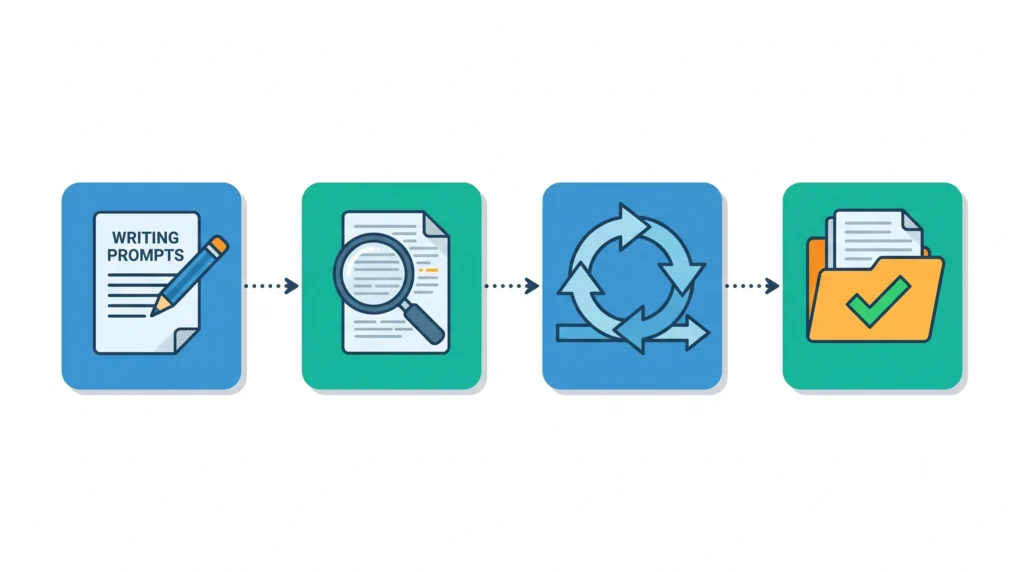
Most explanations of prompt engineering are vague. Here is the practical reality of what the job involves:
- Writing and testing system prompts: Designing the instructions that tell an AI model how to behave inside a product, chatbot, or automated workflow
- Evaluating output quality: Running structured tests to measure whether prompts produce consistent, accurate, and useful results across different inputs
- Iterating and optimizing: Adjusting prompt structure, tone, context framing, and constraints based on test results until the output reliably meets the standard required
- Documenting prompt logic: Writing clear records of what each prompt does, why it is structured a certain way, and how it should be maintained or updated
- Collaborating across teams: Working with product managers, developers, and content teams to ensure AI outputs align with business goals
Organizations are also creating specialized roles like Prompt Operations Engineer and AI Conversation Designer, expanding career paths within this field. The companies hiring most aggressively include enterprise software providers, consulting firms implementing AI for clients, and any organization building AI-powered customer experiences.
This is not about writing clever one-off queries in ChatGPT. It is systematic, documented, repeatable work that directly affects how well AI products perform.
Prompt Engineer Salary in 2026: What You Can Realistically Expect
Salary is one of the main reasons this career attracts so much attention, and the numbers are legitimate:
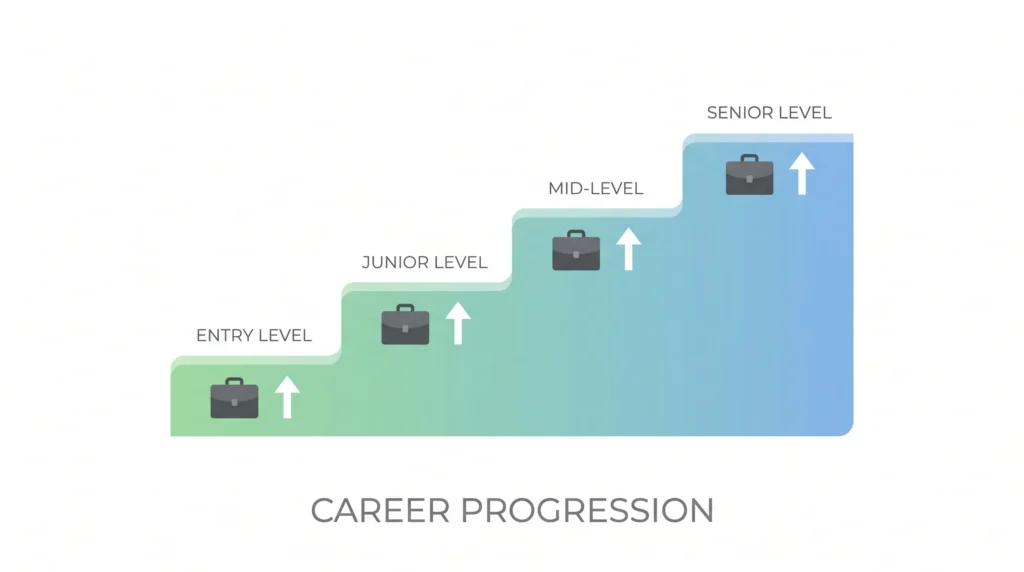
| Experience Level | Annual Salary Range |
|---|---|
| Entry Level (0 to 1 year) | $70,000 to $120,000 |
| Mid Level (1 to 3 years) | $120,000 to $170,000 |
| Senior (3 to 5 years) | $170,000 to $250,000+ |
| Freelance / Contract | $40 to $150 per hour |
At the entry level with no prior AI job experience, companies hiring value enthusiasm, a strong portfolio, and willingness to learn over credentials. The portfolio matters more than the degree at this stage, which is the core reason career changers without traditional backgrounds are successfully landing these roles.
For freelance work specifically, platforms like Upwork and PromptBase already have active markets for prompt engineers. The [AI Tools for Freelancing on Fiverr and Upwork] guide on nfeni.com covers how to position and price AI services as a freelancer if you want to start earning before committing to a full job search.
The Skills That Actually Get You Hired as a Prompt Engineer
No degree is specifically required, but the key is demonstrating systematic thinking and the ability to optimize complex systems. Many successful prompt engineers come from unexpected backgrounds like linguistics, psychology, or business analysis.
Here is a breakdown of what you actually need:
Core skills (non-technical):
- Clear written communication: Every prompt is a written instruction. Precision in language is the entire job.
- Logical structure: Breaking complex tasks into sequential steps, understanding cause and effect in how models respond
- Analytical evaluation: Reading AI outputs critically, identifying patterns in failure, and knowing what to adjust
- Attention to context: Understanding how framing, tone, and background information change model behavior
Technical skills (learnable without coding):
- Understanding of how large language models interpret instructions: context windows, token limits, temperature settings
- Familiarity with prompting techniques: chain-of-thought prompting, few-shot examples, role assignment, output formatting instructions
- Basic knowledge of how to use APIs for prompt testing (no coding required for most entry-level roles; this becomes relevant at mid-level)
Domain knowledge (your existing expertise becomes an asset):
A former nurse who understands medical terminology, a teacher who understands pedagogy, a lawyer who understands legal reasoning: all of these have a genuine competitive advantage in roles where AI is applied to their domain. Your background is not a liability; it is a specialization.
How to Become a Prompt Engineer in 2026 and Where to Learn it from Free Sources
You do not need to pay for a course to become job-ready. These are the most useful free resources available right now:
- Anthropic’s Prompt Engineering Tutorial: Free, hands-on, the best single resource for understanding prompt design from first principles
- DeepLearning.AI Short Courses: Free, one to two hours each, covering retrieval-augmented generation, agents, and prompt evaluation
- OpenAI’s Prompt Engineering Guide: Clear, practical documentation on how GPT models interpret instructions
- Learn.Anthropic.com: Structured learning path covering Claude’s behavior, system prompts, and best practices
- Promptfoo documentation: Free, the clearest introduction to prompt evaluation and automated testing available
Alongside these, daily hands-on practice using free tools is non-negotiable. The [ChatGPT vs Claude: Which AI Is Better for Your Work] comparison on nfeni.com covers both tools in detail; using both gives you a broader understanding of how different models respond to the same prompt structures.
The [New AI Models in 2026: GPT-5, Claude 4, Gemini Omni] overview is also worth reading to understand the current model landscape you will be working with as a prompt engineer.

Building a Portfolio With Zero Experience
This is where most beginners stall: they feel they cannot build a portfolio without prior work experience. That assumption is wrong. Here is how to build one from scratch:
Project 1: Prompt comparison study. Take one task (summarizing a document, writing a product description, explaining a concept) and write five different prompts for it. Document: the prompt structure, the output produced, what changed between versions, and which version performed best and why. This demonstrates systematic thinking, which is exactly what employers want to see.
Project 2: System prompt design. Design a complete system prompt for a hypothetical AI assistant in a specific domain: a customer service bot for a software company, a tutoring assistant for a specific subject, a writing assistant with a particular tone and style. Include your design rationale.
Project 3: Prompt failure analysis. Take a publicly known AI failure or hallucination example and write a structured analysis: what prompt likely caused it, what the model did wrong, and how the prompt should be redesigned to prevent it.
Project 4: Before and after optimization. Take a weak, vague prompt and a well-structured, detailed prompt for the same task. Show the outputs side by side and explain every change you made. This is the clearest possible demonstration of what prompt engineering actually involves.
Keep these projects in a simple document or a public Notion page. Real-world projects, portfolios, and hands-on demonstrations now carry equal weight with hiring managers evaluating early-career AI candidates.
If you are also exploring related income while building your portfolio, the [Best AI Side Hustles You Can Start With No Money] and [AI Tools to Make Money Online Without Investment] guides on nfeni.com cover parallel income options that require the same skills.

Where to Find Prompt Engineering Jobs in 2026
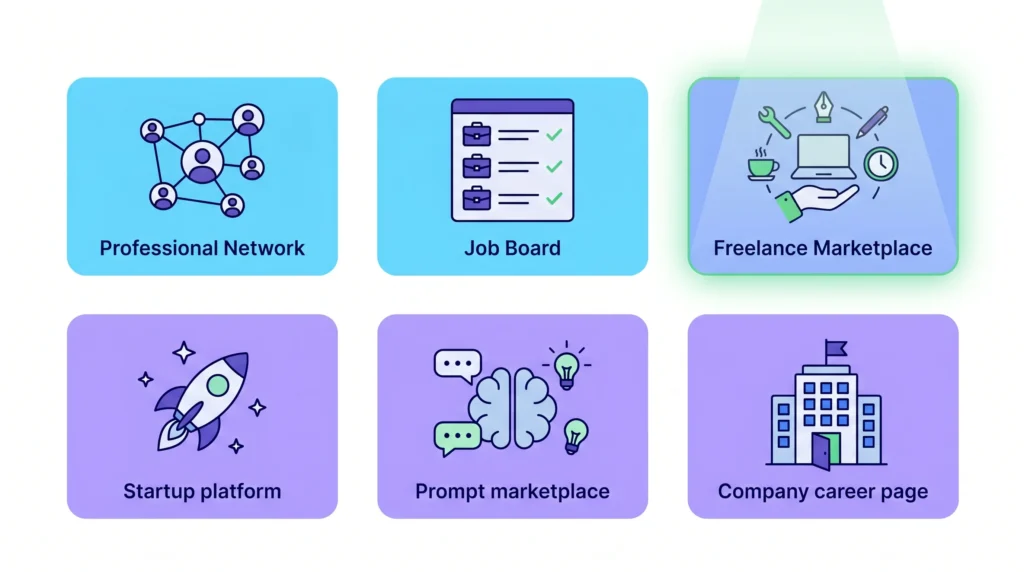
For full-time and contract roles:
- LinkedIn Jobs: Search “prompt engineer” with entry-level filter; 18,000+ active listings globally
- Indeed: Largest aggregator for AI roles; use filters for remote and entry-level
- Upwork: Active freelance market for prompt engineering projects; good for building early client experience
- PromptBase: Marketplace specifically for buying and selling prompts; useful for initial income and portfolio credibility
- AngelList / Wellfound: Startup-focused; many early-stage AI companies hire prompt engineers without rigid experience requirements
Direct company applications:
Apply directly to AI companies and any business deploying AI at scale: technology firms, healthcare platforms, finance companies, marketing agencies, and e-commerce companies all use prompt engineers. Many roles are posted on company career pages before appearing on job boards.
According to a 2026 talent acquisition study, 28% of entry-level AI positions are filled before appearing on major job boards, which means checking company career pages weekly is a genuine competitive advantage.
A Realistic Timeline to Your First Prompt Engineering Role
Most career changers need 6 to 12 months of focused learning to become competitive for entry-level positions, but freelance and contract work is achievable significantly faster:
Month 1: Complete Anthropic’s prompt engineering tutorial and DeepLearning.AI’s foundational courses. Practice daily with free Claude and ChatGPT tiers. Begin Project 1 and Project 2 from the portfolio section above.
Month 2: Complete portfolio projects 3 and 4. Start applying for data annotation and AI trainer roles (covered in [New AI Jobs Created in 2026]) to build income and hands-on AI experience simultaneously.
Month 3: Begin applying on Upwork for small prompt engineering projects. Apply to entry-level roles on LinkedIn and Indeed. Your portfolio from months 1 and 2 is your primary differentiator at this stage.
Months 4 to 6: Iterate based on feedback from applications and client work. Add domain-specific prompting knowledge in your area of expertise. By this point, you have real experience to reference in interviews.
The industry is still relatively new, which means requirements vary significantly; you can find strong roles that want prompting skills without requiring a formal degree or prior AI employment history.
What Separates Candidates Who Get Hired From Those Who Do Not
After analyzing what employers consistently ask for in entry-level prompt engineering interviews, the differentiators are clear:
- A documented portfolio, not just claims: Anyone can say they know prompt engineering; very few can show four structured projects with clear reasoning behind every decision.
- Understanding of evaluation: Knowing how to test whether a prompt is actually working is rarer than knowing how to write one. Candidates who understand evaluation stand out.
- Consistency over credentials: Hiring managers want to see evidence of sustained, self-directed learning. A GitHub profile, a public Notion portfolio, or even a detailed LinkedIn post documenting what you learned this week signals exactly that.
- Domain expertise: If you are applying for a role at a healthcare AI company, your clinical background or understanding of medical communication makes you more valuable than a generic candidate with a CS degree.
Also worth reading before your first interviews: the [Which Jobs Are Safe From AI in 2026] article covers the broader job market context that frequently comes up in AI company culture discussions.
Frequently Asked Questions
Q. Do I need to know coding to become a prompt engineer in 2026?
No, not for entry-level roles. Most prompt engineering positions prioritize writing ability, logical thinking, and output evaluation skills. Basic coding knowledge becomes useful at mid-level, particularly for API work and automated testing.
Q. How long does it take to become a prompt engineer from scratch?
Freelance and contract work is achievable within 6 to 10 weeks with focused daily practice. Competitive entry-level full-time roles typically require 3 to 6 months of portfolio building and applied learning.
Q. What is the starting salary for a prompt engineer with no experience?
Entry-level salaries range from $70,000 to $120,000 per year for full-time remote roles. Freelance rates start at $40 per hour and increase with demonstrated results.
Q. Is prompt engineering a stable long-term career?
Demand is growing consistently as more companies deploy AI in their products and operations. The role is also evolving: mid-level and senior prompt engineers take on architecture and evaluation responsibilities that are substantially harder to automate than the entry-level tasks.
Q. What is the single best free resource to start learning prompt engineering?
Anthropic’s Prompt Engineering Tutorial is the most practical starting point: it is free, hands-on, and teaches prompt design from first principles rather than surface-level tips.
Q. Can I do prompt engineering as a freelancer instead of getting a full-time job?
Yes. Upwork and PromptBase both have active markets. Freelancing also lets you build a client portfolio faster than a traditional job search, which strengthens full-time applications later.
Q. Does my non-technical background hurt my chances?
No, it often helps. Domain expertise in medicine, law, education, finance, or creative fields makes you more valuable for roles where AI is applied to those domains. Hiring managers actively look for this.
Q. What tools should I be using daily to practice?
Claude and ChatGPT both have free tiers and are the most widely used in professional prompt engineering contexts. Use both; they respond differently to the same prompts, which deepens your understanding faster.
Q. Where is the best place to find entry-level prompt engineering jobs?
LinkedIn Jobs (18,000+ active listings), Indeed, Upwork for freelancing, and direct applications to AI company career pages. Check company pages weekly since many roles fill before appearing on aggregators.
Q. How important is a portfolio compared to a degree?
Significantly more important at the entry level. A well-documented portfolio demonstrating prompt design, testing, and optimization is consistently valued above academic credentials by hiring managers in this field.
Prompt engineering is one of the clearest examples of a career where the barrier to entry is skill-based rather than credential-based. The tools to learn it are free, the demand is real, and the window for early-mover advantage is open right now. The people building portfolios this month are the ones getting interviews in three months.