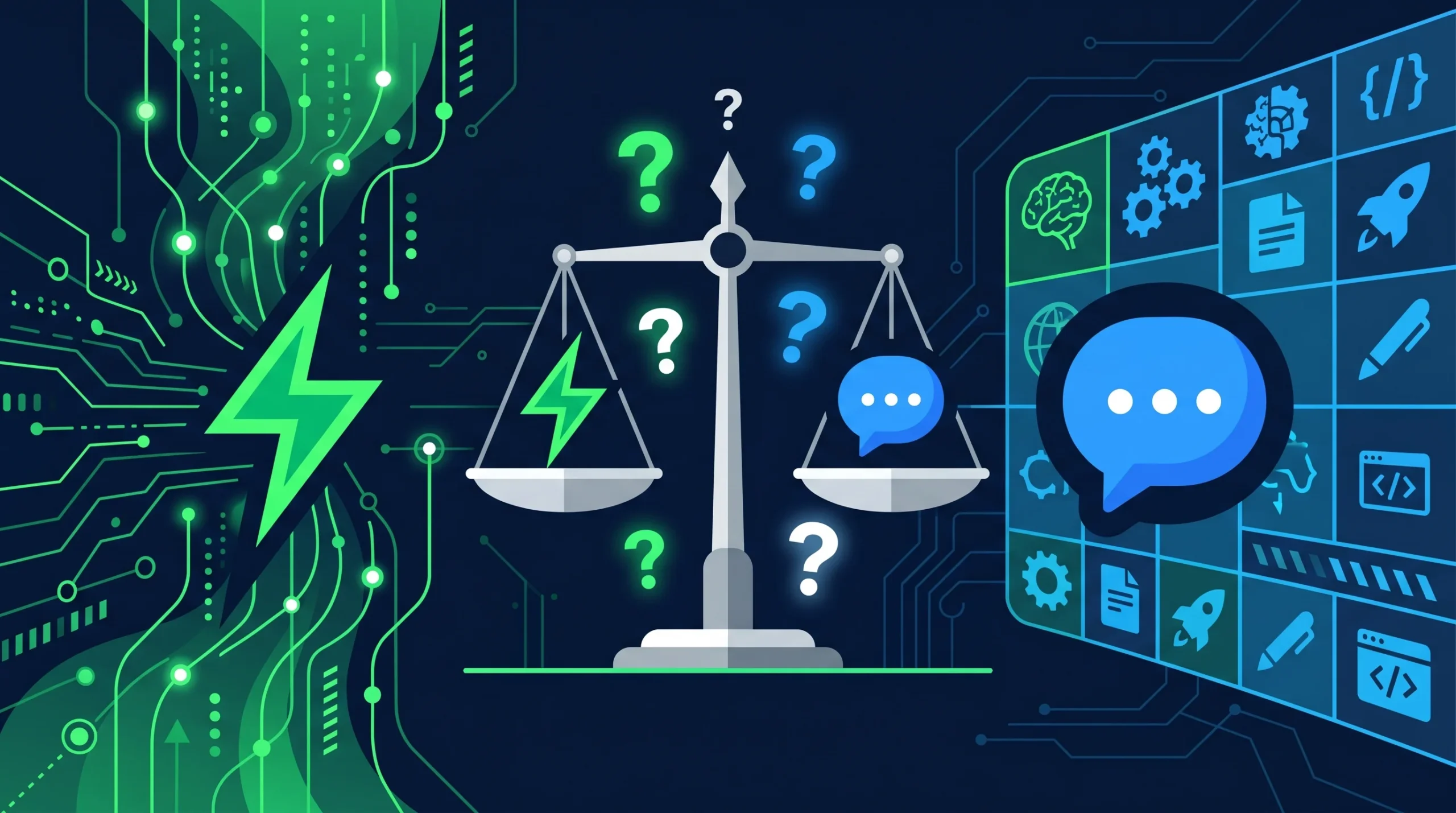
Grok vs ChatGPT: which is better in 2026 is a question that did not exist two years ago. Grok was an experiment; ChatGPT was the standard. In May 2026, that framing no longer holds. Grok 4 leads LMArena’s Elo rankings above GPT-5.5 and Claude Sonnet 4.6. It has a 2-million token context window that no other mainstream AI matches. Its API pricing is among the cheapest at the frontier. And it has one capability that no other major AI tool offers: native access to X’s live data stream, in real time.
None of that automatically makes it worth switching to. What makes a tool worth switching to is whether it handles your actual daily tasks better than what you are already using. This comparison answers that specific question: for the tasks that most people use AI for daily, who wins, where does each tool fall short, and who should actually consider paying for Grok in 2026.
If you have read the guides on new AI models in 2026: GPT-5, Claude 4, Gemini 3, ChatGPT vs Claude: which AI assistant is actually better in 2026, best AI model for coding in 2026, or AI tools to make money online without investment, you already understand how the AI tool landscape is structured. This guide adds Grok to that picture with the same honest, task-by-task approach.
What Makes Grok Different From ChatGPT at a Fundamental Level
Grok vs ChatGPT: Which Is Better in 2026: Understanding the Core Difference
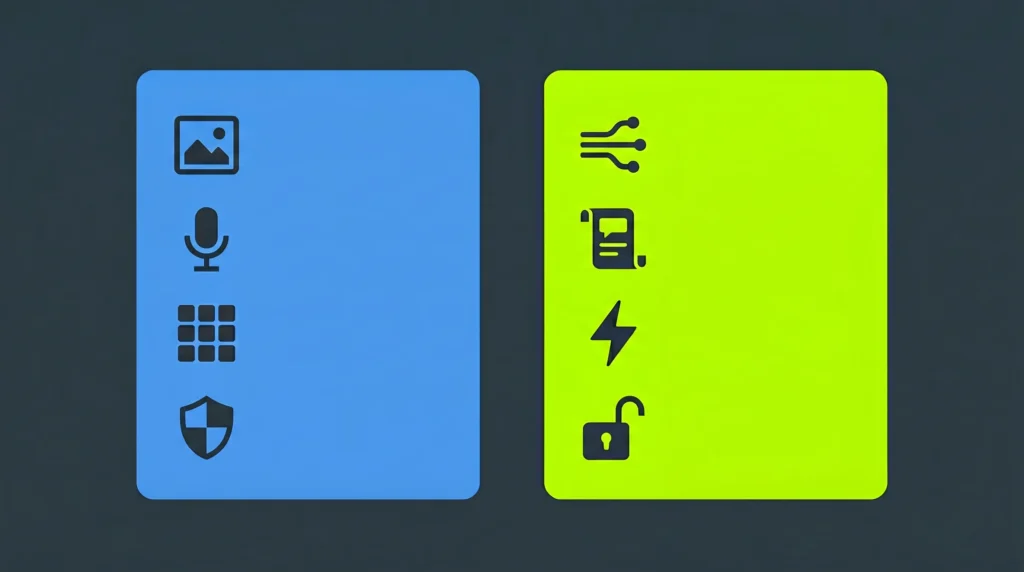
Before the task-by-task breakdown, the most important thing to understand is that Grok and ChatGPT are not just two versions of the same type of tool competing on benchmark scores. They were built with different priorities, and those priorities show up in every aspect of how they behave.
ChatGPT was built to be a broadly capable, broadly safe, broadly integrated AI assistant for the widest possible range of users. Over five years of iteration, it has accumulated an ecosystem: Custom GPTs, DALL-E image generation, voice mode, Code Interpreter, Sora video generation, extensive enterprise integrations, and a safety layer calibrated toward avoiding harmful outputs even at the cost of occasionally refusing legitimate requests.
Grok was built to be fast, real-time, and less filtered. xAI’s explicit positioning is that Grok is the AI for people who find ChatGPT’s guardrails frustrating, who need live information rather than training-data-limited answers, and who want an assistant that engages with controversial or edgy topics that ChatGPT declines. The personality is deliberately informal; the tone is sometimes irreverent; and the prioritization of real-time X data over broad ecosystem depth is a deliberate architectural choice, not an oversight.
That fundamental difference means the Grok vs ChatGPT comparison is not “which is smarter” but “which philosophy matches your workflow.”
Free Tier Comparison: What You Get at Zero Cost
Grok vs ChatGPT: Which is Better in 2026 in Free Tiers: The Honest Assessment
Both tools offer free access in 2026, but they differ significantly in what that free access includes.
ChatGPT Free Tier (May 2026):
The ChatGPT free tier provides access to GPT-5.5 Instant (the lightweight version of GPT-5.5) with daily usage limits. Free users also get limited access to image generation via DALL-E, basic web search, and voice mode. The daily cap becomes limiting for active users within a few hours of regular use, but for occasional tasks, the free tier is functional.
Grok Free Tier (May 2026):
Grok Basic is available for free through an X account. The free tier includes access to Grok 3 (not Grok 4) with usage limits and basic web search access. Real-time X data is included on the free tier, which is Grok’s most valuable differentiator, meaning even free users can ask Grok what is trending on X right now and get an accurate answer.
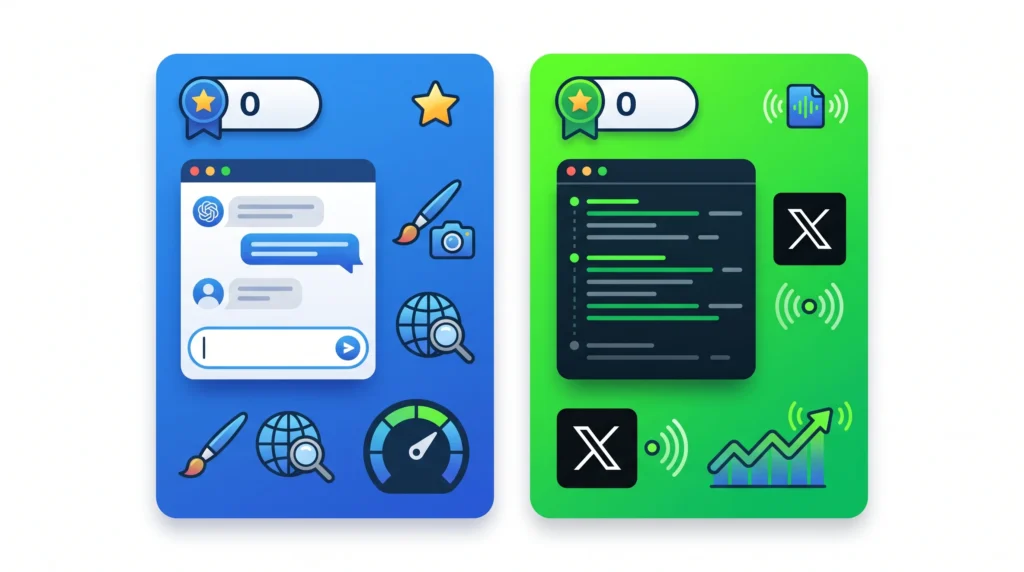
Free tier verdict: For everyday tasks, ChatGPT’s free tier delivers higher-quality responses via the GPT-5.5 Instant model. Grok’s free tier accesses an older model (Grok 3) but includes the real-time X data feature that free ChatGPT cannot match. If current events and live social data matter to you, Grok’s free tier has a genuine practical advantage despite the older model. For writing, research on established topics, and general tasks, ChatGPT’s free tier produces stronger outputs.
Real-Time Data: Grok’s Most Significant Practical Advantage
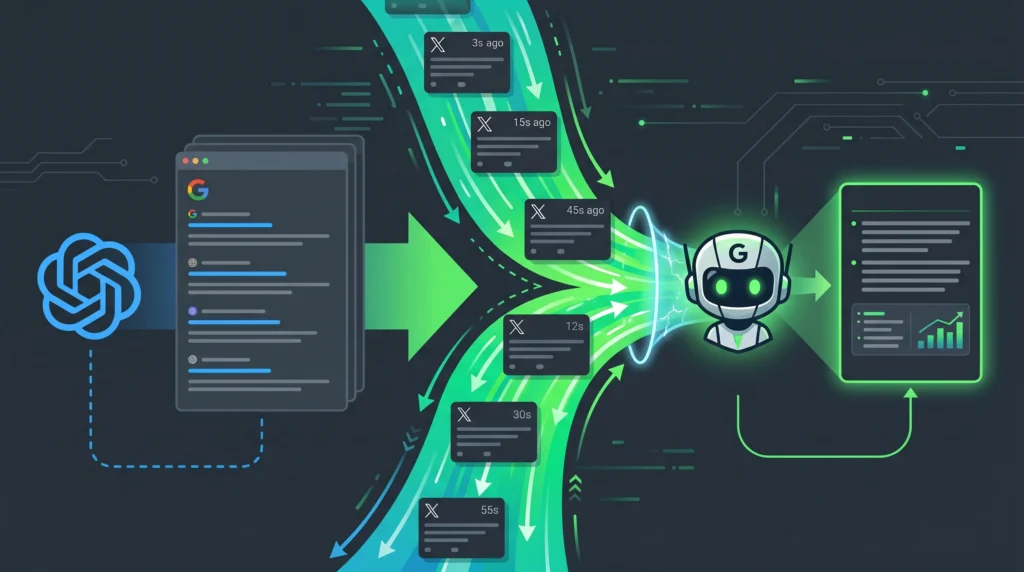
Why Grok’s X Integration Changes What an AI Tool Can Do
This is the category where the comparison is not close, and it is worth spending time on because most articles mention it without explaining what it actually means for practical use.
Grok has direct, real-time access to X’s full data stream. Every post, every trending topic, every breaking development that appears on X is available to Grok the moment it appears. When you ask Grok “what is happening with [current event] right now,” it searches the live X data stream and provides an answer grounded in what was posted in the last hour.
ChatGPT also has web search, and that web search is capable of finding current news articles and online sources. The difference is the depth and recency of coverage. Professional journalists, industry insiders, researchers, and early-adopter communities often post on X before any article is written. Grok’s pipeline accesses that pre-article information layer; ChatGPT’s web search accesses the article layer.
Additionally, all paid Grok tiers include DeepSearch, which performs live web research with multi-source synthesis before answering. This makes it purpose-built for time-sensitive research in a way that feels structurally different from ChatGPT’s web search integration.
Practical use cases where this advantage is real:
- Monitoring a developing news situation and getting a real-time summary
- Researching what people are currently saying about a product, brand, or topic
- Tracking live market sentiment, sports events, or election coverage
- Understanding what is trending before writing content intended to be timely
- Competitive intelligence, where X posts are often the fastest signal
For freelancers and content creators described in the AI tools for freelancing on Fiverr and Upwork guide, this real-time angle has direct practical value: writing timely content, understanding current audience sentiment, and identifying trending topics before they peak.
Where this advantage does not apply:
For tasks that do not require current information, whether drafting evergreen content, writing emails, analyzing documents, solving math problems, or debugging code, the real-time X data advantage is irrelevant. ChatGPT performs these tasks at least comparably, and often better.
Writing Quality: Where ChatGPT Holds a Consistent Lead
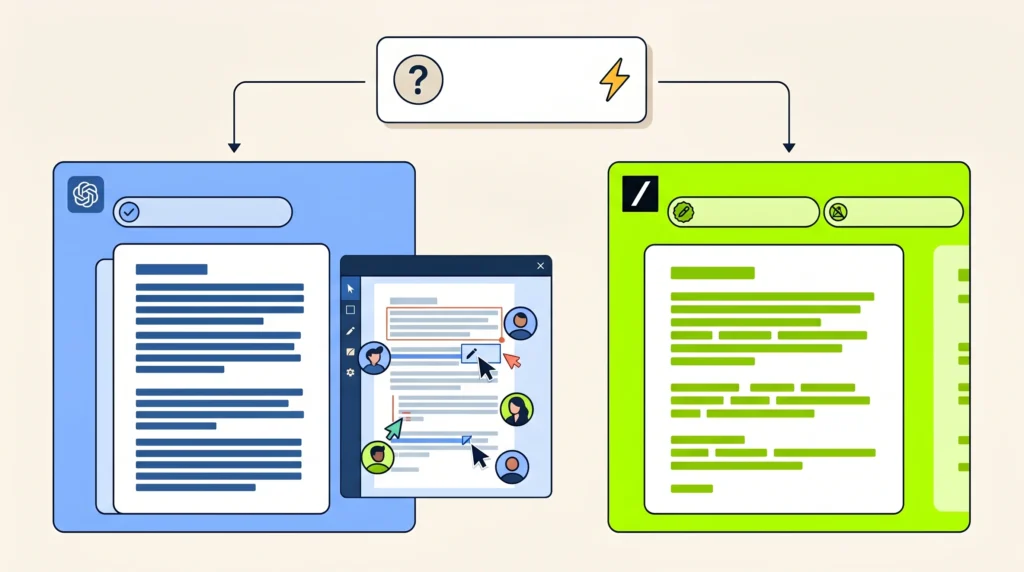
Grok vs ChatGPT for Writing: Who Produces Better Content?
For writing tasks, the comparison favors ChatGPT in most categories as of May 2026.
GPT-5.5 produces more polished, publication-ready prose. It maintains tone consistency across longer pieces, follows complex style guides more reliably, and generates more varied sentence structures. The Canvas editing environment in ChatGPT Plus allows collaborative document editing that has no equivalent in Grok’s interface, making it significantly better for long-form writing workflows where iteration and revision are part of the process.
Grok 4.1 has a genuine edge in one specific writing context: creative writing with an unfiltered or edgy tone. Grok’s less restrictive content policy means it will write characters, dialogue, and scenarios that ChatGPT declines, which is relevant for fiction writers and certain creative content categories. For marketing copy, professional communication, blog posts, and formal writing, ChatGPT’s output quality and style control are superior.
Claude Opus 4.7, as covered in the guide on ChatGPT vs Claude: which AI assistant is actually better in 2026, remains the benchmark leader for long-form prose quality. Neither Grok nor ChatGPT consistently outperforms Claude on carefully crafted written output, but between the two tools in this comparison, ChatGPT produces stronger professional writing.
Writing verdict: ChatGPT for professional, formal, and structured writing. Grok for creative content that benefits from a less filtered approach. Claude is the highest overall prose quality when writing is the primary use case.
Coding: Benchmarks Tell One Story, Production Teams Tell Another
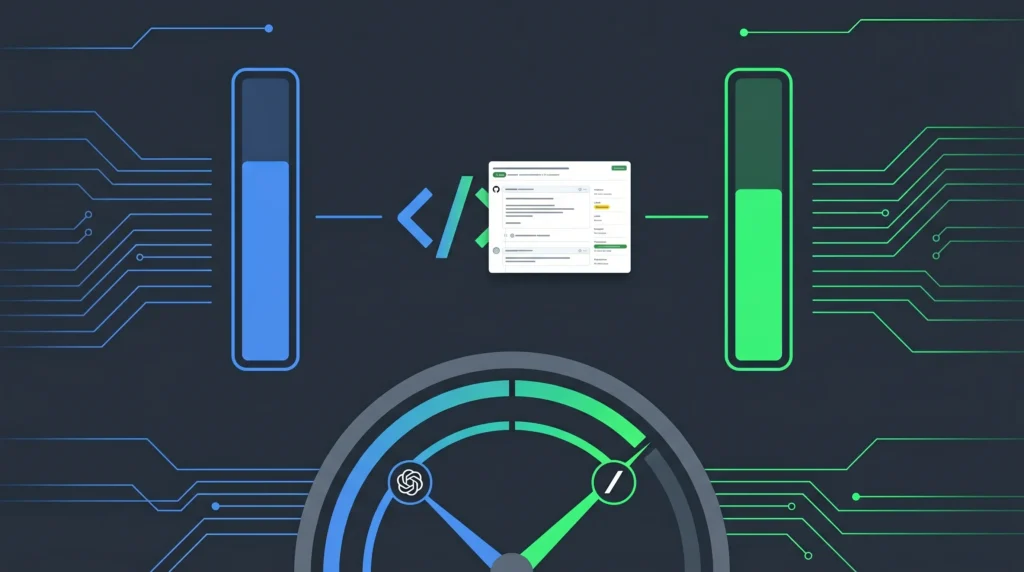
How Grok and ChatGPT Compare on Real-World Coding Tasks
The coding comparison in 2026 is more nuanced than most articles suggest, because the benchmark story and the production story differ.
On benchmark performance, Grok 4 leads LMArena’s Elo ratings and performs competitively on several coding evaluations. GPT-5.5 leads SWE-bench Verified at 74.9 percent versus Grok 4’s 69.1 percent; the benchmark that tests the resolution of real GitHub issues from production repositories.
In practice, developers who have tested both tools for real coding work report that ChatGPT produces more consistent results on complex, multi-file projects. Grok’s faster inference speed is an advantage for quick code generation and iteration, but GPT-5.5 wins on deep architectural reasoning and debugging tasks that require sustained multi-step logical analysis.
For the developer audience reading this alongside the best AI model for coding in 2026: Claude vs GPT vs Gemini guide, the honest recommendation remains: Claude Opus 4.7 leads real-world coding benchmarks, GPT-5.5 is the most reliable for complex production work, and Grok 4 is a cost-effective alternative for high-volume routine coding tasks via API. For most individual developers, Grok is not the primary coding choice; it is a cheaper supplementary option for specific use cases.
Coding verdict: ChatGPT for reliable, consistent, complex coding. Grok for fast, cost-efficient routine code generation, especially at the API level. Neither leads Claude on the most demanding coding benchmarks.
Context Window: 2 Million Tokens and What It Actually Means
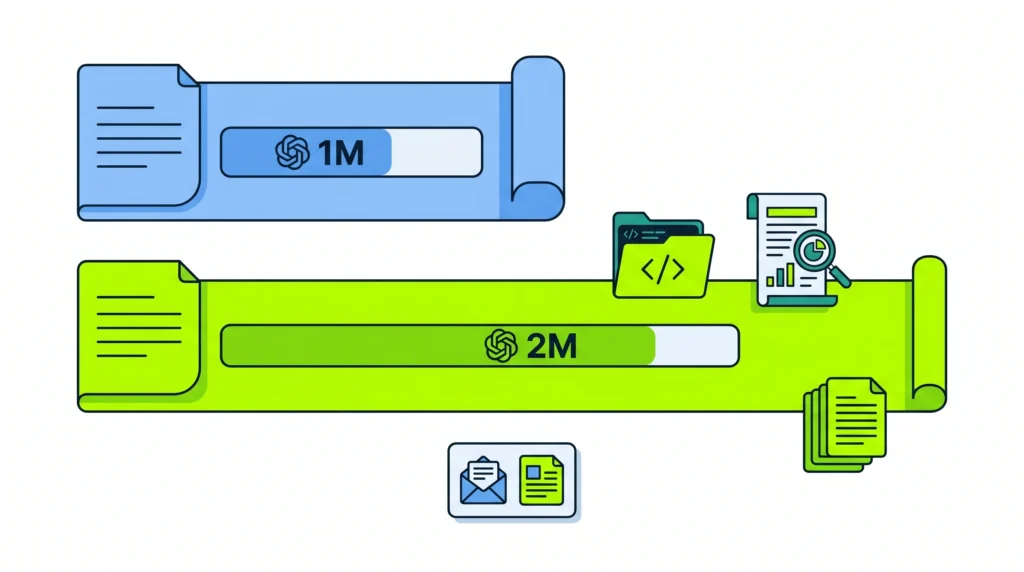
Grok 4 supports a 2-million-token context window, the largest of any mainstream AI assistant in 2026. ChatGPT GPT-5.5 supports 1 million tokens. The gap is real, and it matters for specific use cases.
When 2 million tokens are genuinely useful:
- Analyzing an entire large codebase in a single session without hitting context limits
- Processing a full book-length document alongside extensive background materials
- Running long multi-turn conversations that reference information from early in the session without losing it
- Enterprise document analysis where multiple large reports need simultaneous context
When the difference does not matter:
For most everyday tasks, including writing an email, debugging a function, asking a research question, or drafting a blog post, neither a 1-million nor a 2-million token context window is the limiting factor. The practical difference between Grok and ChatGPT on the context window is relevant for a specific subset of power users rather than the general user population.
For business owners and professionals using AI for document-heavy workflows, as described in the AI tools that replace a virtual assistant guide, Grok’s larger context window is worth noting if your work regularly involves processing very large documents simultaneously.
Pricing: SuperGrok vs ChatGPT Plus, Honestly Compared
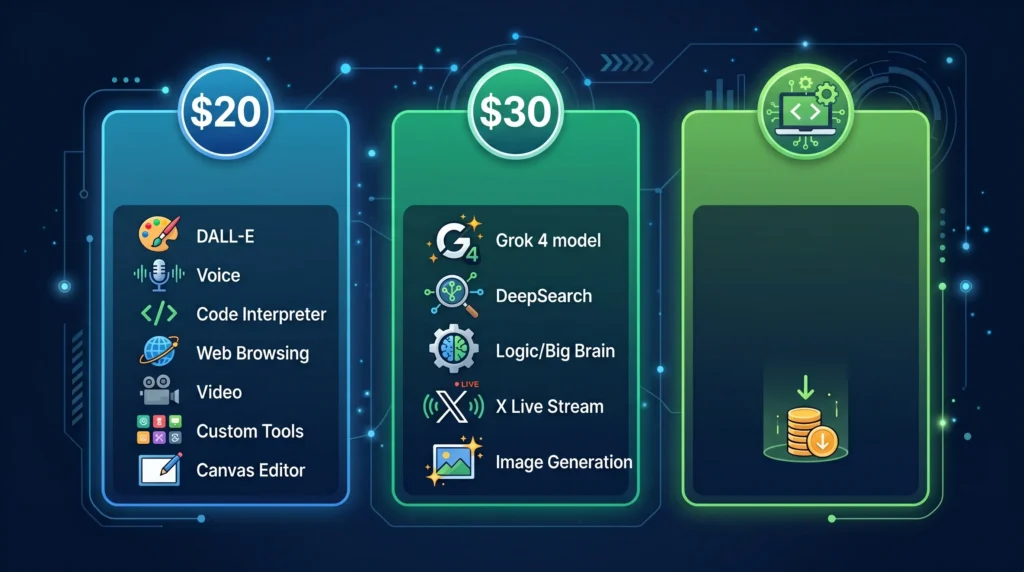
Grok vs ChatGPT Pricing in 2026: Which Plan Offers Better Value?
The pricing comparison is one area where Grok’s positioning works against it for most users.
ChatGPT Plus at $20/month includes:
- Full GPT-5.4 and GPT-5.5 access without daily limits
- DALL-E image generation
- Advanced Voice Mode
- Code Interpreter with live execution
- Web search
- Canvas collaborative editing environment
- Custom GPTs and the full plugin ecosystem
- Sora video generation (limited)
SuperGrok at $30/month includes:
- Grok 4 access without limits
- DeepSearch (live web research)
- Big Brain mode (extended reasoning)
- Real-time X data integration
- Image generation (xAI’s Aurora model)
- Voice mode
SuperGrok costs $10 more per month than ChatGPT Plus while offering a narrower feature set. The image generation quality in ChatGPT’s DALL-E is more mature; the video generation via Sora has no equivalent in Grok; and the Custom GPT ecosystem provides specialized tools for hundreds of specific use cases.
The context where Grok’s pricing genuinely wins is at the API level. Grok 4.3’s API at approximately $1.25 per million input tokens and $2.50 per million output tokens is dramatically cheaper than GPT-5.5 at around $2.50/$15 per million tokens. For developers and teams running high-volume API workloads, Grok 4.3 delivers near-frontier quality at a fraction of the cost. This is the pricing story that most comparison articles bury in a footnote, but which matters significantly for the developer and freelancer audience.
For freelancers using AI tools to generate income, as covered in the AI tools to make money online without investment guide, the API pricing difference makes Grok a serious consideration for building income-generating AI workflows at minimal cost.
Content Policy: The Difference That Divides Users Sharply
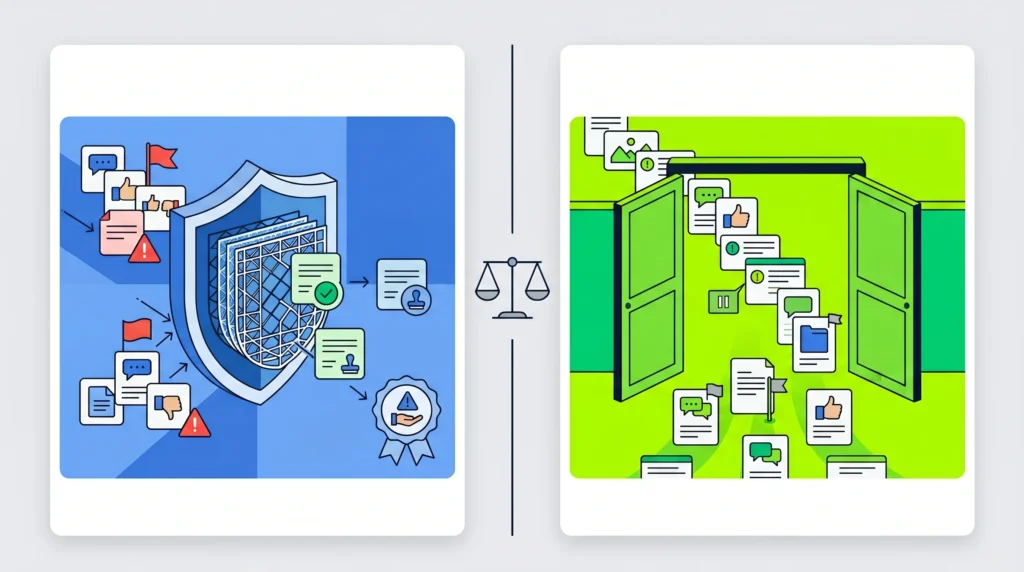
Grok’s more permissive content policy is a feature for some users and a concern for others. It is one of the most significant practical differences between the two tools.
ChatGPT refuses requests across a broad range of content categories: explicit creative content, certain political topics, content that could be interpreted as harmful, and many edge cases where the refusal can feel excessive to users with legitimate purposes. These guardrails are a deliberate safety choice by OpenAI.
Grok’s content policy is less restrictive. It engages with controversial topics more directly, produces creative content that ChatGPT declines, and generally responds to requests that ChatGPT refuses with a safety warning. For users who have found ChatGPT’s filtering frustrating, this is a genuine practical advantage. For users who are using AI in professional contexts where predictable, safe outputs matter, ChatGPT’s more conservative approach is preferable.
Neither position is objectively correct; they reflect different priorities. The right choice depends on your specific use cases and your tolerance for unpredictability in outputs.
The Verdict: Who Should Actually Switch to Grok in 2026
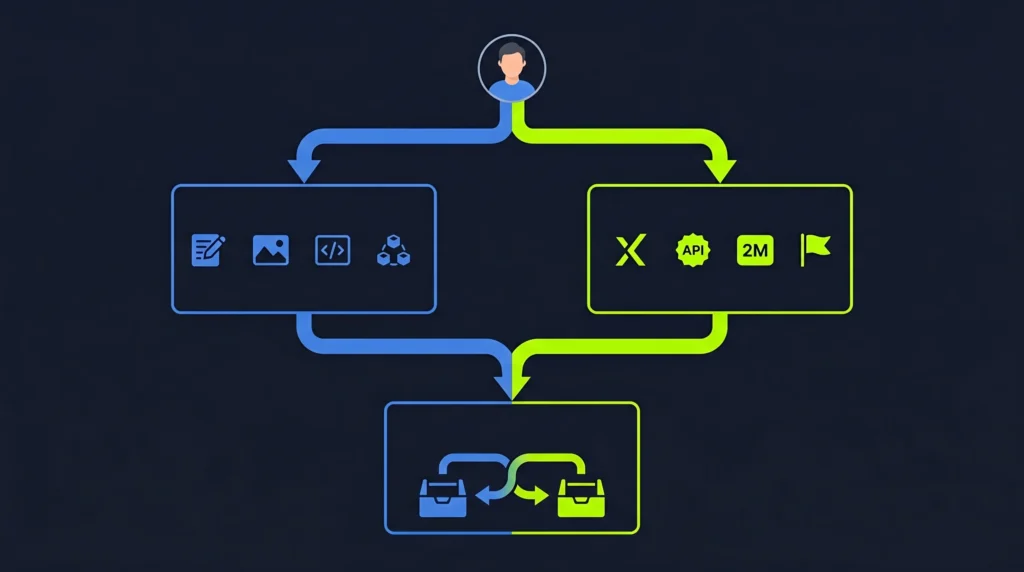
Rather than a single winner, here is the honest decision framework:
Switch to Grok (or add it) if:
- You regularly need real-time X data: current events, trending topics, live sentiment analysis
- You are a developer using AI via API at high volume, where cost efficiency matters significantly
- ChatGPT’s content policy has frustrated you on legitimate creative or research requests
- You work with very large documents regularly and need the 2-million-token context window
- You are an X power user and want AI integrated into that workflow natively
Stay with ChatGPT (or prioritize it) if:
- Writing quality, polish, and tone consistency matter most to your workflow
- You use image generation, Sora video generation, or Custom GPTs regularly
- You need the most reliable coding assistant for complex production work
- Your use cases do not require real-time social data
- You want the broadest ecosystem of integrations and specialized tools
Use both when: ChatGPT for your primary writing, coding, and analysis work; Grok for anything requiring real-time X data, time-sensitive research, or high-volume API use at a lower cost. Many productive users in 2026 treat Grok as a specialized complement to ChatGPT rather than a replacement.
Frequently Asked Questions
Q. Is Grok 4 better than ChatGPT GPT-5.5 overall?
On LMArena’s Elo rankings as of May 2026, Grok 4.1 leads above GPT-5.5. On SWE-bench Verified, GPT-5.5 leads at 74.9 percent versus Grok 4’s 69.1 percent. “Better overall” depends on the task: Grok leads on real-time data and context window; ChatGPT leads on writing quality, ecosystem breadth, and image generation.
Q. Is Grok free to use in 2026?
Yes. Grok Basic is free through an X account and includes access to Grok 3 with usage limits and real-time X data access. SuperGrok at $30/month unlocks Grok 4 without limits. A Grok subscription tier at $8/month was also introduced for users who want more than the free tier but less than SuperGrok.
Q. Is SuperGrok worth $30/month over ChatGPT Plus at $20?
For most users, no. ChatGPT Plus at $20 offers a broader feature set, including more mature image generation, video generation, Custom GPTs, and the Canvas editing environment. SuperGrok is worth the premium, specifically if real-time X data, DeepSearch, and Grok 4’s less filtered content policy are priorities for your workflow.
Q. How does Grok’s real-time X data actually work?
Grok has direct API access to X’s full data stream. When you ask a question involving current events, trending topics, or recent developments, Grok searches that live stream and incorporates what it finds into its response. The DeepSearch feature extends this to live web research across multiple sources simultaneously.
Q. Is Grok better than ChatGPT for coding?
On some benchmarks, Grok 4 leads. On SWE-bench Verified for real-world issue resolution, GPT-5.5 leads Grok 4 by approximately 5.8 percentage points. Production developers generally report ChatGPT as more reliable for complex, multi-file coding work. Grok 4.3’s API pricing is significantly cheaper, making it a cost-effective option for routine coding tasks at scale.
Q. Can Grok generate images like ChatGPT?
Yes. SuperGrok includes image generation via xAI’s Aurora model. The image generation quality is improving but is generally considered less mature than ChatGPT’s DALL-E integration. Video generation, which ChatGPT offers via Sora, has no equivalent in Grok as of May 2026.
Q. Does Grok have a context window advantage over ChatGPT?
Yes. Grok 4 supports a 2-million-token context window; ChatGPT GPT-5.5 supports 1 million tokens. The practical impact of this difference is significant for users regularly working with very large documents or codebases; less significant for everyday conversational and writing tasks.
Q. Is Grok better for content creators and freelancers?
For content requiring real-time relevance (trending topic coverage, current events commentary, social media content tied to live conversations), Grok has a genuine practical advantage. For professional writing, client deliverables, and structured content creation, ChatGPT produces more polished outputs. The guide on AI tools for freelancing on Fiverr and Upwork covers how to integrate AI tools into income-generating work; Grok’s real-time data is most useful for content freelancers covering current events.
Q. What is Grok’s Big Brain mode?
Big Brain mode is Grok’s extended reasoning feature, available on all paid tiers. Before responding, Grok spends additional compute time reasoning through the problem, similar to ChatGPT’s extended thinking feature. It improves accuracy on complex logical, mathematical, and research-intensive queries at the cost of slower response times.
Q. Will Grok eventually replace ChatGPT?
Unlikely in the near term. ChatGPT’s ecosystem advantage, including Custom GPTs, enterprise integrations, DALL-E, Sora, and five years of platform development, represents a significant structural lead. Grok has carved out a real niche with real-time X data, aggressive API pricing, and a less filtered personality. The more likely outcome is continued coexistence: ChatGPT as the general-purpose standard, Grok as the specialist tool for users whose workflows specifically benefit from its unique capabilities.

Final Thoughts
Grok vs ChatGPT in 2026 is a more interesting comparison than it was a year ago, and Grok deserves to be taken seriously. Its real-time X data access is a genuine capability no competitor matches. Its 2 million token context window leads the mainstream market. Its API pricing is among the most competitive at the frontier. And Grok 4.1’s LMArena Elo rating is not a marketing claim; it reflects genuine performance improvements.
The honest assessment is that neither tool is universally better. ChatGPT’s ecosystem, writing quality, and feature breadth make it the right primary tool for most users. Grok’s real-time data, cost efficiency, and less filtered personality make it the right choice or a valuable complement for specific workflows. Most power users in 2026 are using both, routing tasks based on where each excels.
If you are paying for ChatGPT Plus and find that real-time current information is not a significant part of your workflow, switching entirely to SuperGrok for $10 more per month does not make financial sense. If you are a developer running high API volumes, Grok 4.3’s pricing is worth integrating immediately. If you regularly cover current events, track trends, or need live X data, Grok is the only tool that genuinely solves that problem.