
If you have been trying to keep up with the new AI models in 2026, GPT-5, Claude 4, Gemini 3, Grok 4, and DeepSeek V4: the announcements came faster in the first quarter of 2026 than at any previous point in AI history. March alone produced twelve major model releases across seven different labs in a single week.
The problem with most coverage of these releases is that it is written for engineers: benchmark percentages, token counts, and architecture diagrams. What most people actually want to know is far simpler: what does this mean for me, what can I do now that I could not do six months ago, and is it worth upgrading from a free tier to a paid plan?
This guide answers those questions directly. Every model covered here is explained in plain language, with honest assessments of what changed, what stayed the same, and what the free tier actually gives you before you spend anything.
If you have read the guides on AI tools for freelancing on Fiverr and Upwork, AI tools to make money online without investment, best free AI tools for students, or AI tools that replace a virtual assistant, you already know how to put AI tools to practical use. This article tells you which specific models are delivering the best results right now, and what is new about each of them.
What the New AI Models in 2026 Actually Mean for Everyday Users
New AI Models 2026: The Big Picture Before the Details
Before covering individual models, one thing needs to be said clearly: there is no single best AI model in 2026. That framing, which dominated discussions in 2023 and 2024, no longer describes how the market actually works.
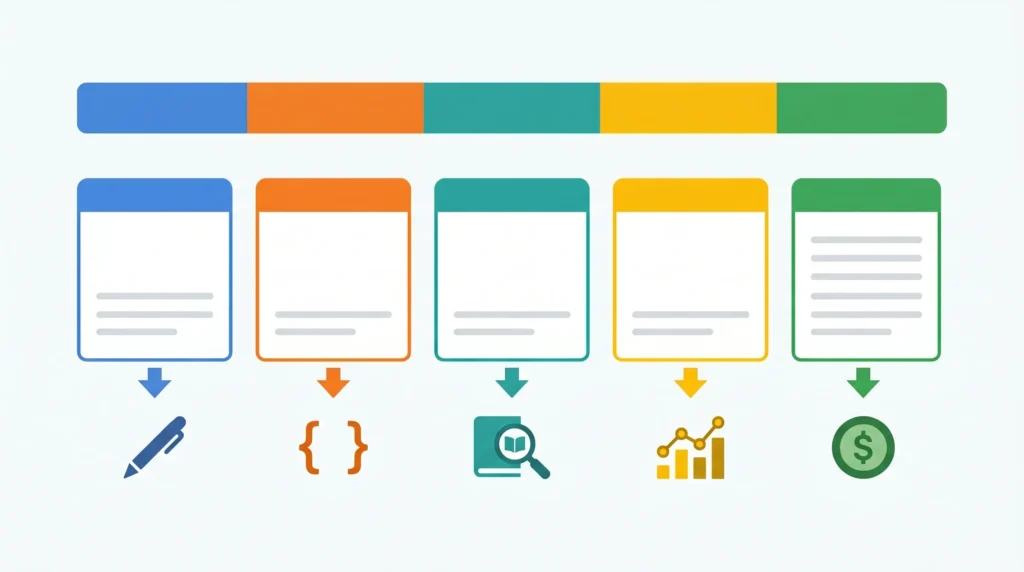
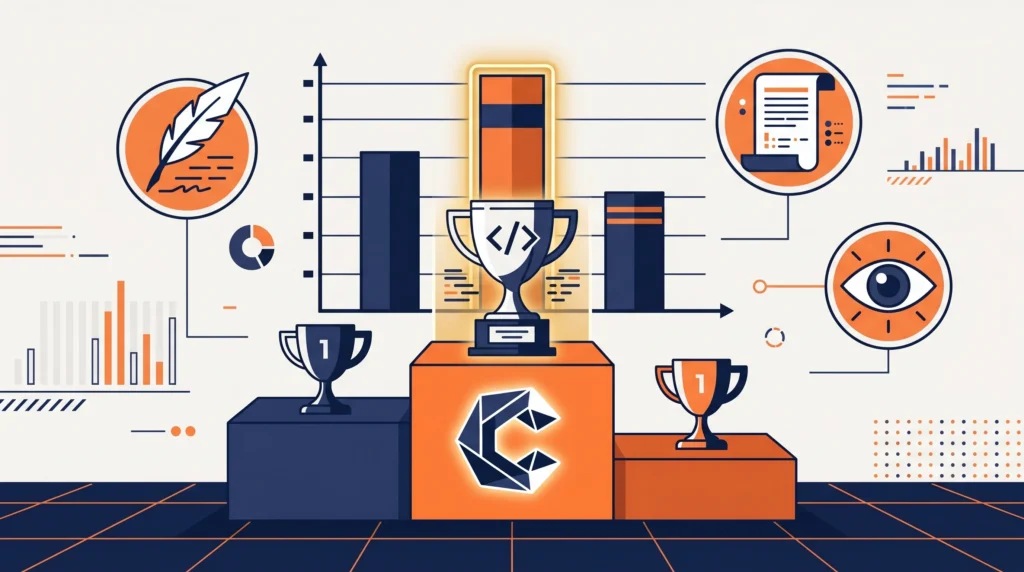
What exists instead is a set of models that each clearly win at specific tasks. Claude 4 leads on coding. Gemini 3 Pro leads on multimodal tasks and offers the best cost-performance ratio at the frontier. GPT-5.5 leads on overall breadth and ecosystem integration. Grok 4 leads on specific reasoning benchmarks at frontier level. DeepSeek V4 offers near-frontier quality at a fraction of the cost.
The users getting the most value from AI in 2026 are not the ones who picked one model and committed to it. They are the ones who understand where each excels and use them accordingly, often through a combination of free tiers that together cost nothing.
With that framing clear, here is what changed with each major release.
GPT-5 Family: What Changed from GPT-4o
New AI Models in 2026 GPT-5 Claude 4: The OpenAI Side of the Story
The GPT-5 family covers several distinct models released across late 2025 and early 2026. The most significant for everyday users are GPT-5.4 (released March 2026) and GPT-5.5 (released April 2026). Understanding the difference between them matters because they serve different purposes.
What actually changed from GPT-4o:
- Context window: GPT-5.4 accepts up to 1.05 million tokens of input, compared to GPT-4o’s 128,000. In practical terms, this means you can now paste an entire book, a full codebase, or hundreds of emails into a single conversation and ask questions about all of it at once.
- Factual accuracy: GPT-5.4 reduced individual factual errors by 33 percent compared to GPT-5.2. For users who rely on ChatGPT for research and information tasks, this is the most meaningful practical improvement.
- Tool use: GPT-5.4 introduced a new Tool Search architecture that makes it significantly more reliable at calling external tools, searching the web, running code, and using plugins without errors.
- GPT-5.5 (April 2026): This is the first fully retrained base architecture from OpenAI since GPT-4.5. It is not a better chatbot; it is a model designed for autonomous, multi-step agentic work. For everyday chat users, GPT-5.4 remains more relevant. For developers building automated workflows, GPT-5.5 is the primary reason to pay attention.
Free tier in 2026: The ChatGPT free tier provides access to GPT-5.5 Instant (the lightweight version, which became the default in May 2026) with daily limits. This is a significant upgrade from the GPT-4o mini access that free users had previously. The paid Plus plan at $20/month unlocks the full GPT-5.4 and GPT-5.5 models without daily limits.
What GPT-5 is still best for: Versatility. If you use one AI for everything, including writing, research, coding, image generation, and voice mode, GPT-5 inside ChatGPT Plus remains the broadest single-tool option. The plugin ecosystem and integrations are unmatched by any competitor.
Freelancers using AI tools for client work, as covered in the guide on AI tools for freelancing on Fiverr and Upwork, will find GPT-5.4’s improved factual accuracy and tool use particularly relevant for proposal writing and research-heavy deliverables.
Claude 4 (Sonnet 4.6 and Opus 4.6 and 4.7): The Writing and Coding Upgrade
Claude 4 Review: What Anthropic Changed and Why It Matters
Claude’s 2026 releases represent the largest generational jump in Anthropic’s model history. Claude Sonnet 4.6 was released in February 2026, followed by Claude Opus 4.6 and then Opus 4.7 in April 2026. Each release addressed a different segment of the user base.
What changed from Claude 3.5:
- Coding benchmark performance: Claude Opus 4.6 achieved 80.8 percent on SWE-Bench Verified, the industry standard test for real-world coding ability involving actual GitHub issues from production repositories. Claude Opus 4.7 pushed this further to 87.6 percent, representing the highest score any model has achieved on this benchmark. For context: a human software engineer solves roughly 13 percent of these issues; the previous generation of AI models solved around 50 percent.
- Writing quality: Claude has consistently been ranked highest for natural prose quality across independent evaluations. Claude Opus 4.7 can output 128,000 tokens in a single response, meaning it can write an entire long-form report, book chapter, or detailed proposal without truncating.
- Long-context reasoning: Claude leads on GPQA Diamond, which tests graduate-level scientific reasoning. This makes it particularly strong for research tasks that require multi-step logical analysis rather than simple information retrieval.
- Vision improvement in Opus 4.7: Image resolution processing jumped from 1.15 megapixels to 3.75 megapixels, enabling detailed analysis of complex screenshots, charts, and dense visual documents.
Free tier in 2026: Claude.ai’s free tier provides access to Claude Sonnet 4.6, which performs at near-Opus level on most everyday tasks. This is genuinely useful for most writing, analysis, and research needs without paying anything. The paid plan at $20/month unlocks Opus 4.6 and 4.7 for the most demanding tasks.
What Claude 4 is best for: Anything that involves careful, high-quality writing; complex coding work; long-document analysis; and tasks where accuracy matters more than speed. Students using AI for academic work, as described in the guide on best free AI tools for students, will find Claude Sonnet 4.6’s free tier particularly strong for essay drafting, research synthesis, and code debugging.
Gemini 3 Pro: Why It Became the Best Value at the Frontier
New AI Models in 2026: Gemini 3 Pro’s Quiet Dominance
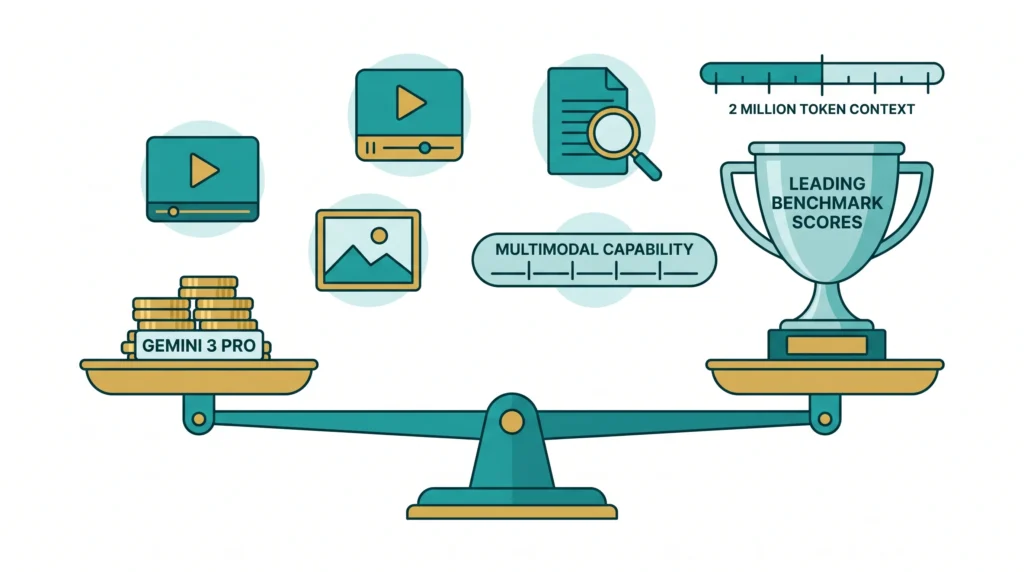
Gemini 3 Pro and its updated version, Gemini 3.1 Pro, released in February 2026, represent Google’s most significant competitive leap to date. On many independent benchmarks, it now leads the field, while pricing it at a level that makes it the most cost-effective frontier model available.
What changed from Gemini 2.5:
- GPQA Diamond benchmark: Gemini 3.1 Pro achieved 94.3 percent on this graduate-level reasoning test, leading all other models as of May 2026. Claude Opus 4.7 competes closely at approximately 91 percent.
- ARC-AGI-2: Gemini 3.1 Pro scored 77.1 percent on this benchmark, which specifically tests novel reasoning that cannot be solved through memorization. This is more than double Gemini 3 Pro’s score from just months earlier.
- Multimodal capability: Gemini 3.1 Pro leads every published benchmark for video understanding (78.2 percent on Video-MME), image analysis, and document processing. Google’s investment in visual AI research shows clearly in these results.
- Context window: Gemini 3 Pro supports a 2 million token context window, the largest available at the frontier. The practical implication is the ability to analyze entire research libraries, multi-year company email archives, or complete legal case files in a single session.
- Price: At $2 per million input tokens and $12 per million output tokens, Gemini 3.1 Pro offers near-top-tier intelligence at approximately 60 percent of the cost of Claude Opus 4.7 and GPT-5.5.
Free tier in 2026: Gemini 3 Flash, the lightweight version, is freely accessible through Google AI Studio. For users already in the Google ecosystem (Google Docs, Gmail, Google Drive), Gemini’s native integration provides practical value that no other model can match. The Gemini Advanced subscription at $20/month unlocks the full 3.1 Pro model.
What Gemini 3 is best for: Research tasks that involve processing large volumes of documents; multimodal work involving images and video; users integrated into Google Workspace; and any use case where cost efficiency at scale matters. For business owners managing large amounts of information, the connection to the guide on AI tools that replace a virtual assistant is direct: Gemini’s enormous context window and Google Workspace integration make it genuinely powerful for document management workflows.
Grok 4: The Newcomer That Earned Serious Attention
Grok 4 Review: What xAI Built and Who Should Pay Attention
Grok 4 from xAI entered the frontier in March 2026 and immediately generated attention for specific benchmark results. Its Humanity’s Last Exam score of 50.7 percent, a test of knowledge at the absolute frontier of human expertise, led all models. Its SWE-bench Verified coding score of 75 percent edged out GPT-5.4.
For everyday users, Grok 4’s most practical advantage is its integration with X (formerly Twitter) and its access to real-time social media data. This makes it uniquely useful for trend analysis, social listening, and content creation tied to current conversations. It is available through the X Premium subscription and a standalone Grok subscription.
What Grok 4 is best for: Real-time information and trend analysis; frontier-level reasoning tasks; users already paying for X Premium who get Grok access as part of that subscription. For general everyday use, the three major models above cover most needs. Grok earns its place on the shortlist for specific research tasks and social-media-integrated workflows.
DeepSeek V4: The Open-Source Model That Changed the Cost Equation
DeepSeek V4 vs ChatGPT: Why the Free Alternative Matters
DeepSeek’s “moment” came in January 2025 when DeepSeek R1 demonstrated that open-source models could match frontier performance at dramatically lower cost. DeepSeek V4, released in early 2026, extended that lesson further.
What makes DeepSeek different:
- Open-source and self-hostable: DeepSeek V4 is available under an MIT license, meaning anyone can download and run it on their own hardware. For businesses processing high volumes of text, this eliminates per-token API costs entirely.
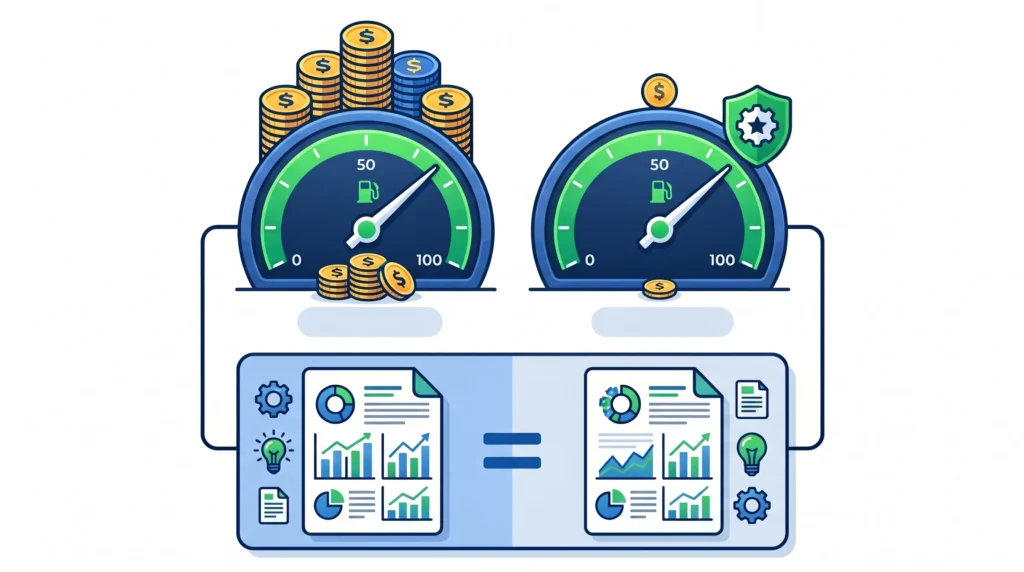
- API pricing: Even through the API, DeepSeek costs approximately $0.27 per million tokens at standard pricing, compared to $5 per million for Claude Opus and $15 per million for GPT-5.5.
- Quality: On most everyday tasks, including writing, analysis, and research, DeepSeek V4 delivers output comparable to much more expensive models. The gap shows up primarily in complex multi-step reasoning and specialized technical tasks.
- MoE architecture advantage: DeepSeek uses a Mixture of Experts architecture that activates only the relevant portion of the model for each task, making it significantly more efficient computationally.
What DeepSeek is best for: High-volume use cases where per-token cost matters; business owners and freelancers who need AI capabilities without a monthly subscription; and anyone who is currently paying for a premium AI subscription primarily for volume rather than cutting-edge capability. The guide on AI tools to make money online without investment covers free AI income strategies in detail, and DeepSeek fits directly into that framework as a zero-cost AI capable of production-quality work.
Which New AI Model Wins Which Task in 2026
New AI Models in 2026 GPT-5 Claude 4: Task-by-Task Winner Table
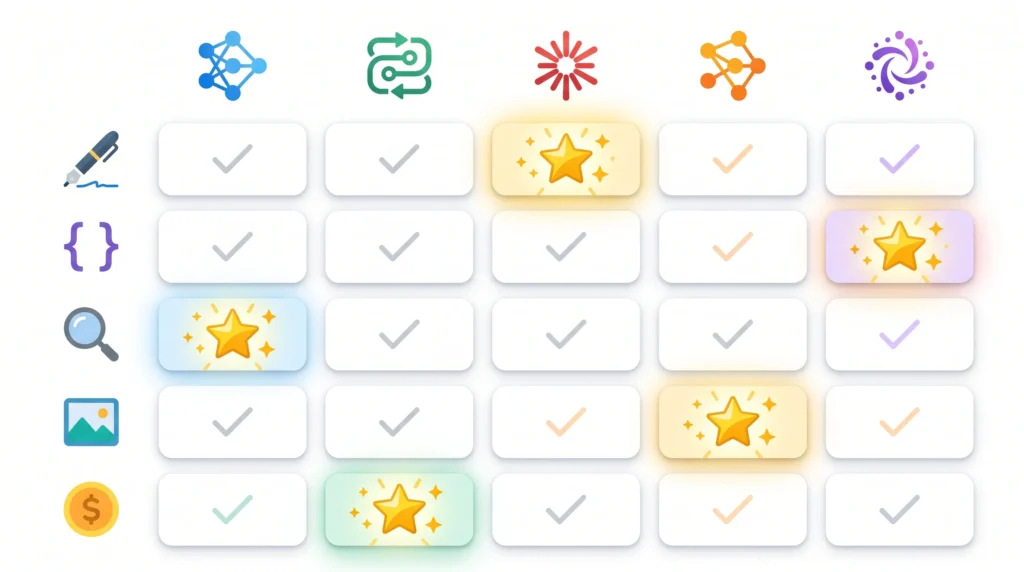
Rather than declaring one overall winner, here is the honest task-by-task breakdown based on verified benchmark data as of May 2026:
Writing and long-form content: Claude Opus 4.7 and Claude Sonnet 4.6 produce the most natural, well-structured prose. For collaborative document editing, GPT-5.5’s Canvas feature provides the best working environment. For Google Docs integration, Gemini 3.1 Pro connects natively.
Coding and software development: Claude Opus 4.7 leads SWE-bench Pro at 64.3 percent for complex, real-world coding tasks. For everyday coding assistance, Claude Sonnet 4.6 offers near-Opus performance at the free tier. Grok 4 competes closely on benchmark coding scores.
Research and scientific reasoning: Gemini 3.1 Pro leads GPQA Diamond at 94.3 percent. Claude Opus 4.7 is the strongest alternative at approximately 91 percent. For research involving current events and real-time data, Gemini and Grok both have live web access.
Multimodal tasks (images, video, documents): Gemini 3.1 Pro leads Video-MME by a significant margin. GPT-5 handles images competently across all tasks. Claude Opus 4.7’s improved image resolution makes it useful for dense visual document analysis.
Cost-effective high volume: DeepSeek V4 at $0.27 per million tokens; Gemini 3.1 Pro at $2 per million tokens. Both deliver quality that justifies cost significantly below the $5 to $15 per million range of premium models.
Best free tier overall: Gemini 3 Flash (via Google AI Studio), Claude Sonnet 4.6 (via Claude.ai free tier), and GPT-5.5 Instant (via ChatGPT free) together cover most everyday needs at zero cost.
How to Use These Models Together Rather Than Picking One
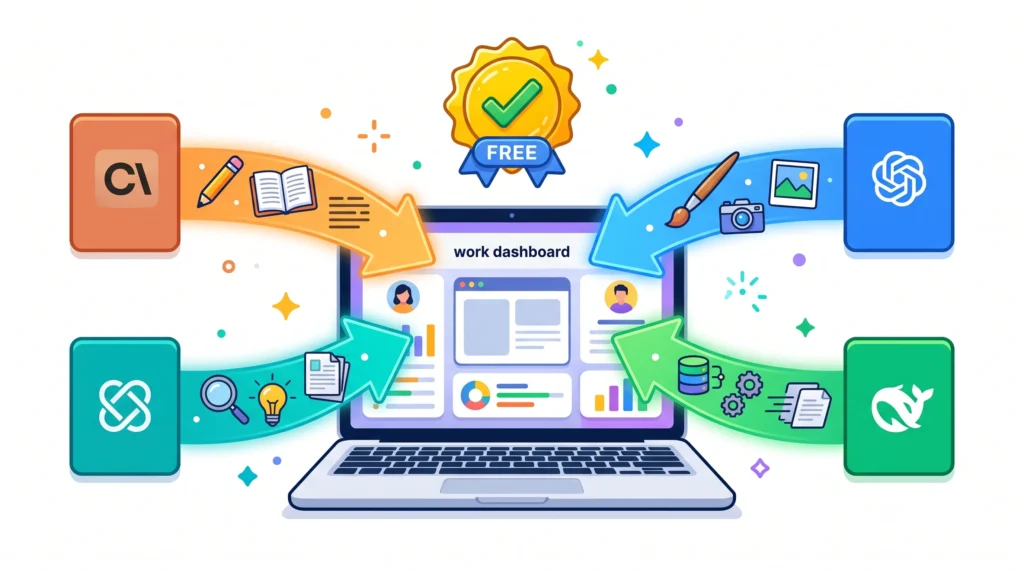
The most important practical insight from the 2026 AI landscape is this: the professionals getting the most value from AI are not using one model. They are routing intelligently.
A practical approach for freelancers and content creators:
- Use Claude Sonnet 4.6’s free tier for drafting written content and reviewing code
- Use Gemini’s free tier for research tasks and Google Docs integration
- Use ChatGPT free for image generation, voice mode, and broad general tasks
- Use DeepSeek V4’s API for high-volume processing if cost is a concern
Combined, this workflow costs nothing until volume exceeds the free tier limits of each platform. At that point, the $20/month decision becomes a question of which platform you spend most of your time on, rather than which is “best.”
For freelancers building income streams through AI tools, as described in detail in the guides on AI tools for freelancing on Fiverr and Upwork and make money with AI art without any skills, this multi-model approach means access to genuinely frontier-level AI capability at zero ongoing cost.
What to Expect in the Rest of 2026
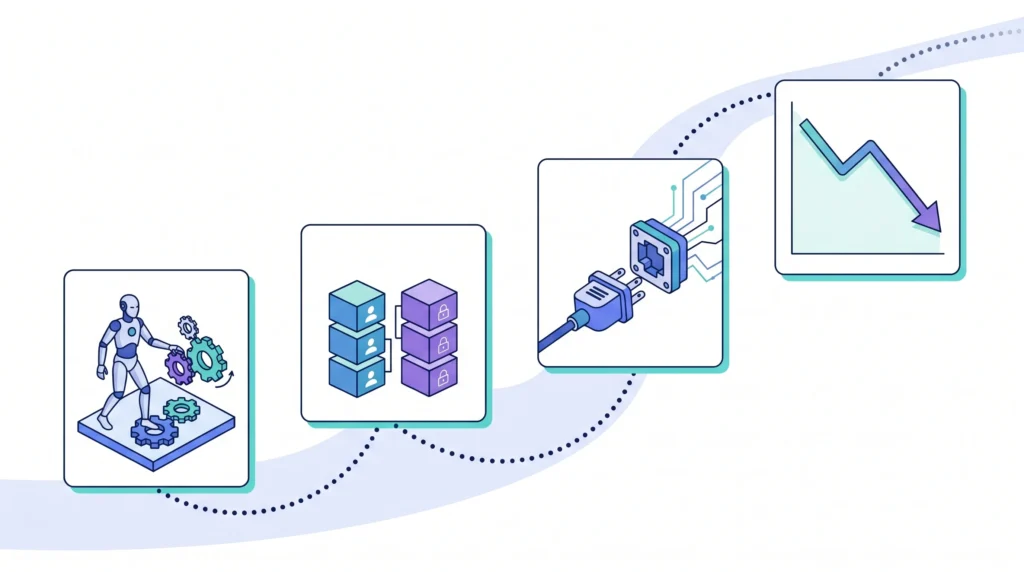
This section matters because this article will be updated quarterly. Here is the current direction of the market based on confirmed lab roadmaps and publicly available information as of May 2026:
- Agentic AI is the next frontier: Every major lab is investing in models that take autonomous, multi-step actions rather than just responding to prompts. GPT-5.5 is explicitly designed for this. Claude Opus 4.7 leads real-world agentic coding benchmarks. This category will be the primary differentiation point in the second half of 2026.
- Open-source is competitive: The gap between the best open models (DeepSeek V4, Llama 4, Qwen 3.5) and closed frontier models has narrowed dramatically. For many everyday use cases, open models now deliver equivalent quality.
- MCP (Model Context Protocol): Anthropic’s MCP standard, now adopted across OpenAI and Google as well, is becoming the standard for connecting AI models to external tools and data sources. By the end of 2026, most AI assistants will be able to read your calendar, search your files, and interact with your work applications directly.
- Prices will continue falling: The cost-per-token for Frontier AI has fallen by approximately 90 percent since 2023 and continues to drop with each new model release.
Frequently Asked Questions
Q. Is GPT-5 available for free in 2026?
Yes, in a limited form. GPT-5.5 Instant became the default model on ChatGPT’s free tier in May 2026. This provides access to a lightweight version of the GPT-5.5 architecture with daily usage limits. The full GPT-5.4 and GPT-5.5 models require a ChatGPT Plus subscription at $20 per month. The free tier is useful for everyday tasks; the paid tier is justified if you use it heavily for work or income-generating activities.
Q. Is Claude 4 better than GPT-5 for writing?
For long-form writing quality, natural prose, and detailed analytical writing, Claude 4 (specifically Opus 4.7 and Sonnet 4.6) produces output that most evaluators rate higher. GPT-5.5 Canvas provides a better collaborative editing environment if you are working on a document iteratively. The honest answer is that both are excellent, and the difference for most writing tasks is smaller than the marketing suggests.
Q. What changed in Gemini 3 compared to Gemini 2.5?
The changes are substantial. Gemini 3.1 Pro now leads the GPQA Diamond reasoning benchmark at 94.3 percent, more than doubling the ARC-AGI-2 score of its predecessor. The context window expanded to 2 million tokens. Multimodal performance improved dramatically, with a Video-MME score significantly ahead of all competitors. Pricing is $2 per million input tokens, making it the best cost-to-quality ratio at the frontier.
Q. Is DeepSeek V4 actually as good as ChatGPT?
For most everyday writing, analysis, and research tasks: yes, the quality difference is minimal. The gap between DeepSeek V4 and GPT-5.4 becomes noticeable on complex multi-step reasoning, specialized technical tasks, and situations requiring nuanced judgment. For high-volume use where cost matters, DeepSeek V4 at $0.27 per million tokens delivers professional-quality output at a fraction of the price. It is available both via API and as a self-hosted open-source deployment.
Q. Which free AI model is best for students in 2026?
For most student use cases: Claude Sonnet 4.6 on the Claude.ai free tier for writing and analysis; Gemini’s free tier for research and Google Classroom integration; and ChatGPT free for general questions and image tasks. NotebookLM (Google), which is free and allows students to upload their own notes and query them, remains one of the most underused and most valuable free AI tools for academic work. The guide on best free AI tools for students covers this in complete detail.
Q. Should I pay for a premium AI subscription in 2026?
The honest answer depends on how you use AI. The free tiers of ChatGPT, Claude, and Gemini are now genuinely capable of most everyday tasks. A paid subscription makes sense if: you hit free tier limits regularly, you need access to specific features like extended context windows or image generation, or you use AI for income-generating work where the subscription cost is a small fraction of the value delivered. For freelancers and content creators, $20 per month on the right subscription frequently returns that cost within a few hours of productive use.

Final Thoughts
The new AI models in 2026 represent a genuine step change in what AI can do, not just a marketing refresh. GPT-5.4 and 5.5 deliver context windows and agentic capabilities that were impossible six months ago. Claude 4 has set new records for coding and long-form writing. Gemini 3 Pro offers frontier performance at a price that challenges every assumption about what quality AI costs. DeepSeek V4 has proven that world-class AI capability can be open-source and nearly free.
What has not changed is the need for human judgment about which tool to use, how to prompt it effectively, and how to verify the outputs before using them. The models are better; the responsibility for using them well still belongs to the person sitting at the keyboard.
This article reflects the AI model landscape as of May 2026. The specific models, benchmarks, and pricing mentioned here will continue to evolve. Check back for quarterly updates.